
Better Than What Was Scheduled
submitted by SK and ghostsniper via comments
“A poem Anne referred us to some time ago comes to mind:” and “In reply to SK”
From SK:
Trees – Joyce Kilmer 1886 – 1918
I think that I shall never see
A poem lovely as a tree.
A tree whose hungry mouth is prest
Against the earth’s sweet flowing breast;
A tree that looks at God all day,
And lifts her leafy arms to pray;
A tree that may in summer wear
A nest of robins in her hair;
Upon whose bosom snow has lain;
Who intimately lives with rain.
Poems are made by fools like me,
But only God can make a tree.
and ghost’s reply:
And then there’s this:
[Intro]
There is unrest in the forest, there is trouble with the trees
For the maples want more sunlight, and the oaks ignore their pleas
[Verse 1]
The trouble with the maples, and they’re quite convinced they’re right
They say the oaks are just too lofty, and they grab up all the light
But the oaks can’t help their feelings if they like the way they’re made
And they wonder why the maples can’t be happy in their shade
[Bridge]
There is trouble in the forest, and the creatures all have fled
As the maples scream, “Oppression!”, and the oaks just shake their heads
[Instrumental Break]
[Verse 2]
So the maples formed a union, and demanded equal rights
“The oaks are just too greedy, we will make them give us light”
Now there’s no more oak oppression, for they passed a noble law
And the trees are all kept equal by hatchet, axe and saw
===================
===================
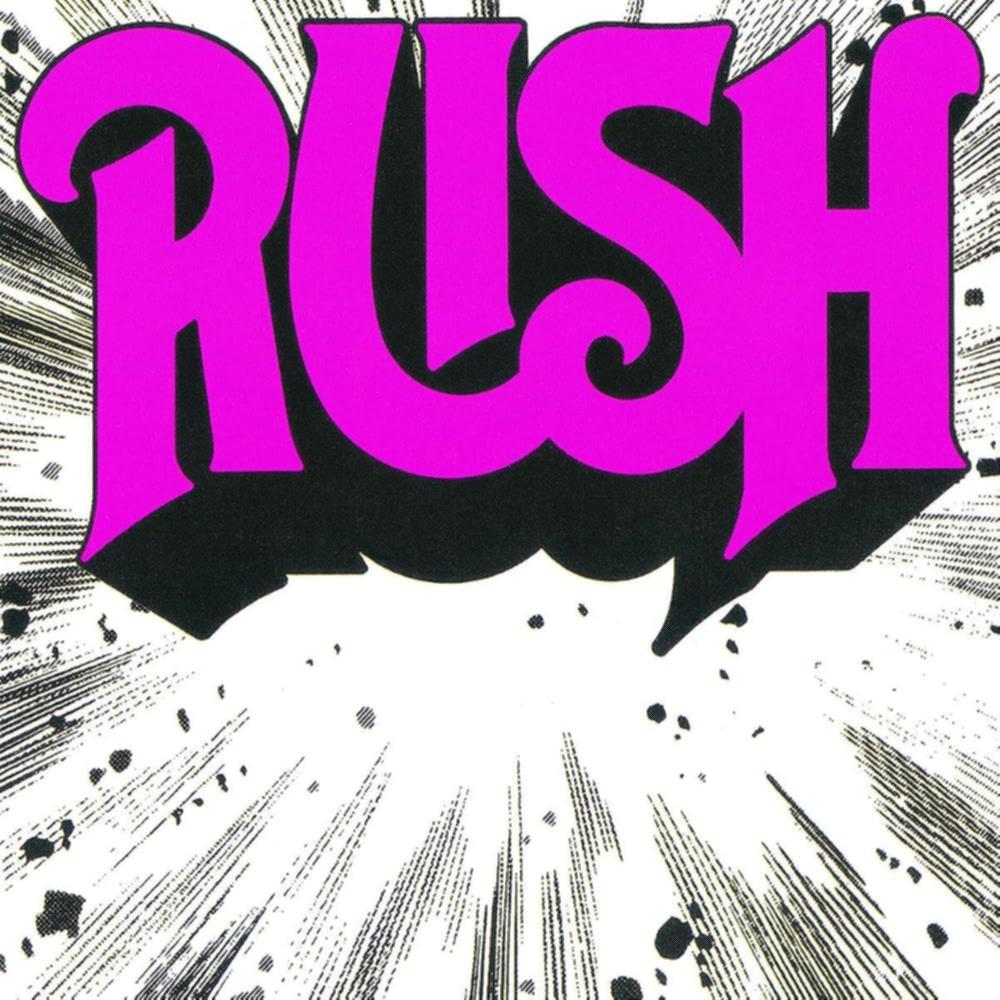
This classic prog-rock track from Rush’s 1978 album Hemispheres tells the story of a conflict between oaks and maples. It ends with a sense of “equality”, but at the righteous and/or sinister expense from the imposed and/or agreed upon acts of justified (or unjustified) violence of destruction.
Constructively, or rather musically and rhythmically, Rush’s signature time signature changes include 4/4 (standard 4 beats per measure, introduced in Verse 1), 6/8 (fairly common time, especially throughout this song, during the choruses and the acoustic guitar-driven sections), and 5/4 (a relatively uncommon meter).
Rush invokes 5/4 time intermittently throughout the song’s instrumental break (which comprises 50% of the song), which brings in a lyric-free musical sense of conflict, mystery, and tension (ripe with the 7-measure hard-rock guitar solo), but only after the break’s first section of a peacefully bucolic, woodland nature in 4/4 time.
The hard rock 5/4 guitar solo then merges back to the instrumental guitar-driven 6/8 meter, but not before a brief foray into 5/4 resolving back to 4/4 in time for the resolution of the revolution in the final (outro) lyrical sections, with the dramatic vocalized penultimate decree (“by hatchet, ax, and saw”).
While the song may appear to simply reflect upon the futility of conflict, given Neil Peart, Rush’s drummer, and lyricist, stated that they were based on a random image that once drifted into his head, the band’s history suggests alternate interpretations.
As the-the-then 1970’s adherents of Ayn Rand’s Objectivism, the band bought-into the virtues of selfishness (as being for the greater good, assumably); thus, the oaks are justified in “grabbing up all the light” by their superior nature.
(Curiously, the annotations to the song herein substantiate the maple as being the national tree of Canada, Rush’s home country, vs. oaks, the national tree of both Great Britain and the U.S.A).
The equalizing influences (“hatchet, axe, and saw”) are those of democracy and socialism, which curtail the dominance of the strong.
And yet in the hands of the strong (e.g., the wealth and power of despotic oligarchs) the same means oppress the weak, ensuring inequality reigns-in those without economic, educational, and/or militaristic strength (including the fortitude to fight against injustices).
Is Ayn Rand’s hyper-capitalistic philosophy a travesty?
It depends on the definition of “capitalism” and how governments decide to uphold, exploit, de-regulate, or regulate the concept (as they define it?), and whether that American “invisible hand” chops down trees, plants seeds, or some variation of both.
Since my childhood I have loved trees. I cannot count how many I climbed and how many I fell from. There were birch trees with branches that swayed us as storms gathered their winds, wide old beeches hollowed out for building dens, oaks with dense foliage for playing hide and seek and apple trees for stuffing my mouth.
My mother encouraged all these activities except for sitting in the birch trees daring the storm to sway us harder. She waived us down with a dishcloth or threatened us to come down with a riding crop at the ready if we didn’t. The crop was not used, it was just a symbol of elevated punishment for disobedience.
I have happy memories of my childhood. I was fortunate to have parents that were knowledgeable and curious about nature and country life. Weekly family marches always included identifying flowers, trees, bushes, nuts, animal tracks, pond creatures, butterflies, bird and insects. We carried with us pocket sized reference books with pictures and memorized the details of unusual things so we could identify them in more comprehensive nature books when we got home. I still have all those pocket books, worn and dog eared from use.
One takes these things for granted as a child, but almost all of what I learned back then has stuck with me and I am deeply grateful to my parents for our marches through the marshes, fields and woodlands. Walking now, with nephews, nieces and grandchildren, I point things out to them. They ask, “how DO you know the names of all these things?” I am happy to tell them of my childhood tree climbing and weekly walks but sad they are so removed from country life and the sense of being in rhythm with the cycle of life. They are, of course, horrified when I mention my mother wielding the riding crop! Several of them suffer from “anxiety” and see therapists. I tell them “save your money, take a walk in a green and quiet place”. They say “good idea, I’ll bring my cell phone to identify the trees”.
I see they have rather missed my point about quiet and then think maybe I am just getting old and am looking at my early life with rose tinted glasses.
As our home is surrounded by giant oaks and tulip poplars both poems sit very well. I enjoyed both but have to add that when jd wrote “One takes these things for granted as a child” I thought, right now, Americans, of all ages take most everything for granted. We have become “soft” and our roots are rotting away. Pretty soon we will not know who we are, what we stood for and will have to line up for our food.
Love that poem. Have never forgotten it or its author probably since grammar school. As for “Rush” when I first saw the large letters, I thought there might be a discussion of Rush Limbaugh. How we could use him today!