submitted by illinoisbeekeeper
Good afternoon……….visited the marker again yesterday and was amazed at how ‘the old timers’ did it.
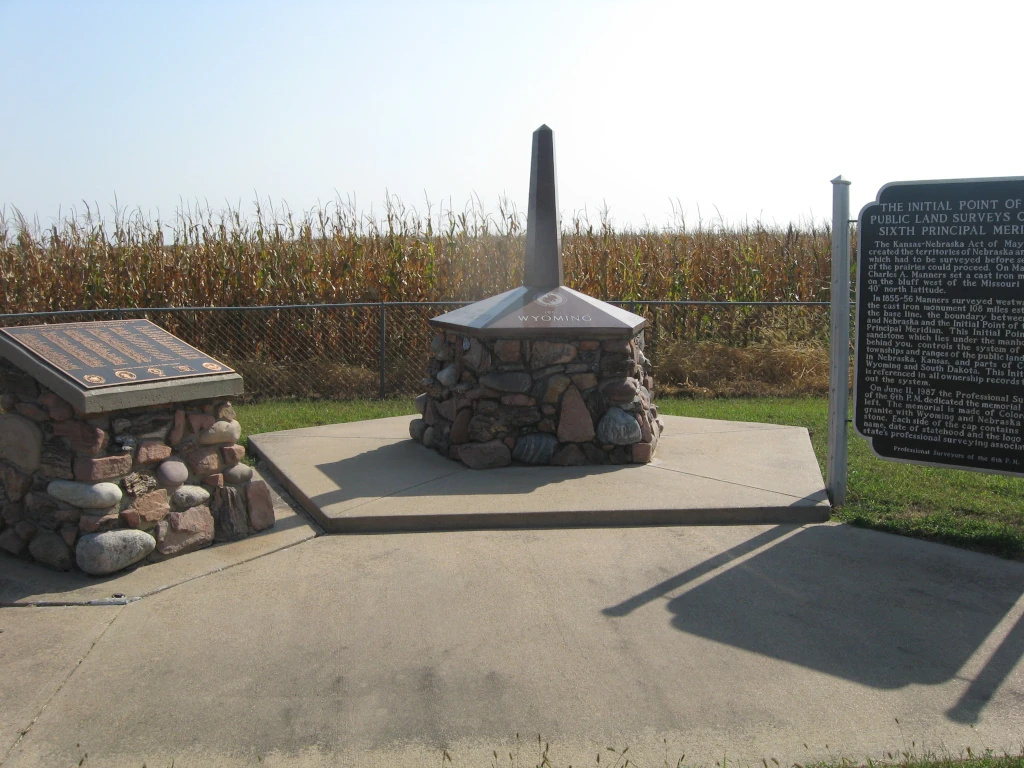


submitted by illinoisbeekeeper
Good afternoon……….visited the marker again yesterday and was amazed at how ‘the old timers’ did it.
and a city near you
Be prepared before it’s too late … and “too late” appears to be close upon us.
originally posted by Jean Apr 17, 2007
Him: Nice ring. Topaz and diamonds?
Her: Thanks. Yes.
Him: Somebody likes you…
Her: Ha, yeah. I like me. I bought it.
Him: Hmmm… what’s your boyfriend supposed to buy?
Her: You’re assuming I have a boyfriend.
Him: Ah, independent woman.
Her: You say that like it’s a bad thing.
Him: Men like to feel needed, ya know.
Her: Men like convenience with no attachment.
Him: That can work out ok for women, too.
Her: Sometimes. I prefer to know who I’m having fun with.
Both sip their drinks quietly.
Him: Bartender, give this lady a drink on me.
Her: Bartender, this lady can buy her own drinks.
Him: Ouch.
Her: Why would you buy a woman something?
Him: (smiling) Well…
Her: Uh huh. Which is exactly why I said no.
Him: What if I’m your Prince Charming?
Her: I think I would’ve figured that out by now.
Him: You’ll never notice if you keep that wall up.
Her: Time for me to catch my flight.
She picks up her purse and walks out of the lounge.
Bartender: mmm mmmm… nice ass on that.
Him: Nice package all around.
Hope she lets someone buy her a drink someday.
I received an email today:
“You seem to be getting swamped with comments going to posts.
Does that make it any easier to fill up NAD? Readers seem to like it.“
I’m not swamped …
Sometimes a group of comments come in that I think are worth elevating to posts.
Sometimes they come in groups and I may spread them out a bit.
Sometimes I may miss a comment or two that would make a good post but they remain in the comments.
Sometimes I think they make better comments than posts.
I have plenty of material to fill space even if it’s just a pretty (or not) picture or two. I usually only put up one post per day but that’s not a hard and fast rule.
On the other hand, when I set up this site, I had hoped it would be sort of a community share board where readers would also submit their works for others to enjoy or comment upon – sometimes without my yapping involved.
I rarely censor anything. There was one post in the early days that did get canned; the author agreed and stated that even Gerard would have either deleted or not posted. To date, there have been 7,162 comments submitted with only 1 rejection. Only one reader has been blocked (very early on) and that was a known troll.
So go ahead, submit – or not – most anything you care to share. I will allow links but I prefer to not post something posted on another site unless it’s your own (for instance, I will link to a news article but I won’t post it). Jean is an example; she often submits things she’s posted on her site, Pondering.
Some subjects such as tranzies piss me off enough I (usually) wish to avoid the topic; such topics may get ignored or deleted at my discretion and depending on the phase of the moon.
If you make a comment and prefer it not be posted, mention that. If you’d like to submit a post without making a comment, send it to me at dt@newamericandigest.org
But don’t feel obligated to submit anything – this site will carry on for the foreseeable future in any case.
For those that might be interested (if not, close eyes for a moment), NAD averages about 120 visitors per day although those may not be unique visits; the top authors beyond myself are Jean, ghostsniper, Wild Wild West, and Anne; the top viewing countries are US (of course) and China (???) at about ½ US views with Japan and Italy far behind. United Kingdom and Canada get mentioned. Viewers from those last two might be subject to arrest for viewing this admittedly anti-globalist, non-politically correct, and definitely not properly woke site.
So that’s all the news that fit to be news for now.
Carry on …
PS: Comments are not moderated unless they have a lot of links (4 or 5 I think). Comments will appear as soon as they are entered; however, they may be edited by the commenter for a short period of time.
If you wish to say something to me without it being public, use the email address. Emails do not get published unless they are a submission for posting.
NORWEGIAN WOOD
I once had a girl
Or should I say
She once had me
She showed me her room
Isn’t it good
Norwegian wood
She asked me to stay
And she told me to sit anywhere
So I looked around
And I noticed there wasn’t a chair
I sat on a rug
Biding my time
Drinking her wine
We talked until two
And then she said
“It’s time for bed”
She told me she worked in the morning
And started to laugh
I told her I didn’t
And crawled off to sleep in the bath
And when I awoke
I was alone
This bird had flown
So I lit a fire
Isn’t it good
Norwegian wood
Here’s 2 instructional vids that break it down so even a caveman can grasp it.
Note, both show a capo on the 2nd fret but I never do that.
Depends on the comfort range of your voice.
My suggestion is to just play the chords until you are comfortable and no mistakes.
Then, sing the lyrics with the chords. This is more difficult than you might think but completely doable.
After you’ve assigned that to mental and muscle memory you can tackle the finger picking part which is fairly simple.
Note the finger picking mimics the voice-lyrics and it’ll come right to ya.
Song:
https://www.youtube.com/watch?v=Xu9S05QKk5k&list=RDXu9S05QKk5k&start_radio=1
Lesson 1:
https://www.youtube.com/watch?v=Z-KxxY4U3ag
Lesson 2:
https://www.youtube.com/watch?v=4BXzDOrjRro
And then there’s Stella:
https://www.youtube.com/watch?v=Q8zLY-eoIjU

by Anne in Comments
I lived in the SFO area and worked in the travel business from 1964 to 1978. I remember well both PSA and Air California. My mom lived in Orange County so I had multiple trips “down south” on both carriers. Was thrilled to death when Orange County Airport opened!
I was at Oakland airport when some boys came home and the entitled hippies of Berkeley met them with spit and nasty name calling.
But, mostly what I remember were those days in the fall of 1967 or Spring 1968. The days were crisp and clear–the light was so beautiful! I remember going up and down Knob Hill and seeing all those young men dressed in new uniforms. I remember mostly the sun shining off of those metal parts of their hats or coats. Stars and bars shimmered like gold. Us young travel professionals often had to be in the downtown Union square area for business. We would then take a quick run up to the “Top of the Mark” bar as would many of the higher ranking soldiers. You know the kids who had gotten some education and some rank from the military. OMG–how I remember that sunlight, those uncertain eyes, and tentative smiles of not real bravado! There were so many new uniforms in that city on those days!
by ghostsniper in Comments
In 2004 I posted this on the newspaper, Fort Myers News Press in Fort Myers, FL, as my alias at that time was “Bob Black” and I was instantly banned for life.
As you read this keep in mind it is 22 years old.
(9 out of 10 will not understand, or believe, these words)
===============
*Now* is a shadow of *was*, hollow and without form or substance, intangible.
Truth has been replaced by falsehood, honor removed by cowardice, selflessness succumbs to selfishness.
A random flash of media during the recent past highlights OJ, apathy, Menendez, aggression, Michael, deficit, Martha, deception, Kobe, revenge, Saddam, restriction, Osama.
The blue pill was easily gulped with a smile by all.
That you are a slave, like everyone else, you were born into bondage; born into a prison that you cannot smell or taste or touch; a prison for your mind.
The governing powers need things from us, not the least of which is our consent. To obtain our consent we are fed all manner of benefits. We are programmed from an early age to believe that such benefits are necessary. To obtain these benefits, a number of conduits are attached to each of us. Adhesion contracts like Social Security, a driver’s license; voter registration for a pretended choice of social masters, bank accounts where credit is manufactured for our use and other memberships, registrations, licenses, deeds and permits to insure the conduct of our affairs will be confined within the corporate governance.
We are given our own numbered *cube*, a social net provided by the gov’t. Educated according to mandates of the state, our belief system is further cultured by corporate media.
There are various forms of *welfare* should we succumb to poverty or disease. If we are threatened or in danger we can call 911. Govt’s job of *securing* us is made easier by the massive database tracking our movements, our finances, the location of our homes and businesses and our tax records. When old age creeps up, we can rely on gov’t to take care of us.
The corporate/gov’t/financial interface combines to create a massive illusion of benefits — the American dream. For the price of a promise to indebt our future labors, pay our taxes and play within the system, there are seemingly limitless toys, castles, comforts and consumables for those who believe in this system. For half our productivity taken in taxes (the other half in payments) and the deeds and title to whatever we think we own, gov’t and its private affiliates will take care of us.
To live in this environment, all we have to surrender is any genuine sense of independence, personal responsibility and our right to live freely and actually own the fruits of our labors.
A contingent of agents are deployed to combat any renegade humans who have a will for freedom from the world which surrounds us.
The system is the enemy, look around, what do you see? Businessmen, teachers, lawyers, carpenters. These people are part of that system and that makes them our enemies. They are not ready to see the truth and many are so hopelessly dependent on the system, they’ll fight to protect it.
Why will these people fight to protect a system that enslaves them? It’s all they know. And all their toys, castles, comforts and consumables will be gone without this holographic image. Their whole illusionary existence will evaporate, leaving them naked and alone.
What won’t these folx look at? They refuse to acknowledge they are funding their enslavement to a socialist homeland police state. Awhile back a few *truth seekers* traveled to D.C. for an eloquent conclusion to Freedom Drive 2002, exposing the fraud of the l6th Amendment, the IRS, and the federal income tax. But the *braindead* people remained comfortably in their coma, ever willing to pay a tax they do not owe. They fund Congress and the Nazi/moron president’s implementation of America’s new Third Reich, so they can feel *secure*.
Hidden away on the 6th floor of the Department of Justice building is the secret FISA Court. U. S. attorneys have been going there for years to get secret search warrants from in-house, rubberstamp judges under the guise of *national security*. This parallel *legal* system can order clandestine searches of citizens’ and non-citizens’ homes. From the *evidence* gathered, we can be secretly declared *enemy combatants* and held indefinitely at U. S. military bases.
Remember the detainment camps those paranoid conspiracy theorists told you about years ago?
U.S. officials claim they can detain and interrogate enemy combatants until the executive branch declares an end to the war on terrorism. This includes no access to lawyers or family members; investigations, interrogations, trials and punishments can be held without the protections secured by the Constitution. The Nazi/moron president’s administration says there is ample precedent for what it is doing. Are we following the *ample precedent* of a man named Hitler?
Meanwile, the Congress has passed the American Gestapo Authorization (Homeland Security) Act which defines a terrorist as:
*The term *terrorism* means any activity that — involves an act that is dangerous to human life or potentially destructive of critical infrastructure or key resources; and is a violation of the criminal laws of the United States or of any State or other subdivision of the United States; and appears to be intended to intimidate or coerce a civilian population; to influence the policy of a government by intimidation or coercion; or to affect the conduct of a government by mass destruction, assassination, or kidnapping.”
As a test for social compliance, 838 of the braindead recently passed blissfully through an unconstitutional random roadblock in Pittsburgh without *seeing* the real *terrorists* in Homeland Security’s new America — the police state. Is our present police state *dangerous to human life* and *destructive of critical infrastructure* like the Bill of Rights? Is it *against the laws* (18 USC 241; 242) to deprive a citizen of their right to travel and be secure in their persons, houses, papers and effects? Do random roadblocks, by design, *intimidate or coerce a civilian population*? What happens if you don’t comply with the roadblock?
The next test for braindead compliance will be mass inoculations for smallpox. Will the braindead population literally trample all over each other to get their shots as some officials predict? Has the vaccination imagery been so well entrenched in the braindeads’ minds that they will actually let mercury, monkey puss and aborted fetal tissue be injected under their skin based on an unproven theory that such things promote health and prevent disease?
And what greater system is there, than our current *fiat* financial system? We believe that a piece of paper with the picture of a dead president has the value of the number printed on it and that one dead president is more valuable than another. We don’t even consider that the use of this dead president paper is the direct cause of our own enslavement.
Have you ever seen your bank account? It’s not there. Only the slight-of-hand practiced by the teller and the accountant behind the scenes makes this illusion look real to the blue pill people.
Everything that built this great land, that drew from the largess, is gone, eroding from day one. It is now a rusted out hulk, dissolving into the sanddrifts of time. Memories of what once was and what will never be again dissipate as vapor, pried from your begging nostrils while you scream……..

from Comments – 10/22
… on public transportation, an airliner in my case, but my story ran a different course.
Pacific Southwest Airlines (PSA) was a regional airline that flew in California and was later engulfed by USAir in the 1980’s. And PSA stewardesses were legendary for being extremely attractive, remarkably so even back in the day when all stewardesses had to be attractive to get hired. This before stews were rebranded as “flight attendants” and, well, you know what happened to norms and standards after that.
I only got to fly PSA twice.
Home on leave going to Veet Nom and upon arrival at the airport to fly to California to catch the plane over, I missed my flight, and Ozark had no options that would get me there on time and oh fudge. But Frontier (the old Frontier, mind you) came through and got me to Oakland just in time to catch a cab to Travis AFB and arrive 5 minutes before AWOL time. Whew, that was cutting it too close! But, upon reflection, I shouldn’t have worried. After all, what were they gonna do, send me to Viet Nam?
Anyway. I was way back of the bus LAX to Oakland and standing waiting for the aisle to clear so I could go face my destiny when one of those drop-dead gorgeous PSA stews said hello, all friendly like. She was a stunning brunette about three inches shorter than I was putting her about 5’10 and she had big brown eyes like deep, dark pools. They sparkled. I was gob-smacked but managed to say hi and then she said, we hope you’ll fly with us again real soon.
Me too, I said, but it’ll be about a year.
Her face darkened and her smile vanished. Obviously, she knew what that meant. Oh, she said. You’re going over. That was not a question.
Yes, I said, and she gave me about a five-count look and then flashed me with a huge smile and said, well then, I hope you’ll fly with us again when you get back!
I freely admit to being scared shitless about “going over” and that big smile was exactly what I needed at that exact instant. But the aisle cleared and all I could say was, I’ll make a point of it and like the dumb hick kid I was, headed for the door without thinking GET HER ADDRESS AND PHONE NUMBER YOU BLITHERING IDIOT!
But I was all a-tither about the process of going off to present myself before The Great Abyss, and that did not occur to me until afterwards.
I did keep my promise, though. Upon return from SE Asia, our planeload was bused to Oakland Army Reception Station from Travis and after several hours of hurry-up and wait, do this, don’t do that, can’t you read the sign Army bullshit, turned us loose. Four of us shared a cab to SFO and despite a direct flight to Dallas being available, I caught a flight to LAX on PSA just on the off chance, you know, but that was not meant to be either. I might never have gone home if it had.
I’ve often wondered whatever became of her. I hope she found some wretchedly rich Capitalist who took her away from all that and kept her safe and warm and well taken care of and they lived charmed lives happily ever after THE END.
OK, show’s over. Y’all can go now.
Submitted by ghostsniper in response to Jean’s “Microscopic Welder”
Funny, I did work for Lockheed briefly in 1980 when I worked for Martin-Marietta in Torrance Calif making more money than a single dood should be allowed.
It wasn’t microscopic though, quite the opposite. Using a gantry I loaded 72′ long aluminum wing spars into a 750 ton stretcher and stretched them about 6 inches longer then they were. The explanation given to me was, that when aluminum molecules are stretched they become oval shaped and fit tighter together making them stronger.
An inked benchmark was applied to the surface of the spar and after it was stretched it was measured with a big micrometer and the increased length had to be within a certain range. Sometimes 2 or 3 stretches were required.
After the stretch the spas were loaded into huge train box cars and the cars were pushed into huge ovens and baked at 1440 degrees for 2-3 weeks constant. Supposedly stretching the aluminum makes the spars stronger but also makes them brittle and susceptible to cracking under stress, like when wings “wave” (flex) during flight. When the spars are baked it is similar to ageing and ageing makes aluminum more flexible. Thus, over time (ageing) the aluminum will become such (stressed) that it is not safe to be flown.
At the time I was in a probationary period of 3 months with the steelworkers union and they stipulate you cannot miss work without prior approval. You can’t just call in beforehand and say you’re not coming in. You have to have advanced approval. Well, on the evening of 09Jul80, 2 hours before my graveyard shift was going to start, my mother called and told me my dad in Fort Myers, FL had died and the funeral was in 3 days….
I called my job and explained the situation and that I was going to get a flight out that night. I was told that my message would be passed to my supervisor but I was not given “permission” to leave on the spot.
I skied out of LAX at 1:05am to FM, FL not knowing if I would have a job when I came back. I came back 5 days later and I had been fired. I bummed around for a couple months and tried to find another job but I got down to my last $100 and bought a ticket on the “dog” for 5 days of fun and adventure, back to FM, FL.
It wasn’t all dark shadows bounced off lunar eclipses. Just south of Tampa in a little place named Nokomis a beautiful blonde girl named Rose got on the bus and her and me hit it off immediately. I was going to Fort Myers and she was going 50 miles south to Naples. When the bus stopped at FM I didn’t get off. Her and me lived together for the next 6 months and then tragedy set in. I never heard from her again. Every Nov 5th I think about her cause that was her birthday.
She was a blinding ray of sunlight on a colorless dark night and I never really got over her. I looked her up on the web a few years ago and found out she died in a car crash in 2002.

so y’all just get a picture.