
Lucin Ponds
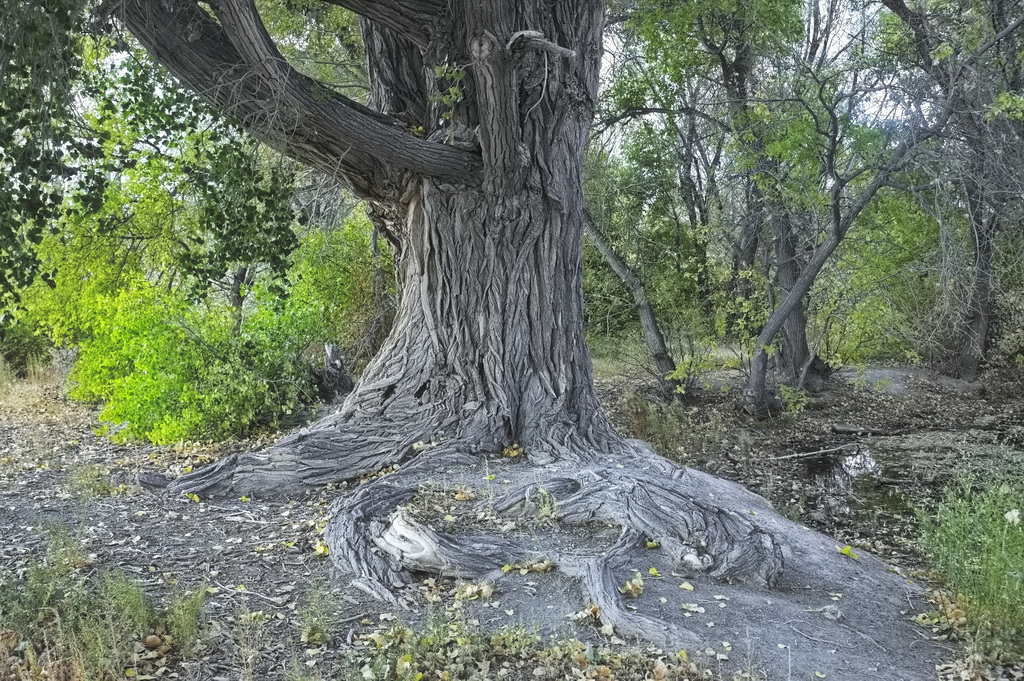
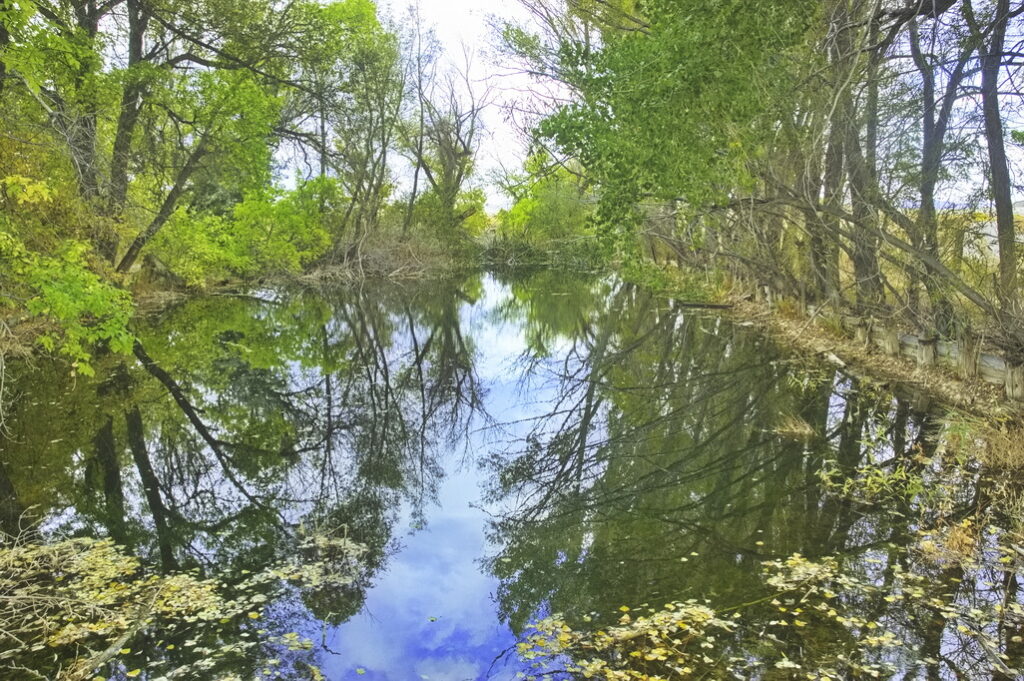
The Transcontinental Railroad passed by within a few rods of this watering hole in 1868 … which the railroad improved to serve both the station that once stood here as well as the locomotives heading either way into the deep deserts of northern Nevada and Utah. Lucin, Utah grew into a town of sorts, mostly railroad maintenance workers and their families. Then it stopped being anything …
I’m guessing a LOT of readers are scratching heads and mumbling ‘Rods?’
Went and looked at the place, a whole lotta nuthin goin’ on.
Same for many miles around there. Many, many miles.
Long ago and far away I took some surveying classes and learned every form of measurement known to civilized man. Then forgot most of them in short order. “Rods” are a form of measurement but I can’t tell any more than that, you’ll need to look it up on your own.
But I will provide your lunch dreem.
Ha! I thought Gary meant fishing rods. There’s a lot to be said about those too.
OK OK stop beggin’!
As a traditional unit of measurement, a rod is exactly 16.5 feet long. It is also equal to 5.5 yards or 5.0292 meters.
Quick Mathematical Conversions
Historical Context and Equivalencies
The rod—historically also referred to as a pole or a perch—originated in the Middle Ages. It was standardized based on the length of a wooden stick used by medieval ploughmen to guide their teams of oxen.
It served as a fundamental building block for larger traditional land measurements:
Modern Common Equivalents
While rarely used in day-to-day life today, you can still find it in specific contexts:
This past year I’ve been trying my hand at sourdough baking. Initially, I found it to very frustrating and the learning curve pretty steep. But I am starting to reliably produce some damned fine baked goods, if I do say so myself.
But one of my beefs with this sourdough thingi is that it has forced me into the metric system (Pa-tooohey). Everything gets weighed in grams. My objection is that if I’ve had to learn the imperial system, with inches and ounces and pints, and now rods (let’s not forget grains), then those Euros can do it too.
Maybe I should consider a post on the metric system … preferring imperial units myself. 9? or 357?
Keeping good sour dough starter is like having a pet that needs regular feeding but the baked results are so worth the trouble.
And you can freeze it if you want to take a maintenance break.
Good on you for trying something new.
I usually just eyeball my measurements – for bread basically 3 cups of flour and half the amount of water, 1 and 1/2 cups plus the starter and/or yeast. It pretty much never fails. Pounds grams it’s not so important…just the proportions.
Thanks DT! One simple word sent me spinning down a rabbit hole, and by the time I got back Ghost had already provided all of the relevant answers anyway. Guess I should have waited a couple hours. 🙂
I like rabbit holes …
of course you do… 🙂
Ahh. The true origin of a mile, 320 rods. That whole 5280 feet seemed rather arbitrary. Thanks for the info.
Lucin has a semi-famous resident these days, Ivo Zdarsky: https://www.smithsonianmag.com/history/the-man-who-pierced-the-iron-curtain-in-a-flying-go-kartand-left-civilization-forever-180982739/
This is a great quote: “The communists didn’t really like what I did.”