Imagine spending money all day everyday and never having to answer for it.
Imagine a million gov’t employees doing the same. Every. Dam. Day. And NO accountability.
Think about the shenanigans you could conjure.
The unaccountable spending has gone on for decades, many decades, and no one has any idea how much has been spent. That $38til is just a wild assed guessed with no way to prove it. There is no audit on anything.
20 years ago there was a long and intense article on Lew Rockwell’s site that was very well written to where even a cave man could understand it. It laid it all out in detail and the gist of it was that the best unbiased guess is, at that time (20 years ago) the US gov’t was in debt more than 200,000 trillion dollars. Read that again. I don’t know if my keyboard has that many zeros in it, let’s see. $2,000,000,000,000,000,000.00
OK, I had to make a deal with my keyboard that I won’t use any more zeros for 3 more days cause I’m over the limit. See, here in the real world we have limits.
The gov’t has no limit. It makes the rules and breaks them when it wants and the rest of us still have to follow them.
$200k trillion is MORE than the value of everything on the planet. Though I’ve read about it numerous times I still do not have a clear picture of WHO that money is owed to. Stands to reason, whomever it is, they would be the wealthiest entity ever, if they collected it all at one time.
Talking about the gov’t debt is a circular (il)logic similar to the idea of the US gov’t itself. Think about it. “Of the people, by the people, for the people.” What the hell does that even mean? I, for one, take no responsibility for anything this criminal assed gov’t has ever done. I reject the notion that it does what it does, for me. I never asked it for anything.
As far as I have ever seen, this rotten assed gov’t is an entity in and of itself has zero to nothing to do with the average citizen. I can only speak for myself when I say that I have never known this gov’t to have ever done anything, anything at all, that was to MY benefit. Giving back some of what it stole from me is not a benefit. In my 71 years on this earth I have never received even one thing from this shitty gov’t that I didn’t pay dearly for. What I have received from it has been many lifetimes worth of grief on a scale that is unbelievable.
This lab stuff that DT brought up? Sure, I believe it happened. Why wouldn’t I? Why wouldn’t any sentient human believe it? The employees of the gov’t don’t care what you believe because they know that there is absolutely nothing you nor anyone else can do about it. NO accountability!
I also believe this lab stuff is fairly mild stuff compared to lots of other things this criminal gov’t is involved in. Ever wonder how much skin can be peeled from a living human before it succumbs to shock? The gov’t knows.
Frankly, my trodden path has revealed such that there is nothing about this rotten assed gov’t that I wouldn’t believe. Once, when I was young and naïve, I put my life on the line for this gov’t and almost lost it all – and I pay the price to this day (in 1 week it will have been 51 years (20APR75)). I will never do that again. For decades at least I have been on “the other side”, and likely will remain there.
Here’s the first chapter in the story of “My Current Disaster” and there may be a 2nd chapter later.
===============
I have been a licensed AutoCAD user since 1996. That is, I actually purchased the very expensive software ($3500) and did the expensive yearly upgrades. By 2005 I was tired of paying for the yearly $1000 upgrades and just stopped buying them. I never even installed the 2005 version and still use the 2004 version.
(By 2005 I had paid AutoDesk more than $10,000 for their software.)
That AutoCAD (Acad) is installed on an old refurbished Dell computer with the Windows XP operating system. XP, to me, is the best version and Windows has continuously went down hill in subsequent versions.
(I had originally had Acad installed on a brand new Dell computer but it failed in 2010 and Windows XP machines were no longer for sale, but I found refurbished models on Amazon, and when the other one failed I installed Acad on the refurbished one and AutoDesk was still doing 2 part certifications at that time.)
Well that refurbished XP machine was 15 years old and it finally quit last Monday. Panic sets in. See, Acad requires a 2 part installation certification and AutoDesk no longer does the 2nd part.
When Acad is installed it requires the serial number on the CD case. After the serial is installed the computer logs into AutoDesks website and it generates a 2nd serial that you have to type into the computer. An XP machine will no longer go online and AutoDesk no longer offers “support”, so there is no way to install my AutoCAD 2004 in another XP machine. Nor can Acad 2004 be installed on a new Windows 10 or 11 machine.
Have I lost ya yet? lol
AutoCAD is how I design buildings, some 3000 projects since 1996, and without it I am basically shut down. I have projects I am working on that are at a standstill right now.
We spent more money today than in the past 6 months. (house was paid off last Dec)
First, the income tax, both fed and state, went out in certified mail. 20+ years ago we got slammed between the criminal IRS and the criminal USPS with the result being a $1300 penalty for not paying our taxes on time even though we did. We sent them in by the regular mail like we always did before. But the USPS dragged it’s feets and the IRS didn’t receive the payment until after the deadline. We tried, but found out, you simply cannot argue with the criminals. I’ll not disclose how much was sent today because the very though ignites all my fibers.
Next up.
The vehicle insurance for 2 rides. I pay by the year because it’s less expensive overall. Almost a thou. Then, about 2 months ago very high winds tore through here and knocked over 2 white pine trees about 100′ tall. One hit the ground but the other one got hung up on a 40 degree angle in a very large beech tree. Very dangerous, and our power pole was within the arc.
So: 1 cherry picker 2 trees 3 experienced doods 4 thousand of my favorite legal tenders made the problem go away.
We’re not used to the idea of spending that kinda money, and not getting anything for it. We already owned the trees, and we still have them, but they are now cut up and no longer live and function like the did for all of their lives. So yeah, money for nuthin and the sticks for free. or sumfink like that…
Anyway, the doods did a good job, took only about 3 hours, and though we paid them with a check, I gave them a $100 cash tip.
Further, the owner asked what I do and I told him I’m an arky and he said he may have some work for me. So there’s that.
Submitted by ghost via comments At least, I hope he's OK with me turning a comment into a post. He writes a good story and lets us enjoy his writings every once in a while. Commented April 1
Welp, today my next younger brother would have turned 70. He died 15 years ago or so. I don’t remember. He and I had been on and off again most of the time since we were both teens. Mostly off. His choice.
I mentioned this brother awhile back. A kid was beating his ass one time and I came to his rescue by putting the kid in the emergency room, when I was 10. In another year or so me and this brother started drifting apart.
Though he and I were only 14 months apart in age the school system had us 2 grades apart. Grades 1-6 he and I saw each other day but in 7th and 8th grade I went to another school and that’s where the gap started, and it never closed up.
When I turned 19 I went in the army and it was 10+ years before I saw this brother again. I was married with a kid on the way and he had been in and out of jail many times. Never violent, he just couldn’t keep his hands off other peoples stuff.
In our early 30’s his lifestyle was such that it effected his appearance and not for the good. He looked like a down on his luck criminal. We spoke kindly to each other, but he looked so diff from the last time I had seen him that I was very wary of him. I had been a soldier and he had been a thief.
I wanted to help him. Lacking much cash at the moment, (1986) I wrote him a check for $100. He pulled out a lighter and set it on fire and dropped it in an ashtray. Then left. My wife and I just looked at each other.
It was about another 10 years when I saw him again. Our son was a young teen, my wife and I had been married about 14 years and I had been running my architecture business for 10 years.
It was in the evening and I was out in our garage doing something and an old van pulled into the driveway and my brother got out. I didn’t recognize him at first. He was looking rough. Real rough. We chatted in the driveway and I felt uncomfortable and he did too. He left and I never seen him again. This was in the late 90’s.
Over the years I heard about him now and then, from my sisters, other brother, and my mother who lived in San Diego. He kept doing drugs, stealing stuff, getting caught, doing a little bit of time in the can, over and over.
He would bounce around the country, Fort Myers, FL, a place in ARK, and San Diego. Working shitty jobs, getting fired or quitting, petty theft, shoplifting, drugs, jail, release, living with cheap women….over and over, never getting any real traction.
I had a sister, 2 years younger than this brother (she’s now dead too) that was married with 2 daughters and sometimes this brother would stay at her house until he wore his welcome out. Then he’d move in with my mother and her husband (not my dad – he died in 1980), until he got throwed out of there too. Back n forth, no traction.
Somewhere in the early 00’s, don’t remember when, I got a call from my San Diego (really Lemon Grove) sister telling me our brother had died, on her front door step. She was at work at the time and found him when she came home. The best they could tell is he died from a massive heart attack from drug use. I can’t remember the drug right now as I write this, I think it starts with an M. I never tried it nor knew anyone that had.
A few weeks later my mother cut my brothers obituary out of the paper and sent it to me. It’s in a small lockbox I have with such things in it. My Dad’s obit is in there. As well as my mothers, my other brother’s, and my youngest sisters. Of our immediate fambly the only obits that aren’t in that lockbox are my oldest sister’s (3 years younger than me) and mine.
Like my brother was most of my life, I don’t know where that lockbox is right now.
There’s still one more chapter in this story.
Throughout the years, starting in the mid 70’s my bother had an on again off again with a woman named Lorie. She was a lowly person and I didn’t care for her. My brother was always going back and forth with her. When he went to jail she’d hook up with another dood, sometimes marrying, and a couple years later she’d take back up with my brother when he got out. Over and over. Turns out that my brother and Lorie had spawned 2 little girls and put them up for adoption. Both girls were adopted by a very wealthy and childless couple.
10 years ago I got an email from a young woman in Chicago that told me she was one of those adopted girls and wanted me to tell her about her father. She had learned he was dead and knew almost nothing about him. She wanted to have a family relationship with his family.
I didn’t reply for 3 days, I didn’t know what to say. It took me that long to find and install my “Hat of Diplomacy”. I needed to carefully carve a set of words that conveyed my thoughts to her in such a way that I gave her some meaningful information without lying or hiding the truth, but not going too far.
Having any sort of meaningful relationship with this young woman who was in her early 20 and married with a daughter seemed like it would be awkward and strained, and what would be the point? Our only connection was her father and my brother and neither one us knew him very well, or, in her case, at all. I told her that and I never heard from her again.
On this day every year I think of this stuff. Then tomorrow I put everything back in that lockbox, until next year….
written by ghostsniper; published by Gerard Dec 27, 2020
“Take away a man’s livelihood and he starts to die.”
I saw Jim back in June and he was walking with a cane and had lost considerable weight. His speech was soft but clear and he had nothing but good words to say, as always. I have known Jim for 15 years.
In 1966 Jim Brester graduated from college and set up his own veterinarian office over here on 135 in Bean Blossom, about 1.5 miles from our house. We had 2 dogs and I met Jim shortly after we moved here. People came from hundreds of miles around for Jim’s vet service and the parking lot at his place was always slammed hard. There was always a several hour wait to get in. They didn’t take appointments.
I took both dogs to Brester’s to get full examinations and shots, total cost was $40. Both dogs.
Once, one of our mutt’s had a problem, don’t remember what right now, but after I put her up on the table Jim stood in front of her, outstretched hand on top of her head and the other on her side and stroked her gently. Then he bent down to her level and looked in her eyes.
Before my very eyes, I saw a Vulcan mind-meld occur. As he stared in Lady’s eyes his head turned slightly to the side, like he was reading an unheard message from her. Then he stood upright, grabbed a glass syringe from the cabinet and triple loaded it with some chemicals, bunched up the skin on her shoulders, and gave her the shot.
I asked him what was wrong and he said she had an ear infection. Then he grabbed a cloth, applied a solution, and deeply cleaned her ears out which were full of brownish material. In a few days, Lady was her same ol’ self and Brester had charged $15 for that service.
5 years ago an out of state woman wasn’t happy with the primitive service she received at Jim Brester’s place and lodged a complaint with the state. In hours, through social media, hundreds of people jumped to Doctor Brester’s defense. The state dismissed the complaint.
A year later someone else filed a complaint so the state inspected his place and decided it was not up to par with where it needed to be. They didn’t have a $500k x-ray machine, etc. To do all the things the state demanded meant Brester’s place would never again be his dream.
See, Jim Brester got up early every morning and made the rounds out through the many farms in the area, checking in on sick cows, pregnant horses, immunizing every kind of farm animal and people’s pets. He also supervised all the animals at the 4H clubs in the area as well as judged animals at the county fair for the past 40 years. The care of animals was the reason Jim Brester got up every morning.
Unwilling to “update” his made-from-scratch business to be something he didn’t want or understand, 78-year-old Jim shut it down. Within a month a chain vet company bought the place, filled it with airheads in white coats, and quadrupled the prices and everybody had to have an appointment. I took my mutt Shannon there last year and a basic exam and a rabies shot cost $80.
When I talked to Jim this past summer the shine was gone from his eyes. He still spoke kindly like always but I could tell things were different now. They took away his reason for living and when you stop living you start dying.
— ghostsniper December 24, 2020, 12:40 PM
Dr Brester died 2 days before I wrote this.
Original article here: https://bcdemocrat dot com/2020/12/23/goodbye-doc-well-known-veterinarian-passes/
from a comment on "Silver Banner Mine" by ghostsniper
BREASTMILK
She thought she was studying milk. What she uncovered was a conversation.
In 2008, evolutionary anthropologist Katie Hinde was working in a primate research lab in California, analyzing breast milk from rhesus macaque mothers. She had hundreds of samples and thousands of data points. Everything looked ordinary—until one pattern refused to go away.
Mothers raising sons produced milk richer in fat and protein. Mothers raising daughters produced a larger volume with different nutrient balances.
It was consistent. Repeatable. And deeply uncomfortable for the scientific consensus.
Colleagues suggested error. Noise. Statistical coincidence. But Katie trusted the data.
And the data pointed to a radical idea.
Milk is not just nutrition. It is information.
For decades, biology treated breast milk as simple fuel. Calories in. Growth out. But if milk were only calories, why would it change depending on the sex of the baby?
Katie kept digging.
Across more than 250 mothers and over 700 sampling events, the story grew more complex. Younger, first-time mothers produced milk with fewer calories but significantly higher levels of cortisol—the stress hormone.
The babies who drank it grew faster. They were also more alert, more cautious, more anxious.
Milk wasn’t just building bodies. It was shaping behavior.
Then came the discovery that changed everything.
When a baby nurses, microscopic amounts of saliva flow back into the breast. That saliva carries biological signals about the infant’s immune system. If the baby is getting sick, the mother’s body detects it.
Within hours, the milk changes.
White blood cells surge. Macrophages multiply. Targeted antibodies appear.
When the baby recovers, the milk returns to baseline.
This was not coincidence. It was call and response.
A biological dialogue refined over millions of years. Invisible—until someone thought to listen.
As Katie reviewed existing research, she noticed something unsettling. There were twice as many scientific studies on erectile dysfunction as on breast milk composition.
The first food every human consumes. The substance that shaped our species. Largely ignored.
So she did something bold.
She launched a blog with a deliberately provocative name: Mammals Suck Milk. It exploded. Over a million readers in its first year. Parents. Doctors. Scientists. People asking questions research had skipped.
The discoveries kept coming.
Milk changes by time of day. Foremilk differs from hindmilk. Human milk contains over 200 oligosaccharides babies can’t digest—because they exist to feed beneficial gut bacteria. Every mother’s milk is biologically unique.
In 2017, Katie brought this work to a TED stage. In 2020, it reached a global audience through Netflix’s Babies. Today, at Arizona State University’s Comparative Lactation Lab, she continues reshaping how medicine understands infant development, neonatal care, formula design, and public health.
The implications are staggering.
Milk has been evolving for more than 200 million years—longer than dinosaurs walked the Earth. What we once dismissed as simple nourishment is one of the most sophisticated communication systems biology has ever produced.
Katie Hinde didn’t just study milk. She revealed that nourishment is intelligence. A living, responsive system shaping who we become before we ever speak.
All because one scientist refused to accept that half the story was “measurement error.”
Sometimes the biggest revolutions begin by listening to what everyone else ignores.
Welp, it was 40 years ago today that I started my architectural design business.
Time flies…..
Was living in Fort Myers, Florida at the time, 30 years old, been married a year and a half, had an infant son, and was working at the best job I ever had getting paid more than I deserved, for the largest architecture firm in the state. I was a lead designer and was treated like a king by everybody there. But then, I did work like they never seen before, nor since.
I landed that job in the summer of 85 and they offered to pay me MORE than what I was asking for. I was not yet an architect so my title was Lead Designer and I was doing design work on their biggest projects. Sarasota Justice Center. Tampa Stadium. Sugarloaf Key Elementary School. St Anthony Church restoration (oldest church in Florida), etc.
All of that stuff was a piece of cake and not nearly enough to sate my drive. I was burning hard at both ends and exploding in the middle. Out of our little rented house I was doing side jobs, nights and weekends after working 60 hour weeks at “the firm”. Residential remodeling and additions, single family homes, multi-family buildings, new commercial construction, everything. I turned nothing away and kept trying for more.
Soon, I realized I was earning more money on my own than at my well paid job, so the job had to go. Now I could devote all of my time to my goal.
My wife didn’t work until our son was 5 and started school so she handled the books for my business. It didn’t take long before I realized this wasn’t going to work. Some people can some how work with their wife, I cannot.
I moved my business into an office, expanded my licenses statewide, and hired an accountant to handle all the bookwork. I hired a part time drafter. I aligned (joint ventures) with 2 architects for larger projects. The whole thing was upwardly mobile.
Some of my projects started winning contests and awards. During 1990 I had designed more model home centers in the 3 county area than anyone else and I hired 2 more drafters and a full time administrative assistant and I started attending real estate school.
In 1994 I started getting involved with CAD, Computer Aided Design, and kicked everything into high gear. I was doing some of the largest projects in the area and was attracting some celebrity attention for specialized projects. I did one gov’t project, lost my ass on it, and never did another one.
By 2000 I was realigned with reality, trimming the fat, becoming more specialized. I could pick and choose my projects. I only wanted to design large scale custom homes on islands. That’s where the top quality projects intersected with top quality clients and pay. I was the exclusive designer for the islands of Sanibel, Captiva, Bokeelia, Cayo Costa, Useppa, and Boca Grand. Top shelf material all the way around.
Since 2010 I have slowed down a little, only doing 10-20 projects a year. No office, no employees, just me and some sub-contract associates in Florida. Last year I completed my last commercial project. I will continue to do preliminary design work on commercial projects but all construction documents will be handled by others. I’ll keep designing custom homes too.
Since I was 11 and in 7th grade I had a pretty clear view of what I wanted to do for the rest of my life as a vocation. Design buildings. There have been many challenges along the way. Heartbreaks. Massive frustrations. Months on end of irritable clients, projects, and gov’t overbearance. More than once I wanted to give up. Throw the towel in. Just go get a job and let others be responsible. But after a few brews, a puff of smoke, and a few hours or snoring, and 6 am the next day I was always back at it. Never giving up.
I’m old now, and I want to work up til I die. But the reality of such a thing is not good thinking. In earlier times this had never occurred to me. Getting old is something you do alone, and you learn alone.
Last Sept my mutt Shannon died and I told my wife I’ll not get another mutt and thrust it onto someone else when I die. Similarly, I don’t want to leave my clients high and dry when I die. Uncompleted projects that would probably be locked up in probate to where other people would not be able to complete them. Such a condition could cause problems for my wife. I won’t let that happen.
I learned how to start and successfully run a business for more than half my life and now I must learn the reverse, how to shut it down, and when. How do you stop doing something that has been so good to you for so long?
Watching the Mourning doves in the yard walking around, their heads constantly bobbing back and forth as they are in motion only stopping when they stop moving. How can they see, plainly, while their heads are bobbing?
Triangulation. Simple geometry.
When the head is in the forward position they snap a picture, then a microsecond later when the head is in the rear position they take another pik. Instantly, their brain compares the 2 images and gives them the info they need.
Distance, height, color, etc. And much more. Their eyebals do not rotate in the sockets, the position of each is fixed, and from different sides of their heads. It can get complicated. To you. To them it is the only life they ever knew. From the day they are born.
To you it may seem a handicap, to them it just is. Imagine flying, through the branches and trees of a forest with eyes like that. They do it well. You, though, would crash and burn instantly.
You think your eyes see continuously while moving them around in their sockets but they do not. They are like a movie camera in that they take many pictures per second and stitch them together in your brain and make you think it is one continuous movie. Movie cameras take pictures rated at number of frames per second. Old skool TV was about 60 frames per second, and if, while viewing, you turned your head quickly from side to side you could catch a glimpse of this reality. Newer TV have a much higher frame rate.
While reading this, if you stop and focus on each letter in each word you will notice that in each position your eye is focused on you will only be able to see a few letters and the rest will sort of blur out. Then, seemingly fluidly, you will move your eyes to the next “group” of letters, that were formerly blurred and they will now be in focus and the previous letters will be blurred. There is no continuous focus. You can see this more clearly at night, with clear night vision.**
With each advancement of your seeing eyes they are doing what the doves eyes do. Sending a signal to your brain that then stitches all of the stops into a seemingly continuous movement. What your eyeball does while rotating in the socket is what takes the Mourning Dove an entire head movement to do.
Fascinating, no?
**If, in darkness, you look directly at something at a distance, it will seem to be in an unfocused cloud. This is because of a blind spot on the rear of the eye where the retina cord connects. (there is a technical term for this but it eludes me at the moment) Therefore, if you want to look at a thing in the dark you need to avert your focus a little to one side or the other. In a way, your peripheral vision is better than your direct vision.
Everyone’s got an old bar-greasy spoon in their background somewhere don’t they? Mine was named “Pete’s Hangover” and it was right on 41 in south Fort Myers, FL.
It was an especially low point in my life, got laid off and had a problem getting employment. I worked for Wicks Component Manuf as a draftsman designing roof truss plans and wall panel plans. Then, POOF, gone. I thought everything was going good, moved into a brand new furnished duplex that no one had lived in before and was just settled in when the rug got yanked. I didn’t do anything wrong, the problem was further up the ladder. 70 people got laid off and I was one of them.
Pete’s was up the road a piece and I had been in there a time or 2 but it was a “biker bar” in the truest sense and I hadn’t frequented it before. But no, times were tuff, money short, prospects vacant, so I started hanging there. Even did a little drink slinging for coin and guzz. I even snagged a few “gurlfrenz” while slinging there. That only went on for a couple months and nothing bad came from it. I was working day labor joints during the days I could get picked up and the rest of the time I was scanning the paper and running down leads, mostly to no avail.
The unemployment started in June and ended in Jan when I finally landed permanent employment working as an architectural designer at what was then the best place I ever worked. I had been working there for a month, making decent money, climbing up out of the hole, then BLAM!, I got slammed into the shitcan, HARD!
At least hard for me. This was an environ I was unfamiliar with and didn’t like. I had an old shitty ride, an ocean liner, a 74 Mercury Montego. During my unemployment phase, when coin was non existent, I didn’t pay for the insurance, and that caused the registration to be null and void which caused my license to be suspended. jeez….could it be any worse?
Yes. Much worse. I pulled out from Canal St onto 41 headed south to my crib and no one had notified me that that was now a non legal move. Didn’t used to be. No left hand turn from Canal onto 41. Well, as luck would have it, Johnny Law was watching. woo-woo-woo-woo When he ran my plate he found out everything and I went to the shitcan. No if ands or buts.
The city jail was unbelievably rancid. Built a hundred years before, never cleaned, no air condition, and criminal negro’s as far as the eye could see. jeeziss I spent 1 night/day there then went to the big house in the county, a newer, nicer place with AC and some elbow room. The worst part was shear boredom. Had 4 cellmates, all white doods about my age, for various silly offenses.
The judge had given me 5 days because I had no money to pay the fines. 3 days in and my brand new boss showed up with a checkbook and in an hour he had sprung me. A friend had seen my ride parked in the lot of a beauty parlor (where I pulled in when the cop pulled me over) and thought it was sitting there because I went to jail. He contacted my boss to find out where I was. Instantly the boss said “Liz (his secretary), grab the checkbook and come on, Ghost is in jail.”
Couple weeks later I went into Pete’s Hangover but it was changed, er, I was changed. I was movin’ on up, as they say. The grungyness was manifold and this was no longer comfortable. I never went into Pete’s again after that and life went on.
Just looked Pete’s up on the map and it’s been cleaned up a little and is now one of them rent-a-furniture places. One of these days I’m gonna write book. Maybe it’ll have better spelling and grammer, but prolly not.
by ghostsniper This is probably the longest review ever written on Amazon and I wrote it over 15 years ago.
Reviewed in the United States on January 23, 2009
Get a cup of coffee and sit back in your easy chair for a spell and I’ll tell you a little story called “The Nightmare Before (and after) Christmas”.
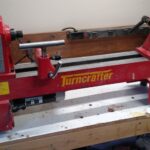
My wife bought this PSI Turncrafter wood lathe for me as a Christmas present, wasn’t that nice of her? Quite frankly, I was shocked on Christmas morning, and elated!
30 minutes into it the motor just stopped, didn’t overheat. Unplugged the motor from the speed unit and connected power directly to it, still wouldn’t work.
Called PSI the next day and spoke to Judy who referred me to Joe Roberts and he told me to send the motor and speed unit to them and they would immediately check it out and send me a new one (cost me $15 to send it back). That was lie 1.
A week later I called them to see whats up and Joe Roberts told me the motor hadn’t come in yet but he would call me when it did. Lie 2.
3 days later I called again and Judy told me she couldn’t find Joe but she’d have him call me. Lie 3.
At this point I start documenting this stuff.
I called the next day and Joe said he didn’t remember talking to me before but would check the motor and call me back but he never did. Lies 4&5.
I called the next day and Judy told me they were having inventory so there was no way my motor had been received by them and transferred me to someones voicemail so I left a message, and no one ever called me back. sigh.
I called back and asked to speak to Joe and he told me because it was Friday he’d send me a new motor the following Monday. So on Tues I called and Joe said he sent the motor on Mon and would call me the next morning (Wed) with the tracking number. He didn’t call. Lie 6.
I called the following Tues and Joe said he didn’t send the motor and forgot to call me but he had a new motor in hand and would send it to me that day and call me the next morning with the tracking number.
Now we are up to today, Jan 22, and I spoke to Joe this morning and he said he sent the motor yesterday and would call me back with the tracking number which he did, but the tracking number showed (via the UPS website) that what he shipped only weighed 2.3 lbs and was going to a different state than where I lived.
I called back and Joe said there was a mix up and he’d call me back with the correct tracking number. He never did. I don’t know how many times he has lied to me at this point.
So here it is, exactly 1 month since this lathe was purchased and paid for and all I have is a heavy piece of metal that doesn’t do anything and a severe case of irritation over this whole mess.
If I don’t have a new motor and speed unit by close of business on Monday the 26th of Jan I’m going to box the thing up and send it back to Amazon.
I mean really, have you ever heard of anything like this before?
I haven’t, and I don’t think a customer should have to go through this, especially with a Christmas present. Some gift.
I can’t recommend this machine due to the irresponsible performance of the people that work for PSI.
Oh yeah, one more thing, this Joe Roberts has a nasty little laugh he does almost constantly while talking that just drives you up the wall.
If it was up to me he would be standing in the soup line right now.
And all I wanted to do was spin pieces of wood to resemble visions in my mind……..
Part Deux:
Its now been about 4 months since this lathe was purchased. As stated above dealing with Penn State has been a nightmare, specifically the enormous amount of lying by the guy in charge named Joe. He’s still there and he’s still lying.
Anyway, in frustration I scoured the web and found out there are 2 parts to the Penn Sate industry and up to that point I had been dealing with the part that was mentioned in the User Manual at […]. Don’t call that number unless you are a glutton for abuse.
Instead, call […] and speak to Mark ( […] ). When I called he was the one that answered the phone. You can tell instantly that Mark knows what he’s doing and he is used to getting stuff done, and solving problems.
Mark told me their lathes are made in China and recently they have been having a lot of problems with them as I outlined above and he had no solution for me but he said he would send me a new motor and speed controller which he did and they arrived in a few days. The same problem occurred. The lathe initially worked fine then out of nowhere it stopped and wouldn’t come on again. A few days later it would come on but would then go off again. I called Mark and he sent me a 3rd motor. That motor has worked fine to this day. However, there have been a few times when it would stop for no apparent reason and after pushing the reset button on the speed control unit it would run again.
I still don’t know the reason why this thing acts like it does nor does Mark, however I now have 2 extra motors and 1 extra speed control for backup.
Here’s what I think. I think the issue is in the speed control unit, specifically, the reset switch. It doesn’t has a positive feel to it when you press it. You can’t tell if its been pressed or not when you press it. The button itself seems loose in the housing and its just a matter of luck if it makes a connection or not. One of these days I’ll get around to purchasing an after market push button switch and see if that clears the problem up.
Having said all of that, in the past 3 months I have turned over 300 pens and various other things and am very happy with the quality of the unit except as indicated above.
Last week I decided to turn a small bowl which means using the included faceplate. After turning the bowl I went to remove the faceplate from the lathe and realized that a special tool is necessary to do so and it was not included with the stuff that came with the lathe. The main shaft in the headstock has 2 small holes drilled into it and I inserted a cylindrical drift pin into it while turning the faceplate with a 1″ open end wrench and it came undone.
I called the original Penn State number and requested the special wrench that was missing and that idiot Joe said no problem, he’ll send me one, then he asked if I purchased the lathe from them. I had already given him the serial number and he looked me up in the database. I told him I purchased it from amazon and he said, “Well that's a whole different story, you’re gonna have to send me a copy of your receipt so I can verify it.” So now I have to find the receipt and go somewhere and make a copy of it and snail mail it to him in order to fix a problem THEY created by not including the wrench in the first place. Well, Monday morning I’m calling Mark and see what he says and if he says he’ll send me a new wrench I’m gonna tell him he needs to fire that idiot Joe.
I hope no one else has to go through what I have and if you do have problems I hope the info above helps out. It really is a decent lathe but unfortunately the support is horrendous and its up to pure luck how your history will be with it.
Epilogue
Here it is a little more than a year later and I have no good news to add to this review. In the past year this lathe has brought me ecstasy and agony (kinda like being married) but mainly the latter. It is very unpredictable and that is frustrating. If I knew what was wrong I’d fix it, but I don’t so I can’t.
Just this morning I turned a pen, then stopped to eat lunch. When I came back to finish the pen the motor would not come on. I pressed the reset switch a gazillion times and still nothing. I tried 2 different motors and 3 different variable speed switches and still the thing does not work. Irritating. So I just fired off another email to Mark at Penn State (…), I doubt anything will get done about it.
In the past year, while dealing with an at times severely handicapped lathe, I have managed to turn about 300 pens and 30 bowls up to 9.5″ dia x 5″ deep and various other things like gavels, mallets, candle sticks, finials, etc., maybe 500 items all said and done. But because of the way this lathe works or doesn’t work it took 10 times longer to do all those things. You see, my problem was that I quickly became severely addicted to turning stuff. I can take a piece of raw material, say a piece of hickory from a tree that blew down in our yard, and then in the magical realm of the corner of my workshop convert that old chunk of wood into something everybody just drools over. Serious. Its easy to make bad stuff look good on a lathe if you pay attention, settle for nothing but the best and never quit.
My 3 rules for life. Because the lathe is inherently dangerous you MUST pay attention and stay focused. I’ve had a few minor mishaps, while wiping the shaving off the toolrest my finger got caught against the spinning material and yes I was rewarded with a nice blood blister for that infraction. I was holding a piece of 4/0 steel wool against a piece of wood and it caught and exploded, blowing the flotsam all up in my face and the whole area – what a mess. And I even had a few items fly clean off the lathe, over my shoulder and hit the wall on the other side of the room. I also have a few scars on the backs of my knuckles from rubbing against the edge of spinning bowls. Did I mention how much sawdust these things create? Jayziss. I have 3 60 gallon trashcans full of that stuff and I don’t know what I’m going to do with it. Just one bowl will generate about 5 gallons of shavings. Funny, you put a $20 piece of walnut on the lathe and then about $15 worth of it ends up on the floor.
I found turning to be sort of like therapy. I can stand there for hours working my art and thinking about stuff. You get a certain song going through your head like they do and you start thinking about a certain topic and the next thing you know 6 hours have flown by and you’ve solved all the worlds problems too, and that dam song is STILL going through your head. I can’t tell you how many times in the past year I’ve been late to supper, late taking the dogs out, late to just about everything. Time seems to fly when I’m turning. Its only when the sun goes down that I’m aware that time has elapsed from day into night, meanwhile I keep staring at this spinning object in front of me and observing the minutest of detail, making sure everything is exactly perfect.
I’ve made lots of mistakes, some of them major and cannot be repaired, but most of them have been minor and that’s where the creative mind comes into play – how to take a damaged thing and change it into a thing of beauty. Sometimes I’ll just take it off the lathe and set it aside for a day/week/month before I come back to it, and turn other things in the meantime. Like I said, its addictive.
All in all I am really infatuated with the art / skill of turning materials on a lathe but sadly this is not the lathe to do this on, at least not right now. It won’t work.
So, I am out a couple hundred dollars, er my wife is – remember, she bought it for me as a Christmas present and as of right now it's not a working lathe.
I still can’t recommend this lathe for the obvious reasons and suggest that if you are interested in a lathe of this size to look elsewhere, maybe a Jet.
Me? I think I’m going to move up to a larger lathe by another manufacturer, not sure who yet, and I’ll just set this one in a dark corner of the workshop and maybe someone in the distant future can figure out what to do with it. But when I do get a new lathe rest assured I will come right back here to Amazon and deliver an amazing review for you to enjoy.
PS: I was just over at the Penn State website ( […] ) and noticed they no longer have any version of this lathe available. It appears they have a new lathe coming out in March of 2010 and in their listings it has better specs all the way around than this series I am writing about. It looks like this old series of lathes are being phased out so I’d have even more reservations about buying one as repair parts and service will most likely be scarce. Caveat Emptor.
Good luck and happy turning. The Full Time Wood Wizard
Since writing that review I have continued to turn many things on this lathe. One of the contracted jobs I did was 53 walnut handles WWI era US machine guns for a guy that does military re-enactments.
All together I have turned over 1000 pen and pencil sets, most of which I have given away, and rest were sold on etsy. About 800 bowls, again, etsy. And maybe another 500 odd things like mushrooms, spindles, toys, etc., all sold on etsy and various art galleries.
I was initiated with lathes when I was 11 in 7th grade shop but then went about 50 years without ever touching one again. But when I did, LOOKOUT!
If you’re bored, have a little coin to blow, I suggest looking into turning things on a lathe. You might be surprised to find a part of yourself you never knew existed. You don’t need experience, but you do need aspiration, drive, determination, and imagination, and not take things too seriously.