Train Time

Introducing “Little Calico”:
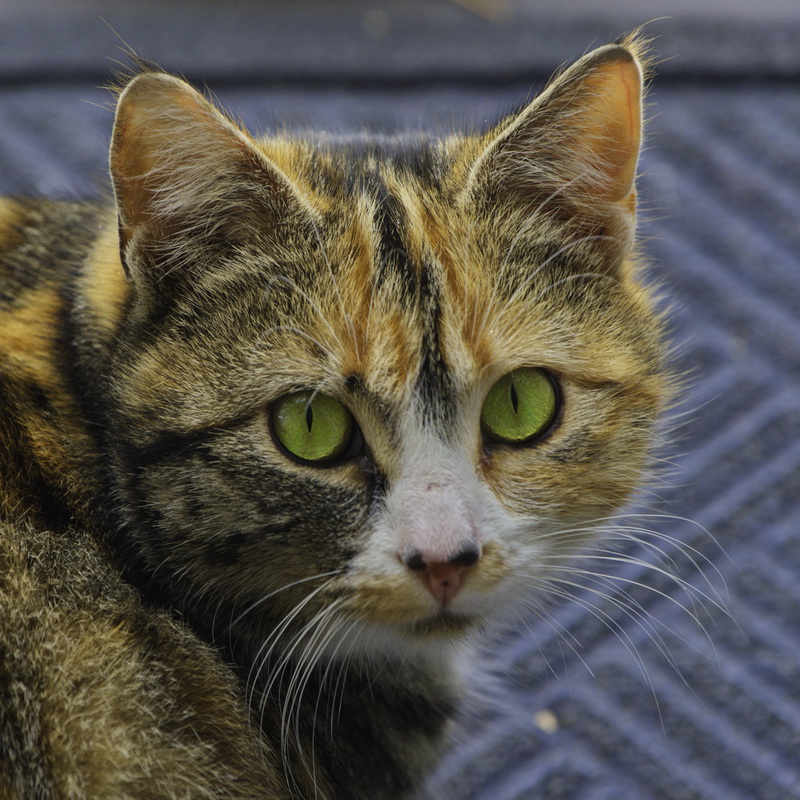
I’ve never made any secret of my fondness for cats. I have nothing really against dogs but to have a dog – or dogs – requires room to run, at least in my eyes. I don’t like fencing a dog in yet most places I’ve lived do not allow dogs to roam free nor are dogs of the size I like suitable for the apartments I’ve lived in.
Yes, I know there are exceptions.
I wouldn’t mind having two right now – two, because I live in coyote country and a coyote will injure or kill a single friendly dog, even of German Shepherd size. The dog wouldn’t realize it was in a serious fight right away. But Wile E won’t mess with two though – two dogs would tear the coyote apart if it wasn’t fast enough on the escape. Can’t though; I’d have to keep them penned up where I live. I wouldn’t want a feather duster; I’d want one or two to take boonie-bouncing with me.
My last dog was a female Norwegian Elkhound:
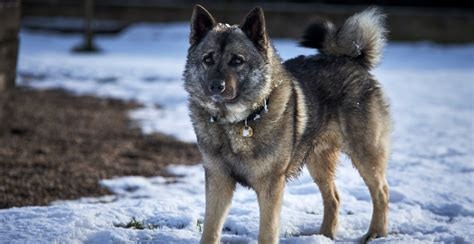
Had her as a pup … No, this is not her; even if circumstances had not gotten in the way, she’d have lived her life out sometime in the 80s. By then, my life was on a path that having a pet was not practical.
This was the mid-70s; she was stolen by someone I had thought was a friend – I never saw the dog or “friend” again; never even knew where they went. She was the last dog of mine … I suppose after almost 50 years I don’t miss her much anymore, only had her for about 6 months as a puppy. But sometimes I think about her. Time has a way of fading some memories …
Sometime around 1990, I had a girlfriend with a retriever. We’d travel – for fun or work – but I-Can’t-Recall-His-Name didn’t take to travelling well. Said girlfriend passed ICRHN off to a friend who was better able to take care of him. They got along very well and when the inevitable breakup with the girlfriend came, it turned out the dog preferred to stay with the friend.
God visited me some time ago … oh, it might have been about 1997. I didn’t realize it at the time. Didn’t think about it at the time. No burning bushes but a beautiful healthy German Shepherd deep in the Wilderness.
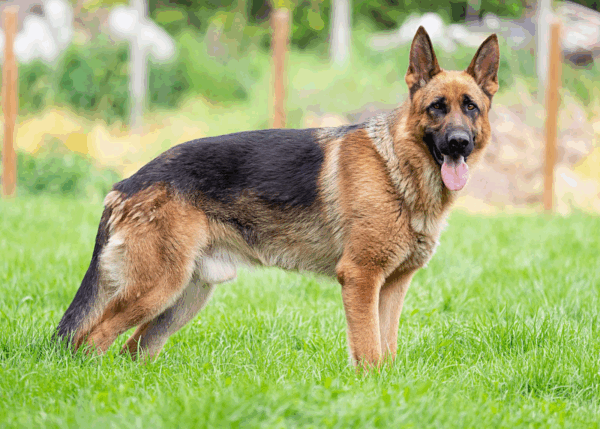
At least it was a dog that looked like a German Shepherd. Kind of like this picture but a little fuller.
I was out in central Nevada someplace out along US50. There’s a lot of not-much through there. I had pulled off the highway to take a break. This dog came out of nowhere – I was a long way from any town or ranch, yet this dog came up to me from out in the sagebrush and just stared at me.
I stared back.
Where did this dog come from? He obviously hadn’t been wandering for long; his coat was too clean, he appeared well-fed.
A dilemma.
Do I take him in? I live in a small apartment. Besides, if he had wandered off, his owners must be looking for him.
Or did they dump him? I didn’t think about that at the time.
Do I try to bond with him? Then what? I can’t care for him.
So I ignored him until he wandered away.
A few minutes later, I had second thoughts. Called out to him – he couldn’t have gotten too far away yet; no response.
I didn’t think much of it at the time, but – not even being sure “God” exists – I now feel I failed a biblical test.
And it bothers me much more now than it did 30 years ago.
Figure that.
This is funny.
I was looking up companies that restore British Spitfire airplanes and came upon one in Duxford, England. While looking at Duxford on the map I noticed the town had a pub named “John Barleycorn”. It looks what you’d think an ancient pub would look like, see here: https://tinyurl.com/33dy3rjn
Here, you can see Steve Winwood himself, by himself, and his acoustic guitar, play this distinctive toon: https://www.youtube.com/watch?v=t8878chOvfI
I taught myself how to play this song on an old acoustic guitar more than 50 years ago, the old fashioned way, by listening to it first, on the radio, then over and over again on a cassette tape. Probably hundreds of times.
I play it with open strings but because of the tone of his voice Steve has a capo set at the 7th fret.
This is what he’s singing:
[Verse 1]
There were three men came out of the west
Their fortunes for to try
And these three men made a solemn vow:
John Barleycorn must die
[Verse 2]
They’ve ploughed, they’ve sown, they’ve harrowed him in
Threw clods upon his head
And these three men made a solemn vow:
John Barleycorn was dead
[Verse 3]
They’ve let him lie for a very long time
Till the rains from heaven did fall
And little Sir John sprung up his head
And so amazed them all
[Verse 4]
They’ve let him stand till Midsummer’s Day
Till he looked both pale and wan
And little Sir John’s grown a long, long beard
And so become a man
[Verse 5]
They’ve hired men with the scythes so sharp
To cut him off at the knee
They’ve rolled him and tied him by the way
Serving him most barbarously
You might also like
Dance with the Devil
Immortal Technique
My Ordinary Life
The Living Tombstone
Lifestyle
Rich Gang
[Verse 6]
They’ve hired men with the sharp pitchforks
Who pricked him to the heart
And the loader he has served him worse than that
For he’s bound him to the cart
[Verse 7]
They’ve wheeled him around and around the field
Till they came unto a barn
And there they made a solemn oath
On poor John Barleycorn
[Verse 8]
They’ve hired men with the crab-tree sticks
To cut him skin from bone
And the miller he has served him worse than that
For he’s ground him between two stones
[Verse 9]
And little Sir John and the nut-brown bowl
And his brandy in the glass;
And little Sir John and the nut-brown bowl
Proved the strongest man at last
[Verse 10]
The huntsman, he can’t hunt the fox
Nor so loudly to blow his horn
And the tinker he can’t mend kettle nor pot
Without a little Barleycorn
John Barleycorn (Must Die)
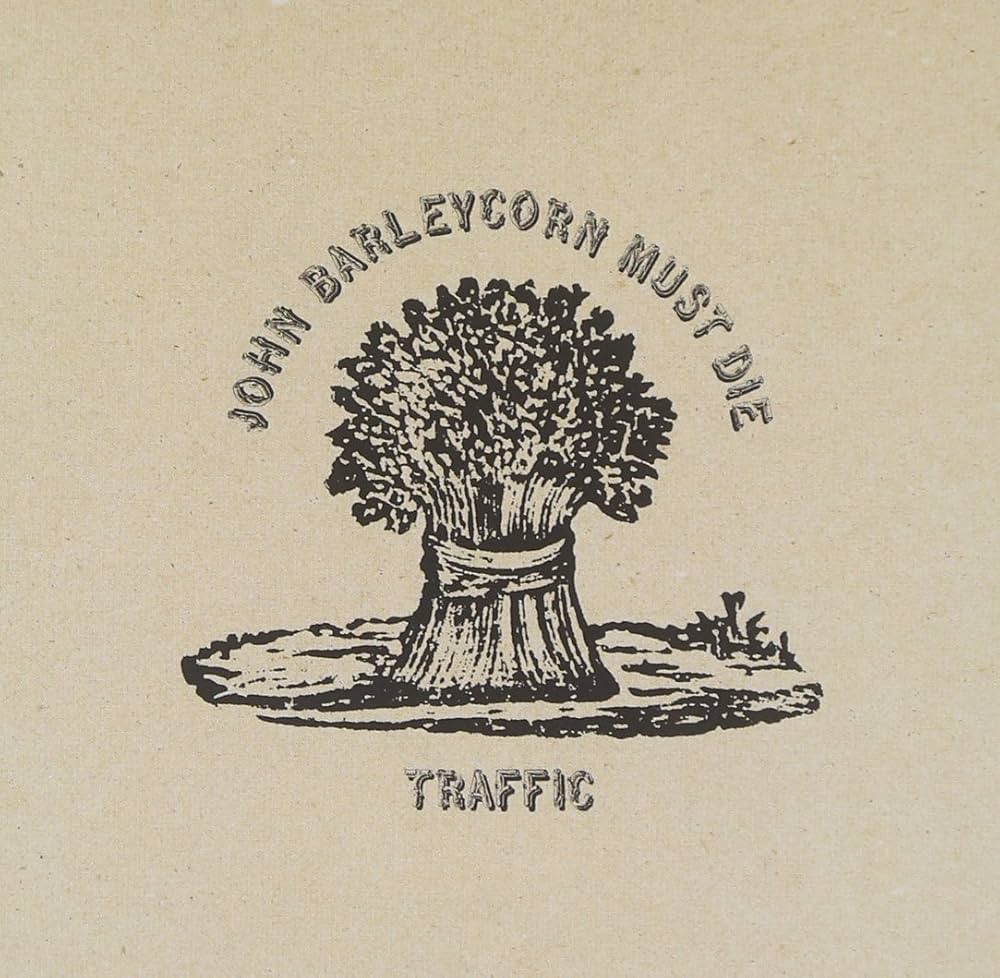
Published by Jean Sat Oct 7, 2006
The summer after fifth grade, we moved from our house in Uniontown, Ohio to the farm in Portage County. It was shortly after that move that my mom found the church she wanted us to attend… St. Michael’s Byzantine Catholic Church.
In Akron, twenty-five miles from the farm. No more than ten miles from Uniontown. Oh, well. Long drives to get where you needed/wanted to be were not uncommon for our family.
Mom was born in Czechoslovakia, when it was still known as Austria-Hungary.
In her eyes, the Roman Catholics just didn’t do it right.
St. Michael’s was the church where the four of us kids (the youngest having not yet been born) finally took our first communions. On the same day. After having completed catechism and learning to “go to confession”.
St. Michael’s had, among seemingly hundreds of other social events and celebrations, an annual church picnic. The church owned property at the edge of another town not far away. This piece of land was a hill, at the top of which was the church cemetery. At the bottom of the hill, in the back, was the pavilion for the picnics. The pavilion was a huge, roofed-over concrete slab with benches along the outer edges. I remember large trees surrounding the entire piece of property, so the pavilion was nicely shaded.
The first picnic we attended there, I remember sitting beside my dad on one of the benches, listening to a local polka band and watching people dance. Dad loved music, but his sense of rhythm… or more appropriately, his lack of… kept him off the dance floor most of the time. So, I kept him company while people whirled, twirled, glided and bounced past us.
Mom was one of the dancers.
I could see Dad following Mom with his eyes, watching her graceful movements as she and her dancing partner… an older woman from the church… circled ’round and ’round the dance floor. I could tell that he would have liked to have been her partner in the dance. His gaze never left her face.
After she passed us several times, smiling at us while she danced, I heard Dad let out a long sigh. I turned to look at him, and heard him say so very quietly, “Isn’t she beautiful?”
That was the first time I saw love and passion reflected in a person’s face.
In that moment, he saw only her. The love of his life.
Not long after that time, their marriage started to fall apart.
But they never divorced, and he took care of her as she was dying from cancer.
I like to think that he never stopped thinking she was beautiful.
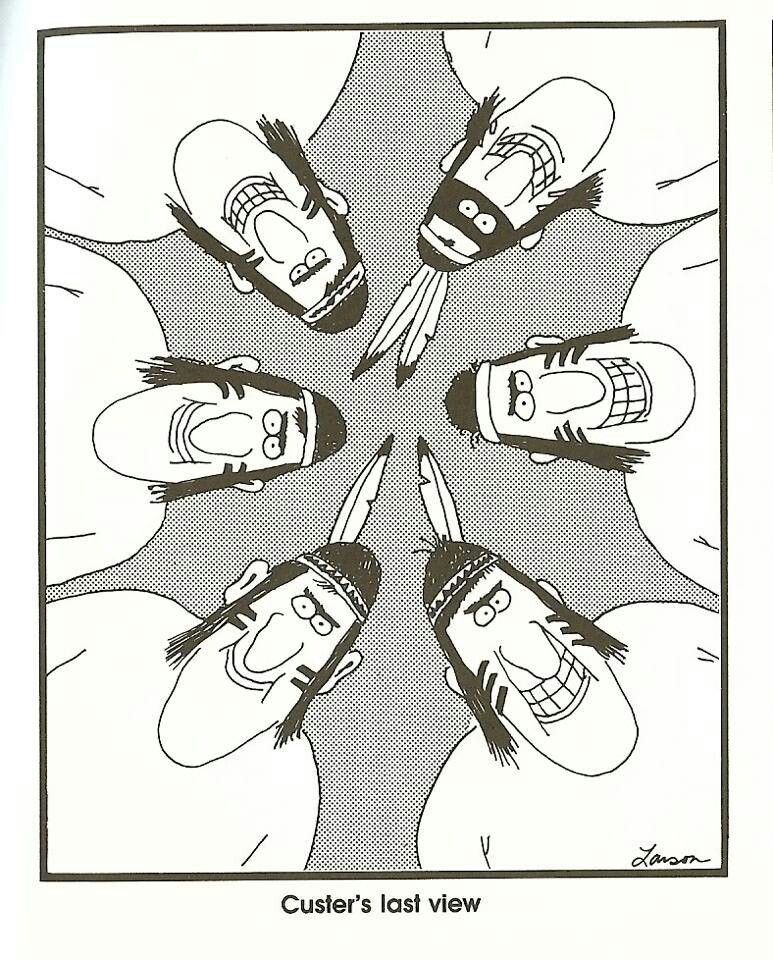
General (Lt Colonel) George Armstrong Custer.
Died this day in 1876, age 36, of over-confidence.

A sample of some obscure – and maybe not obscure – tunes from my strange and off-the-wall collection.
Today’s selection: Dandy Warhols “You Were The Last High” 2003
A band from Portland, OR first formed in 1994 as a group of friends who “needed music to drink to”.
Apparently, the band is still active, with 3 of the original 4 members and a newer drummer.
One of my “newer” selections … more than 20 years old? Oh my.
MTG to AOC:
“Shut up you pathetic little hypocrite.“
🙂
There are some signs that the US strike against Iran was planned and choreographed with the Iranians.
And that the Iranians will respond with something spectacular yet meaningless.
Or not.
It’s not rare that people don’t really know what game Trump is playing until the moves are complete.
We shall see pretty soon …
I’m not going to express an opinion of “right or wrong” – I don’t know enough … but as we appear to be on the verge of war once again – perhaps/probably this time beyond the control our politicians assume they have – I’d like to remind everyone of one thing: