Hey, Mr. Tambourine Man,
play a song for me
I'm not sleepy
and there ain't no place I'm goin' to
Hey, Mr. Tambourine Man,
play a song for me
In the jingle jangle morning,
I'll come followin' you
Take me for a trip upon
your magic swirling ship
All my senses have been stripped
And my hands can't feel to grip
And my toes too numb to step
Wait only for my boot heels to be wanderin'
I'm ready to go anywhere,
I'm ready for to fade
Unto my own parade
Cast your dancing spell my way
I promise to go under it
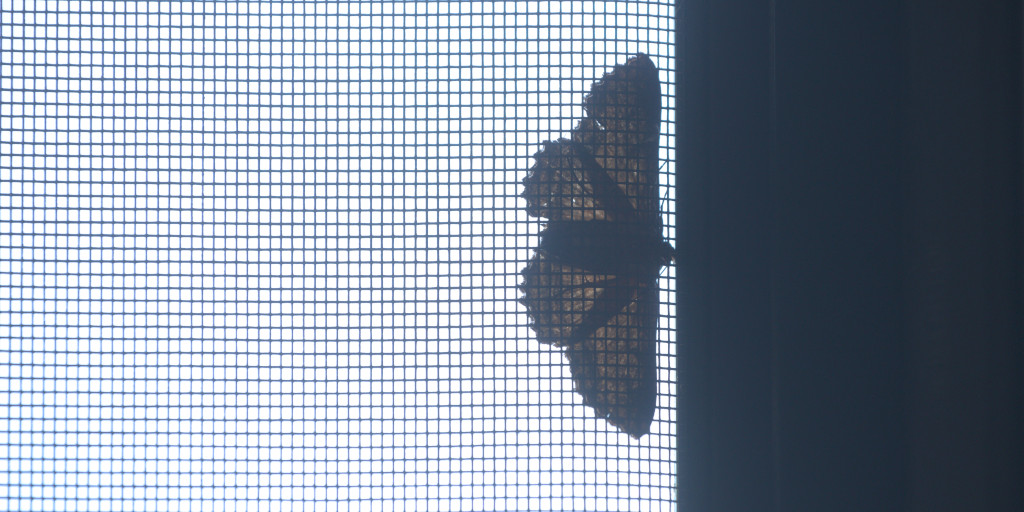

When I was a kid living in OH, we had a screen door from the kitchen into the garage. If the garage and kitchen doors were open you got a nice breeze through the house. The screen kept out all the flies and skeeters. No AC at the house in the very early 70s.
Did you know that porch and window screen is scaled by the number of “squares per inch’? Typical contractor use is 16×16 spi but it allows small insects through, like no-see-ums and gnats. A properly supervised build will have 20×20 spi which will keep out most insects.
There are variations on that sizing depending on the application. People with pets may use a type that is more resilient to claws and paws where every 4th square has double lines.
Then there is the type that will provide a sense of casual security that has 4 squares then 4 lines together in the horizontal position, meant mostly for containing small children. That type is also used in applications that face south to cut down on the amount of sun that comes through the screen, but careful, it also cuts down on the breeze too.
When I was a kid in the 50’s and 60’s gray aluminum screening was the norm and though very strong was very difficult to install. In the early 70’s the fiberglass screen we use today came on board and the aluminum stuff, while still available, was mostly phased out of residential applications.
Fiberglass screen is fairly easy to install but does require some effort to install it properly. A slack – novice installation will result in sagging and strange tension, possibly warping the frame. The tools are simple and inexpensive. The screen itself is the most expensive part and is sold in sized sheets and sized rolls, and of course by the number of squares per inch. A good supplier will also have various shades and colors. Spline, the thin vinyl tubing that holds the screen in the frame also comes in various sizes and colors.
The primary tool for installing screen is a Spline Tool and a single edge razor blade for cutting and trimming. Patience and attention to detail are your friends when installing screening.
I’ve never been a big fan of splining screens and the few times I had done it in the distant past were less than desired but still acceptable. When we moved here in 2006 our house did not have a screened in porch and since we are outdoor types in 2007 I set about building our new porch by myself as I knew no one else around here. It was a 2 story porch, all pressure treated wood, with the first floor 6′ off the ground. The 2nd floor has decking and a 36” high railing and the 1st floor has decking, no railing, and screen from the floor all the way up to the bottom of the beam that supports the 2nd floor, a distance of 9′ high. The vertical posts supporting the 2nd floor are 7 feet apart, so the open screen area between posts, and floor and beam are 7′ wide x 9′ tall and affords large, unobstructed views through the forest behind our house.
Just one problem, I searched high and low all over the state of Indiana and beyond and rolls of 20/20 screen 8′ wide were simply not available. My only option was to contact a supplier I knew in Cape Coral, FL and have them ship it to me. It weren’t inexpensive.
So the summer of 07′ I built the porch and the deck above, all by myself (with just (2) 6′ step ladders) and installed those huge screen panels too. The 7’w x 9’t screen panels were intimidating, and remember, I was up on the top of ladders. I sometimes did risky/stupid stuff when I was younger. It took 2 full days to install all the screen and also 2 screen doors and all of it turned out perfectly. Far, far better than I ever imagined I could do. BTW, this was in 90+ degree weather.
Now, 19 years later that screen still looks like the day it was installed, tight, no sags, and no coons have torn it out yet. I had a bunch of that 8′ wide screen leftover (for repairs) so it went back in the cardboard tube it was shipped in and is still sitting where I put it in 2007, above the garage door tracks in my workshop – all covered in saw dust and spider webs. ha!
So there ya go, more than you ever expected to learn about a product you have probably owned all of your life but never gave much thought to.
In the attached pik you can see a slight glimpse of this porch-deck in the background. This pik was taken in 2015 when I was building another 40′ x 8′ deck along the left side (south) of our house, so that we now had deck or porch all the way around our house. What you don’t see in this pik is the 40′ long bridge to the left, that I built in 2017 that connects my detached office-workshop to the house.
You wouldn’t know it to look at me but I used to work like a dawg!
Yup, screen is sold/specified by openings per square inch. All that stuff in bags down in the baking aisle at yer local grocery store is sized by running thru or over various sieves/screens/screeners with the correct openings. Very nearly any bulk commodity that can be thought of goes over a sieve or screen at one point or another and all are sized and graduated by number of openings per inch. Or whatever they use where metric is spoken. Flour. Dog kibble. Corn. Chicken feed. Sand and gravel. All kinds of stuff.