↓
 

The New American Digest

For Followers of Gerard Van der Leun's Fine Work

  • About American Digest
  • About New American Digest
  • “The Name In The Stone”
  • Remembering Gerard Van der Leun
    • from the website: Through the Looking Glass
    • from the website: Barnhardt
    • from the website: Neo’s Blog
  • Articles
    • The Overland Stage
      • The Holladay Overland Stage: 1 – The Central Route
      • The Overland Stage – 2 Company Operations
      • The Overland Stage – 3 Exploring The Route – An Overview
      • The Overland Stage: 4 – South Platte/Julesburg/Ft Sedgwick
        • Jack Slade
      • The Overland Stage: 5 – Julesburg to Junction Station (aka Ft Morgan)
      • The Overland Stage: 6 – Junction Station to Latham
      • The Overland Stage: 7 – Latham Crossing to Fort Collins
      • The Overland Stage: 8 – LaPorte to Virginia Dale
      • The Overland Stage: 9 – Virginia Dale to Cooper Creek
      • The Overland Stage: 10 – Cooper Creek to Pass Creek
        • Fletcher Family
      • The Overland Stage: 11 – Pass Creek to Bridger Station
      • The Overland Stage: 12 – Bridger Pass to Duck Lake
      • The Overland Stage: 13 – Duck Lake to LaClede
      • The Overland Stage: 14 – LaClede to Almond
      • The Overland Stage: 15 – Almond to Rock Springs
      • The Overland Stage: 16 – Rock Springs to Fort Bridger
      • The Overland Stage: 17 – Fort Bridger to Weber Station

I find I don’t wish to explore new lands, but to explore again those I have already passed through, trying to see what I’d missed in the first hectic rush … Gerard Van der Leun

Home→Published 2025 → May - Page 2 << 1 2 3 4 … 6 7 >>

Monthly Archives: May 2025

Post navigation

<< 1 2 3 4 5 6 7 >>

NOT YOURS TO GIVE

The New American Digest Posted on May 25, 2025 by ghostsniperMay 25, 2025

Submitted by ghostsniper via Comments

From The Life of Colonel David Crockett, compiled by Edward S. Ellis
(Philadelphia: Porter & Coates, 1884)

David Crockett
Member of Congress 1827-31, 1832-35

One day in the House of Representatives, a bill was taken up appropriating money for the benefit of a widow of a distinguished naval officer. Several beautiful speeches had been made in it’s support. The Speaker was just about to put the question when Crockett arose:

 “Mr. Speaker– I have as much respect for the memory of the deceased, and as much sympathy for the suffering of the living, if suffering there be, as any man in this House, but we must not permit our respect for the dead or our sympathy for a part of the living to lead us into an act of injustice to the balance of the living. I will not go into an argument to prove that Congress has no power to appropriate this money as an act of charity. Every member upon this floor knows it. We have the right, as individuals, to give away as much of our own money as we please in charity; but as members of Congress we have no right so to appropriate a dollar of the public money. Some eloquent appeals have been made to us upon the ground that it is debt due the deceased. 

Mr. Speaker, the deceased lived long after the close of the war; he was in office to the day of his death, and I have never heard that the government was in arrears to him. Every man in this House knows it is not a debt. We cannot, without the grossest corruption, appropriate this money as the payment of a debt. We have not the semblence of authority to appropriate it as a charity. Mr. Speaker, I have said we have the right to give as much money of our own as we please. I am the poorest man on this floor. I cannot vote for this bill, but I will give one week’s pay to the object, and if every memeber of Congress will do the same, it will amount to more than the bill asks.”

 He took his seat. Nobody replied. The bill was put upon its passage, and, instead of passing unanimously, as was generally supposed, and as, no doubt it would, but for that speech, it received but few votes, and, of course, was lost.

 Later, when asked by a friend why he had opposed the appropriation, Crockett gave this explanation:
   
 “Several years ago I was one evening standing on the steps of the Capitol with some other members of Congress, when our attention was attracted by a great light over in Georgetown. It was evidently a large fire. We jumped into a hack and drove over as fast as we could. In spite of all that could be done, many houses were burned and many families made homeless, and besides, some of them had lost all but the clothes they had on. The weather was very cold, and when I saw so many women and children suffering, I felt that something ought to be done for them. The next morning a bill was introduced appropriating $20,000 for their relief. We put aside all other business and rushed it through as soon as it could be done.

 “The next summer, when it began to be time to think about the election, I concluded I would take a scout around among the boys of my district. I had no opposition there, but, as the election was some time off, I did not know what might turn up. When riding one day in a part of my district in which I was more of stranger than any other, I saw a man in a field plowing and coming toward the road. I gauged my gait so that we should meet as he came to the fence. As he came up, I spoke to the man. He replied politely, but, as I thought, rather coldly.

 “I began: “Well, friend, I am one of those unfortunate beings called candidates, and—-‘
   
 “Yes, I know you you are Colonel Crockett. I have seen you once before, and voted for you the last time you were elected. I suppose you are out electioneering now, but you had better not waste your time or mine. I shall not vote for you again.’

 “This was a sockdolager….I begged him to tell me what was the matter.

 “Well, Colonel, it is hardly worth-while to waste time or words upon it. I do not see how it can be mended, but you gave a vote last winter which shows that either you have not capacity to understand the Constitution, or that you are wanting in honesty and firmness to be guided by it. In either case you are not the man to represent me. But I beg your pardon for expressing it in that way. I did not intend to avail myself of the privilege of the constituent to speak plainly to a candidate for the purpose of insulting or wounding you. I intended by it only to say that your understanding of the Constitution is very different from mine; and I will say to you what, but for rudeness, I should not have said, that I believe you to be honest…. But an understanding of the Constitution different from mine I cannot overlook, because the Constitution, to be worth anything, must be held sacred, and rigidly observed in all its provisions. The man who wields power and misinterprets it is the more dangerous the more honest he is.’

 “‘I admit the truth of all you say, but there must be some mistake about it, For I do not remember that I gave any vote last winter upon any constitutional question.’

 “‘No, Colonel, there’s no mistake. Though I live here in the back woods and seldom go from home, I take the papers from Washington and read very carefully all the proceedings in Congress. My papers say last winter you voted for a bill to appropriate $20,000 to some suffers by fire in Georgetown. Is that true?’

 “‘Well, my friend, I may as well own up. You have got me there. But certainly nobody will complain that a great and rich country like ours should give the insignificant sum of $20,000 to relieve it’s suffering women and children, particularly with a full and overflowing Treasury, and I am sure, if you had been there, you would have done just as I did.’

 “‘It is not the amount, Colonel, that I complain of; it is the principle. In the first place, the government ought to have in the Treasury no more than enough for its legitimate purposes. But that has nothing to do with the question. The power of collecting and disbursing money at pleasure is the most dangerous power that can be intrusted to man, particularly under our system of collecting revenue by tariff, which reaches every man in the country, no matter how poor he may be, and the poorer he is the more he pays in proportion to his means. What is worse, it presses upon him without his knowledge where the weight centers, for there is not a man in the United States who can ever guess how much he pays to the government. So you see, that while you are contributing to relieve one, you are drawing it from thousands who are even worse off than he. If you had the right to give anything, the amount was simply a matter of discretion with you, and you had as much right to give $20,000,000 as $20,000. If you have the right to give to one, you have the right to give to all; and, as the Constitution neither defines charity nor stipulates the amount, you are at liberty to give to anything and everything which you may believe, or profess to believe, is a charity, and to any amount you may think proper. You will very easily perceive what a wide door this would open for fraud and corruption and favortism, on the one hand, and for robbing the people on the other. No, Colonel, Congress has no right to give charity. Individual members may give as much of their own money as they please, but they have no right to touch a dollar of the public money for that purpose.If twice as many houses had been burned in this county as in Georgetown, neither you nor any other member of Congress would have thought of appropriating a dollar for our relief.  

 There are about two hundred and forty members of Congress. If they had shown their sympathy for the suffers by contributing each one week’s pay, it would have made over $13,000. There are plenty of men in and around Washington who could have given $20,000 without depriving themselves of even a luxury of life.. The congressmen chose to keep their own money, which, if reports be true, some of them spend not very creditable; and the people about Washington, no doubt, applauded you for relieving them from the necessity of giving by giving what was not yours to give. The people have delegated to Congress, by the Constitution, the power to do certain things. To do these, it is authorized to collect and pay moneys, and for nothing else. Everything beyond this is usurpation, and a violation of the Constitution.

 “‘So you see, Colonel, you have violated the Constitution in what I consider a vital point. It is a precedent fraught with danger to the country, for when Congress once begins to stretch it’s power beyond the limits of the Constitution, there is no limit to it, and no security for the people. I have no doubt you acted honestly, but that does not make it any better, except as far as you are personally concerned, and you see that I cannot vote for you…’

 “I tell you I felt streaked. I saw if I should have oppostion, and this man should go talking, he would set others to talking, and in that district I was a gone fawn-skin. I could not answer him, for the fact is, I was so fully convinced that he was right, I did not want to. But I must satisfy him, and I said to him:

 “Well, my friend, you hit the nail upon the head, when you said I had not sense enough to understand the Constitution. I intended to be guided by it, and thought I had studied it fully, I have heard many speeches in congress about the powers of the Congress, but what you have said here at your plow has got more hard, sound sense in it than all the fine speeches I ever heard. If I had ever taken the view of it that you have, I would have put my head into the fire before I would have given that vote; and if you will forgive me and vote for me again, if I ever vote for another unconstitutional law I wish I may be shot.’

 “He laughingly replied: “Yes Colonel, you have sworn to that once before, but I will trust you again upon one condition. You say that you are convinced that your vote was wrong. Your acknowledgment of it will do more good than beating you for it. If, as you go around the distict, you will tell people about this vote, and that you are satisfied it was wrong, I will not only vote for you, but will do what I can to keep down opposition, and perhaps, I may exert some little influence in that way.’

 “‘If I don’t,’ said I. “I wish I may be shot; and to convince you that I am in earnest in what I say I will come back this way in a week or ten days, and if you will get up a gathering of the people, I will make a speech to them. Get up a barbeque, and I will pay for it.’

 “‘No Colonel, we are not rich people in this section, but we have plenty of provisions to contribute for a barbeque, and some to spare for those who have none.. The push of crops will be over in a few days, and we can then afford a day for a barbeque. This is Thursday; I will see to getting up on Saturday week. Come to my house on Friday, and we will go together, and I promise you a very respectable crowd to see and hear you.’

 “‘Well, I will be here. But one thing more before I say good-by. I must know your name.’

 “‘My name is Bunce.’

 “‘Not Horatio Bunce?’

 “‘Yes.’

 “‘Well, Mr. Bunce, I never saw you before though you say you have seen me, but I know you very well. I am glad I have met you, and very proud that I may hope to have you for my friend.’

 “It was one of the luckiest hits of my life that I met him. He mingled but little with the public, but was widely known for a heart brimful and running over with kindness and benevolence, which showed themselves not only in words but in acts. He was the oracle of the whole country around him, and his fame had extended far beyond the circle of his immediate acquaintance. Though I had never met him before, I had heard much of him, and but for this meeting it is very likely I should have had opposition, and had been beaten. One thing is very certain, no man could now stand up in that district under such a vote.

 “At the appointed time I was at his house, having told our conversation to every crowd I had met, and to every man I stayed all night with, and I found that it gave the people an interest and a confidence in me stronger than I had ever seen manifested before.

 “Though I was considerably fatigued when I reached his house, and, under ordinary circumstances, should have gone early to bed, I kept up until midnight, talking about the principles and affairs of government and got more real, true knowledge of them than I had got all my life before.

 “I have known and seen much of him since, for I respect him — no, that is not the word — I reverence and love him more than any living man, and I go to see him two or three times a year; and I will tell you sir, if everyone who professes to be a Christian, lived and acted and enjoyed it as he does, the religion of Christ would take the world by storm.

 “But to return to my story. The next morning we went to the barbecue, and, to my surprise, found about a thousand men there. I met a good many whom I had not known before, and they and my friend introduced me around until I had got pretty well acquainted—at least, they all knew me.

 “In due time notice was given that I would speak to them. They gathered up around a stand that had been erected. I opened my speech by saying: “Fellow-citizens — I present myself before you today feeling like a new man. My eyes have lately been opened to truths which ignorance or prejudice, or both, had heretofore hidden from my view. I feel that I can today offer you the ability to render you more valuable service than I have ever been able to render before. I am here today more for the purpose of acknowledging my error than to seek your votes. That I should make this acknowledgement is due to myself as well as to you. Whether you will vote for me is a matter for your consideration only.’

 “I went on to tell them about the fire and my vote for the appropriation and then told them why I was satisfied it was wrong. I closed by saying:

 “And now, fellow-citizens, it remains only for me to tell you that the most of the speech you have listened to with so much interest was simply a repetition of the arguments by which your neighbor, Mr. Bunce, convinced me of my error.

 “‘It is the best speech I ever made in my life, but he is entitled to the credit for it. And now I hope he is satisfied with his convert and that he will get up here and tell you so.’

 “He came upon the stand and said:

 “‘Fellow-citizens — It affords me great pleasure to comply with the request of Colonel Crockett. I have always considered him a thoroughly honest man, and I am satisfied that he will faithfully perform all that he has promised you today.’

 “He went down, and there went up from that crowd such a shout for Davy Crockett as his name never called forth before.

 “I am not much given to tears, but I was taken with a choking then and felt some big drops rolling down my cheeks. And I tell you now that the remembrance of those few words spoken by such a man, and the honest, hearty shout they produced, is worth more to me than all the reputation I have ever made, or shall ever make, as a member of Congress.

 “Now, sir,” concluded Crockett, “you know why I made that speech yesterday.

 “There is one thing now to which I will call your attention. You remember that I proposed to give a week’s pay. There are in that House many very wealthy men– men who think nothing of spending a week’s pay, or a dozen of them, for a dinner or a wine party when they have something to accomplish by it. Some of those same men made beautiful speeches upon the great debt of gratitude which the country owed the deceased — a debt which could not be paid by money — and the insignificant and worthlessness of money, particularly so insignificant a sum as $10,000, when weighed against the honor of the nation. Yet not one of them responded to my proposition. Money with them is nothing but trash when it is to come out of the people. But it is the one great thing for which most of them are striving, and many of them sacrifice honor, integrity, and justice to obtain it.”
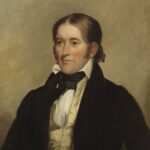

Davy_Crockett_Portrait_by_Chester_Harding
Continue reading →
Posted in Uncategorized | 2 Replies

Mean & Nasty Am I

The New American Digest Posted on May 25, 2025 by DTMay 25, 2025

"New York Governor Kathy Hochul Complains Republican Spending Bill Could Cut Services to ‘Members of the Undocumented Community’"

The only services ‘Members of the Undocumented Community’ should receive is a pre-paid, one-way ticket out. Hochul can accompany them.

(However, the concept of "documented" can be discussed under separate cover. But we all know what is meant.)

Continue reading →
Posted in Uncategorized | 2 Replies

Ready To Go – Got My Irons In The Fire

The New American Digest Posted on May 25, 2025 by DTMay 24, 2025
Continue reading →
Posted in Uncategorized | 11 Replies

California Quail

The New American Digest Posted on May 24, 2025 by DTMay 23, 2025

Quail came up on my post with a chukar. I knew I had a photo of quail but it got lost in a bit pile.
So I pulled out a bit shovel, dug around in the bits, and there it was.

There are a lot of these little critters around these parts ... in spite of a neighborhood full of cats, dogs, coyotes, and other such that enjoy a good poultry meal.

Continue reading →
Posted in Uncategorized | 6 Replies

What’s Your Literacy Level?

The New American Digest Posted on May 23, 2025 by ghostsniperMay 23, 2025

Submitted by ghostsniper via Comments; extracted from "American English Doctor" at americanenglishdoctor dot com/four-levels-of-literacy/

DT: Ghost is right - this is scary. What's scarier is that as time goes by, more of the adult population in positions of authority will have increasingly lower literacy scores and will be resentful of those more literate.

"Do you think you're better than me?"
"Yes, of course - but I dare not suggest it"

The goal of free public education is to educate children of all economic classes to a level of Basic Literacy. Most children are capable of achieving a level of Basic Literacy by the age of thirteen. Three of every ten children who begin first grade will drop out before completing high school. For this reason, every effort should be made to see that children achieve a level of Basic Literacy by the time they have completed the Eighth Grade.

The American English Doctor site provides free information and guidelines for achieving Basic Literacy and above. The intended audience for this information is parents, teachers, and English learners of every age. Nominally priced printed materials will become available as I develop the site.

L-1 Functional Literacy
A person who has achieved a level of Functional Literacy is able to read such texts as these:

At the very minimum, people who have reached a level of functional literacy will be able to do the following:

  • Sign their names to a document.
  • Read street signs, maps, and posted directions.
  • Use a directory such as a telephone book or online site to find contact information.
  • Complete standard forms for employment, school enrollment, public library use, etc.
  • Open a checking account and write a check.
  • Use a calculator to figure sums.
  • Read label information on food, medications, cleaning preparations, etc.
  • Pronounce words clearly enough to be understood by clerks, teachers, and others who may be unfamiliar with their speech patterns.
  • Know where they can go for help with transactions that require a higher level of literacy.
  • Read simple picture books to their children.

National literacy statistics for the United States indicate that as many as 23 percent of adult Americans–44 million men and women–have not reached this level of literacy.


L-2 Basic Literacy
A person who has achieved a level of Basic Literacy—about eighth-grade level— has the ability to read such texts as these:

English speakers who have achieved basic literacy demonstrate the following skills and characteristics:

  • Can write a handwritten note that the recipient can read without struggling to decipher the letters or the meaning.
  • Can spell everyday vocabulary such as definite and calendar correctly without digital help.
  • Are not intimidated by “big words” because they know how to use a dictionary to check the spelling, meaning, and pronunciation of an unfamiliar word.
  • Know how to speak more than one dialect of English and when to speak which.
  • Know the most basic grammatical rules of standard American English.
  • Know how to find information in the old technology called “books.”
  • Sometimes prefer reading to TV.
  • Have a general notion of US history and the United States form of government.
  • Have a general acquaintance with significant English works of literature.
  • Have a general notion of world geography, history, religion, and literature.
  • Can think critically about statements made in such different contexts as advertising, entertainment, news reporting, and books written in an earlier century.

US literacy statistics indicate that 50% of adults cannot read a book written at an eighth grade level.


L-3 Proficient Literacy
A person who has achieved a level of Proficient Literacy has the ability to read texts such as these:

  • Sufficient general knowledge and reading fluency to be able to read and understand (without the help of a teacher) texts written for a general reader since 1900.
  • The ability to spell all the words in one’s speaking vocabulary.
  • The ability to write legibly and in complete sentences.
  • The ability to write a structured, well supported, carefully revised and edited essay suitable for beginning college work.
  • The habit of reading for enjoyment.
  • A basic knowledge of US history and government.
  • A general idea of the development of English language and literature.
  • A basic knowledge of world history and world literature in translation.
  • The ability to speak and write a standard form of English when appropriate.
  • One or two years of foreign language study.
  • The ability to consider differing points of view without becoming angry or defensive.

Surveys show that the average reading level of the top 40 books read by US teens in grades 9-12 is 5.3, barely above the fifth grade level. High school graduates who plan to pursue post-secondary education should reach a level of Proficiency Literacy. The only way to do this is to read widely outside of school assignments.


L-4 Advanced Literacy
A person who has achieved a level of Advanced Literacy has the ability to read texts such as these:

Any high school graduate who expects to go on to university should have reached this level.

Generally speaking, the person who is at a stage of advanced literacy demonstrates some or all of the following characteristics, in addition to those of proficient literacy:

  • Reads widely on many different topics.
  • Reads deeply on subjects of special interest.
  • Is curious about words and understands that usage is not static.
  • Takes care to model standard speech to children and to ESL learners.
  • Adjusts usage and idiom according to whether the context is formal or informal.
  • Speaks a foreign language well enough to communicate with a native speaker of it.
  • Often seeks to verify the truth of information reported as fact in the media.
  • Understands how language is used to persuade.
  • Thinks critically, interpreting speech and writing in context.

A comparatively few individuals will read at this level. Not everybody wants to, and that’s all right. The ability to function at a level of Basic Literacy is sufficient for most human needs and occupations in 21st century society. The appalling fact about the literacy landscape in the United States is that so many Americans have been exposed to 6-8 years of formal education without achieving the level of Basic Literacy.


Prompted by this thing over at Vox’s place.

voxday dot net/2025/05/23/mpai-even-worse-than-you-think/


If you can read, understand, and write an essay on the following you are capable of level 4 reading, and therefore in the 5% of the literate American population.

==================

A Chancery judge once had the kindness to inform me, as one of a company of some hundred and fifty men and women not labouring under any suspicions of lunacy, that the Court of Chancery, though the shining subject of much popular prejudice (at which point I thought the judge’s eye had a cast in my direction), was almost immaculate. There had been, he admitted, a trivial blemish or so in its rate of progress, but this was exaggerated and had been entirely owing to the “parsimony of the public,” which guilty public, it appeared, had been until lately bent in the most determined manner on by no means enlarging the number of Chancery judges appointed—I believe by Richard the Second, but any other king will do as well.

This seemed to me too profound a joke to be inserted in the body of this book or I should have restored it to Conversation Kenge or to Mr. Vholes, with one or other of whom I think it must have originated. In such mouths I might have coupled it with an apt quotation from one of Shakespeare’s sonnets:

“My nature is subdued
To what it works in, like the dyer’s hand:
Pity me, then, and wish I were renewed!
”

But as it is wholesome that the parsimonious public should know what has been doing, and still is doing, in this connexion, I mention here that everything set forth in these pages concerning the Court of Chancery is substantially true, and within the truth. The case of Gridley is in no essential altered from one of actual occurrence, made public by a disinterested person who was professionally acquainted with the whole of the monstrous wrong from beginning to end. At the present moment (August, 1853) there is a suit before the court which was commenced nearly twenty years ago, in which from thirty to forty counsel have been known to appear at one time, in which costs have been incurred to the amount of seventy thousand pounds, which is A FRIENDLY SUIT, and which is (I am assured) no nearer to its termination now than when it was begun. There is another well-known suit in Chancery, not yet decided, which was commenced before the close of the last century and in which more than double the amount of seventy thousand pounds has been swallowed up in costs. If I wanted other authorities for Jarndyce and Jarndyce, I could rain them on these pages, to the shame of—a parsimonious public.

There is only one other point on which I offer a word of remark. The possibility of what is called spontaneous combustion has been denied since the death of Mr. Krook; and my good friend Mr. Lewes (quite mistaken, as he soon found, in supposing the thing to have been abandoned by all authorities) published some ingenious letters to me at the time when that event was chronicled, arguing that spontaneous combustion could not possibly be. I have no need to observe that I do not wilfully or negligently mislead my readers and that before I wrote that description I took pains to investigate the subject. There are about thirty cases on record, of which the most famous, that of the Countess Cornelia de Baudi Cesenate, was minutely investigated and described by Giuseppe Bianchini, a prebendary of Verona, otherwise distinguished in letters, who published an account of it at Verona in 1731, which he afterwards republished at Rome. The appearances, beyond all rational doubt, observed in that case are the appearances observed in Mr. Krook’s case. The next most famous instance happened at Rheims six years earlier, and the historian in that case is Le Cat, one of the most renowned surgeons produced by France. The subject was a woman, whose husband was ignorantly convicted of having murdered her; but on solemn appeal to a higher court, he was acquitted because it was shown upon the evidence that she had died the death of which this name of spontaneous combustion is given. I do not think it necessary to add to these notable facts, and that general reference to the authorities which will be found at page 30, vol. ii.,* the recorded opinions and experiences of distinguished medical professors, French, English, and Scotch, in more modern days, contenting myself with observing that I shall not abandon the facts until there shall have been a considerable spontaneous combustion of the testimony on which human occurrences are usually received.

Preface to "Bleak House" by Charles Dickens
www dot gutenberg dot org/files/1023/1023-h/1023-h.htm

Continue reading →
Posted in Uncategorized | 4 Replies

Lies, Damn Lies, And Statistics

The New American Digest Posted on May 23, 2025 by DTMay 23, 2025

This article over at ZeroHedge ("These Are The States With The Highest Freeway Fatalities") is summed up in its last sentence. Presented by a law firm, the article concludes: "“It’s time for decisive, proactive measures that prioritize lives over speed,” the spokesperson added."

“States like Wyoming, New Mexico, and Missouri consistently see alarmingly high rates of interstate freeway crashes. Factors such as long rural stretches, high-speed travel, and limited visibility often create dangerous driving conditions that put lives at risk every day.”

They present "statistics" that imply Wyoming has the highest fatality rate "per 100,000". Wyoming having little population, vast regions of open territory, and two interstate highways carrying heavy - non-Wyoming residents - inter-state travel, it's easy to develop numbers showing Wyoming is the most dangerous ... but limited visibility? In some places maybe, but in others you can see 15-20 miles ahead. To say nothing of "rural" implying low traffic density.

I-80 - Wyoming

Wyoming's population is under 600,000. If there are 6 highway fatalities in Wyoming, that's a "death rate" of 6 per 100,000. That could be a singe bad accident. Six highway deaths in California (pop about 40 million) wouldn't even register. There are about 20,000,000 people in NY. It would take 200 deaths for NY to have a death rate of 1 per 100,000; 1200 to "match" that 6 per 100,000 in Wyoming.

(reported actual numbers for Wyoming: 31.6 average fatal crashes per year/5.4 crashes per 100,000 between 2019 and 2023. No report of number of fatalities per crash).

Here's where they get down to it:
"The law firm called on policymakers to take concrete steps, recommending a stronger highway patrol presence, improved road lighting and signage, and the use of technology to monitor high-risk zones. Public education on speed control and defensive driving was also highlighted as a critical need."

I've driven every Interstate of the west and many back east. I'd suggest I-75 in Kentucky, or I-66 in Virginia, or I-95 most anywhere, or I-90/94 in Chicago, or any highway near Atlanta are far more dangerous than I-80/25 in Wyoming or I-90 in Montana. Though I-70 in Missery can be interesting, especially near St Louis or Kansas City.

Damn! I'm not fond of the direction people with too much power are forcing "technology" on to those with not enough. Too late to change it though.

Continue reading →
Posted in Uncategorized | 17 Replies

Chukar

The New American Digest Posted on May 23, 2025 by DTMay 22, 2025
Not common to get this close

I'm not a hunter but ...
"Idaho offers some of the best chukar and gray partridge hunting in the West, not to mention robust populations of California quail. Chukars are typically found in rocky, arid areas covered with cheat grass and sage brush."

Half my property is sage covered. Smells nice, especially after a rain. I have groups of coveys of quail - 25 or more per covey sometimes - wandering around the homestead. Ground dwellers for the most part. They seem to prefer running to flying but capable of both. The cats catch one or two but I suspect that's the quail's fault because usually the coveys are very attentive. Not so many chukar immediately close by but pheasant and sage hens make a rare appearance. Need to dig up a photo ... but this is about chukars.

"Chukars are not native to North America, having been introduced from Asia, but they have thrived in the arid, rocky slopes of the western states."

"The Owyhee Mountains in southwest Idaho provide some of the state’s best chukar hunting opportunities. This remote and rugged range along the Idaho-Oregon border has an abundance of chukars. The chukar population here thrives thanks to the plentiful water sources and steep, rocky slopes."

"The birds are hunted across the dry, rocky Columbia Basin, especially in the vicinity of the Snake River in Washington and Oregon." Not sure why this source doesn't mention Idaho - the majority of the Snake is in Idaho and forms much of the border with Oregon.

Pretty bird. Tasty I hear but doesn't seem to be much meat on them, particularly if needing to pick out shotgun pellets.

Continue reading →
Posted in Uncategorized | 4 Replies

Just a poor white sharecroppers chow,

The New American Digest Posted on May 22, 2025 by ghostsniperMay 22, 2025

I was sitting on the concrete stoop in front of my duplex drinking a brew and rebuilding a 4 barrel carburetor in a paint roller pan half full of gasoline. Parts were all over the place, gas spilled everywhere and it was hot as all get out in the summer of 1983 in southwest FL.

Got out of jail 2 weeks prior and still hadn’t got paid from my new job so I was a broke dik dawg, bad! I had a cheap boom boxed hooked up to a guitar amp and was cranking a cassette tape by 38 special and the song “Hold On Loosely” was playing, when an angel appeared before my very eyes. 

Long blonde hair, nice tan, and legs that went all the way up. She stood in front of me with her hands on her hips and said, “I can almost hear your music all the way over at my place.” I didn’t hear a word she said, I just stared and my mouth was probably hanging open. After a second or 2 I asked, “Er, uh, what did you say?” She chuckled lightly and asked if she could watch what I was doing. I was numb from the neck up and don’t remember what I said as she sat cross legged on the grass a few feet out in front of me. I gathered my wits and asked her if she wanted a beer and she said she didn’t drink. I asked her if she wanted a glass of water or a coke and she said a coke would be good, so I jumped up and ran in to get one out of the fridge.

Yes, I ran! Already I couldn’t stand to be away from her.

I was trying to put this Holley carburetor back together while chit chatting with her and I never was a good multitasker. After about half an hour of doing it half wrong at half the speed I told her I’ll need to go get a manual and finish it up later. I asked her if she wanted to get something to eat after I get cleaned up and she said “Sure.”, and I told her she would have to drive and she said that was OK.

Less than an hour into it and I was already knowing she was gonna be my wife. There’d been a lot of traffic on this highway and I’d felt like this before, many times, but this time was different some how….

I was a wild eyed southern boy.

Your baby needs someone to believe in.
And a whole lot of space to breathe in.
So hold on loosely, but don’t let go.
If you cling too tightly, you’re gonna lose control.

youtube dot com/watch?v=vJtf7R_oVaw

wild
Continue reading →
Posted in Uncategorized | 5 Replies

Just Wondering

The New American Digest Posted on May 22, 2025 by DTMay 22, 2025

Have you all received your refund checks from the government giving back the money it's been found was stolen from you?

Have you received your notice yet that the IRS is auditing you because of that undeclared income?

Continue reading →
Posted in Uncategorized | 3 Replies

Food for thought…

The New American Digest Posted on May 22, 2025 by JeanMay 22, 2025

First published May 18, 2025

a minute
or a day
of life with you
might be just
what's needed
to nourish
a hungry soul.

Continue reading →
Posted in Uncategorized | 3 Replies

Post navigation

<< 1 2 3 4 5 6 7 >>

Rules

Contact: dt@newamericandigest.org

Gerard Van der Leun
12/26/45 - 1/27/23


Gerard's Last Post
(posthumous): Feb 4, 2023
"So Long. See You All a Little Further Down the Road"

When my body won’t hold me anymore
And it finally lets me free
Where will I go?
Will the trade winds take me south through Georgia grain?
Or tropical rain?
Or snow from the heavens?
Will I join with the ocean blue?
Or run into a savior true?
And shake hands laughing
And walk through the night, straight to the light
Holding the love I’ve known in my life
And no hard feelings

Avett Brothers - No Hard Feelings

The following was posted along with the announcement of Gerard's passing.
Leonard Cohen - Going Home

For a 2005 interview with Gerard


May 2025
S M T W T F S
 123
45678910
11121314151617
18192021222324
25262728293031
« Apr   Jun »

Most Recent Comments

  1. ghostsniper on DIA HorseMay 11, 2026

    Yesterday, gas (87) $4.79 a gallon. That may be the highest I have ever seen. Trump has exceeded the communists.

  2. jd on Should I Even Share This?May 10, 2026

    I can believe in that sort of thing because I had a similar experience though there was nothing physical (your…

  3. GrayDog on Should I Even Share This?May 10, 2026

    Yes. Yes it was.

  4. DT on Green Drake MayflyMay 10, 2026

    My fishfly-collecting years were spent north of Detroit just off Lake St Clair. I knew them as fishflies before I…

  5. anonymous on Should I Even Share This?May 10, 2026

    Sometimes it seems that we are here and then gone in the twinkling of an eye.


Blogroll
The New Neo
Jean's Blog - Pondering
The Feral Irishman

Hey, Mr. Tambourine Man,
play a song for me
I'm not sleepy
and there ain't no place I'm goin' to

Hey, Mr. Tambourine Man,
play a song for me
In the jingle jangle morning,
I'll come followin' you

Take me for a trip upon
your magic swirling ship
All my senses have been stripped
And my hands can't feel to grip
And my toes too numb to step
Wait only for my boot heels to be wanderin'

I'm ready to go anywhere,
I'm ready for to fade
Unto my own parade
Cast your dancing spell my way
I promise to go under it


Men who saw night coming down about them could somehow act as if they stood at the edge of dawn.


From Gerard's site. The picture always caught my eye.

Archives

  • May 2026
  • April 2026
  • March 2026
  • February 2026
  • January 2026
  • December 2025
  • November 2025
  • October 2025
  • September 2025
  • August 2025
  • July 2025
  • June 2025
  • May 2025
  • April 2025
  • March 2025
  • February 2025
  • January 2025
  • December 2024

Contact: dt@newamericandigest.org

About "DT"

The New American Digest © 2024 - Weaver Xtreme Theme
↑