
Armistice Day – A Tale Of War
I recently came across a document written in 1968 by a Canadian WWI bomber pilot. The document describes his last flight entitled “My Last Bombing Raid”. I thought it might be of interest on this Armistice Day.
The document is transcribed as written except for the addition of pictures.
My Last Bombing Raid
In World War I the British Air Force consisted of the Royal Naval Air Service and its Army counterpart, the Royal Flying Corps. There was no Canadian Air Force, but early in 1916 the Royal Flying Corps established a branch in Canada. A ground school was opened at the University of Toronto and later airdromes were erected at several locations in Ontario.
In 1916, I joined the ground school and after preliminary training in Canada was transferred to Salisbury Plains in England where I graduated on De Havilland 4’s (DH4’s). After finishing aerial gunnery at Turnberry Scotland, I went to France and was posted to Number 27 Squadron.
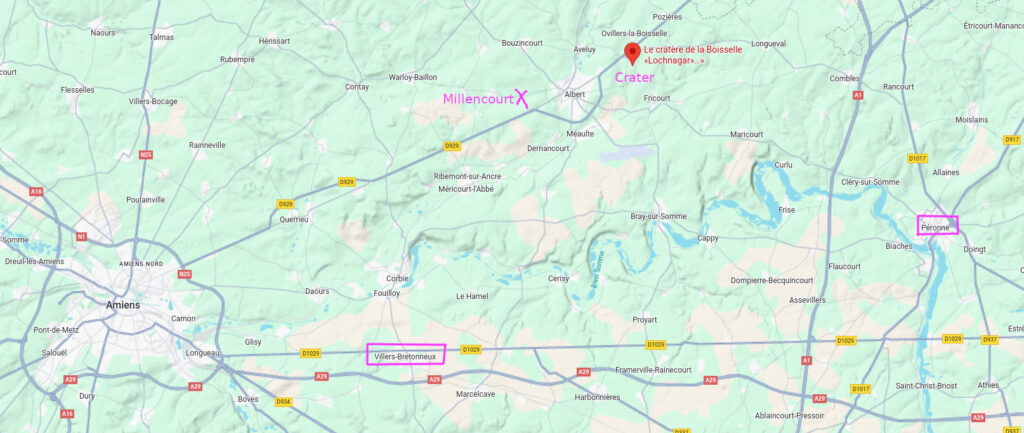
Our airdrome was situated at Vilers-Brettoneux, a small village on the Amiens-Perrone Road, about 4 miles east of Amiens and twenty miles from Perrone.
The 27th, a DH4 long-distance bombing squadron, was equipped with Beardmore-Halford-Pulinger engines (B.H.P.’s). The DH4 was a biplane with the pilot’s seat beneath the upper wing between the engine and main gas tanks. A Vickers machine gun was mounted on the cowling and by means of a special gear was able to fire between the blades of the rotating propeller.
A small gravity tank was attached to the upper wing near the pilot’s head. This tank was used for starting the engine and taking off, until the pressure in the main tanks had increased sufficiently to supply the carburetor. The observer’s seat was in the rear of the fuel tanks.
Attached to this cockpit was a scarf mounting supporting one or two Lewis guns. As the pilot was just behind the engine, he was usually quite comfortable, but the observer was very much in the open and exposed to low temperatures. He was readily recognized around the mess table as the tip of his nose was scarred from repeated frost bite
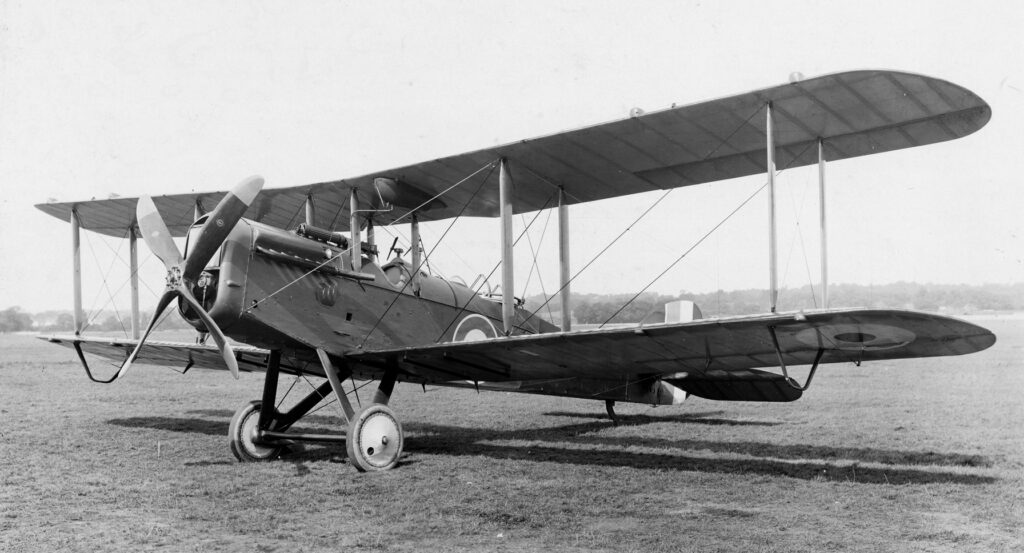
The average speed of the DH4 was 125 miles per hour, and it carried enough fuel to remain in the air about 5 hours. Each squadron had one airplane equipped with a special carburetor and oxygen for the pilot and observer. This machine could climb to 24,000 feet and the day before the raid would take pictures of the next day’s target. There was no danger from attack as the enemy was unable to reach this altitude.
Our targets were primarily railroad junctions, troop concentrations and ammunition dumps. Ordinarily twelve machines took part in a raid, each plane taking off separately. They would then climb to 17,000 feet over the rendezvous previously decided upon. In the case of 27 Squadron, this was usually Perrone. It took about one hour to reach this altitude and when all the machines had arrived they would take up formation and proceed over the front line on their way to the target. Each plane carried eight, twenty-five pound bombs, four on the bottom of each lower wing.
When twelve DH4’s were in close formation, there were 12 machine guns firing forward and as many as twenty-four to the rear. The Germans learned to respect this fire power; however, if the formation were broken up or an individual machine became separated from the rest of the squadron, the heavy DH4 bomber was no match for the faster, easily maneuverable German fighter.
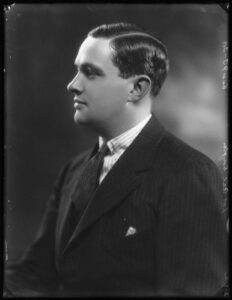
In the spring of 1918 the average tour of active duty for a pilot in France lasted six weeks. usually the same pilot and observer continued to fly together. About the middle of March, a new observer was posted to my machine. He was Lord Cecil Douglas, a son of the Marquis of Queensbury of the Queensbury family of boxing rule fame. He was twenty years of age and well qualified to carry on the enviable tradition established by the upper class of his generation in fighting for their country.
August 2 1924
On March the 21st the Germans attacked the British sector of the front line and aerial activity became markedly increased. Bombing raids were carried out once or twice daily. On this date the squadron commander’s machine was being overhauled and the plane I had been flying transferred to him. I was given “F” which we all recognized as a “lemon”.
[Hm-m-m… was someone in the doghouse with the squadron commander?]
On our first day in “F”, Douglas and I started on a raid to Busigny but were forced to return because of engine trouble. The next day we were scheduled to bomb Le Cateu. This time an oil pipe burst and we had to return. This was repaired, and on March 23rd we started again, but the pressure pumps failed and we were unable to continue. On Sunday, March 24t, we were to bomb Aulnoy. This turned out to be our last bombing raid.
We succeeded in reaching an altitude of 17,000 feet over Perrone but it was evident the engine was not running well. I discussed with Douglas the advisability of returning to the airdrome. Because we had been forced to turn back on the proceeding three days, we were especially anxious not to return again. We finally decided to accompany the rest of the squadron and started over the line. We soon saw puffs of black smoke from bursting anti-aircraft shells. Their guns were located near vulnerable targets or frequently were mounted on lorries. Far below they could be seen speeding along the highway, to stop suddenly, fire, then off again to repeat the performance. Fortunately, at 17,000 feet they were not very effective, although it was not unusual for a plane to return with shrapnel embedded in the wings or fuselage.
It was soon obvious we could not keep up with the formation and after selecting a likely target I dropped our bombs. It was now easier to maintain our position although we had to gradually lose altitude and were soon 3,000 feet below the remainder of the squadron. I was not familiar with the exact location of Aulnoy as routinely we dropped our bombs at the direction of the squadron commander. The first indication I had that we were over the target was when bombs began falling past our machine from the planes directly above us. I could see the other observers frantically waving for us to get out of the way. Fortunately, we were not hit and after dropping the bombs the squadron turned for home.
I had hoped the other machines would throttle down and allow me to remain in formation. This, however, was not forthcoming.
I realized the commander’s orders were to bring back as many machines as possible. I decided to keep in contact with the formation but could only do this by losing height rather rapidly.
On this section of the front, northeast of Perrone, there was an excellent landmark. Earlier in the war a huge ammunition dump had blown up and exposed the underlying chalk leaving a large circular white area readily visible from the air for long distances. [Perhaps Lochnagar Crater?, 50.0155, 2.6973 – NW of Perrone] This guidepost had just come into view, and I was congratulating myself that we would be able to reach our side of the line when a burst of machine gun fire ripped through the gravity tank, allowing ten gallons of gas to pour over my head. It would have been relatively easy to elude the German by side-slipping steeply. However, this would mean losing height quickly and thus jeopardizing our chance of avoiding being taken prisoner. British machines were not equipped with parachutes in World War I.
We were being attacked from behind and below the tail and I began sharp “S” turns to allow Douglas to fire on the German fighter. I soon realized the Lewis gun was silent and I was unable to contact Douglas. I had to assume he had been hit by an early burst of fire.
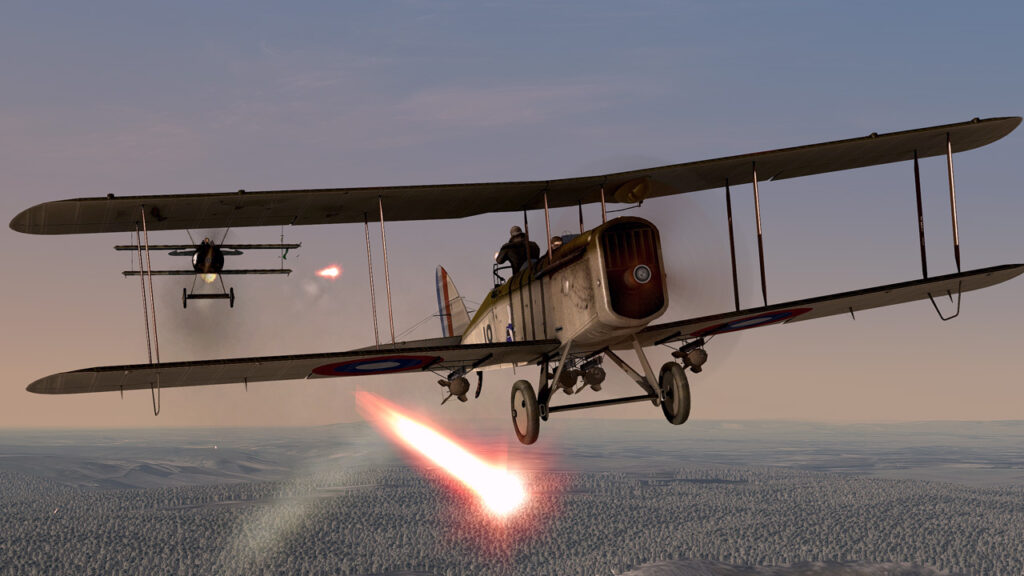
The Germans were using three types of bullets in tandem: the tracer, the explosive, and the regular bullet. By following the flaming tracers, the course of each burst from the German machine gun could be followed. I felt a burning in my left ankle and knew I had been hit. The next burst hit the radiator and the water was lost. Bullets also went through the main gas tanks with the loss of all our fuel.
The danger of fire was one we all dreaded. I realized that, so far, we had been extremely fortunate in that all three gas tanks had been punctured by tracer bullets and this catastrophe had not occurred. The bullets began cutting the wing supports and the engine ceased with the propeller in a vertical position. Realizing that true valor lies between cowardice and rashness, I put the plane in a sharp side-slip. The firing ceased and I pulled out at about 3,000 feet, but the German was still on my tail. I was preparing to side-slip again when two British SE5 fighters appeared. The pilots waved and I felt quite confident I would hear no more from the enemy.

Good read. Can you imagine being involved with such a thing?
Little more than a kite with an engine.
Very interesting, DT. Thank you for posting.
An excellent post. Thanks for this on this Armistice now Veterans Day.
What struck me, apart from the bravery of the pilot and observer was this:
“A Vickers machine gun was mounted on the cowling and by means of a special gear was able to fire between the blades of the rotating propeller…..Each plane carried eight, twenty-five pound bombs, four on the bottom of each lower wing.”
As ghostsniper says these were basically motorized kites. Almost unimaginable today. Though today’s armed forces members face other incredible risks when on active duty. Hats off and deep thanks to all of them, past and present.
That part caught my eye too SK, this part:
“A Vickers machine gun was mounted on the cowling and by means of a special gear was able to fire between the blades of the rotating propeller….”
I’ve heard of that before but didn’t know how it was done. It looks like the firing mechanism on the gun was “timed” to the propeller by way of a shaft and gear system.
Just think, one gear tooth shears off and now you’re blowing the blades off the prop. jayziss….