↓
 

The New American Digest

For Followers of Gerard Van der Leun's Fine Work

  • About American Digest
  • About New American Digest
  • “The Name In The Stone”
  • Remembering Gerard Van der Leun
    • from the website: Through the Looking Glass
    • from the website: Barnhardt
    • from the website: Neo’s Blog
  • Articles
    • The Overland Stage
      • The Holladay Overland Stage: 1 – The Central Route
      • The Overland Stage – 2 Company Operations
      • The Overland Stage – 3 Exploring The Route – An Overview
      • The Overland Stage: 4 – South Platte/Julesburg/Ft Sedgwick
        • Jack Slade
      • The Overland Stage: 5 – Julesburg to Junction Station (aka Ft Morgan)
      • The Overland Stage: 6 – Junction Station to Latham
      • The Overland Stage: 7 – Latham Crossing to Fort Collins
      • The Overland Stage: 8 – LaPorte to Virginia Dale
      • The Overland Stage: 9 – Virginia Dale to Cooper Creek
      • The Overland Stage: 10 – Cooper Creek to Pass Creek
        • Fletcher Family
      • The Overland Stage: 11 – Pass Creek to Bridger Station
      • The Overland Stage: 12 – Bridger Pass to Duck Lake
      • The Overland Stage: 13 – Duck Lake to LaClede
      • The Overland Stage: 14 – LaClede to Almond
      • The Overland Stage: 15 – Almond to Rock Springs
      • The Overland Stage: 16 – Rock Springs to Fort Bridger
      • The Overland Stage: 17 – Fort Bridger to Weber Station

I find I don’t wish to explore new lands, but to explore again those I have already passed through, trying to see what I’d missed in the first hectic rush … Gerard Van der Leun

Home→Published 2025 → November → 23

Daily Archives: November 23, 2025

Dinner with Friends

The New American Digest Posted on November 23, 2025 by JoeNovember 23, 2025

via a comment from Joe

by Stephen Soukup November 22, 2025

The other night, I was blessed to have dinner with old friends, friends who were once the best I had in the world but whom I hadn’t seen in ages. The good news is that, even after all these years, we were able to pick up our friendship right where we had left off, as if no time had passed. There were no awkward silences, no conflicts over newly differing opinions, and no embarrassment over life changes, victories, failures, and all the rest. It was good.

The better news is that during dinner, something happened that both reminded me of why we were such good friends in the first place and also reminded me of important and eternal truths.

I arrived at dinner right on time, walking over from my hotel on a cool and rainy evening, passing a homeless man, sprawled out on a bench, wrapped in a ragged, old blanket, right in front of the restaurant. He said nothing to me. Inside, one of my oldest friends had already been seated and was waiting for the rest of us. Not long afterward, the rest of our party joined us.

Maybe twenty minutes later—as we were finishing our first drinks and were about to order food—our waitress brought a to-go meal and coffee out to my friend, the first to arrive. He excused himself, took the meal and coffee outside, and returned a few moments later. You see, he, too, had passed the homeless man, but, unlike me, had been asked for his spare change. He apologized for only having fifteen cents to give the man, but promised to make up for it. The meal and the coffee were his way of making up for it. When we asked why he felt obliged to do so, he told us that he didn’t feel obliged at all. He just figured that, as the four of us (me, a conservative, and the rest libertarians) were going to be sitting around, complaining about the government and kvetching about the size and scope of the state, it was only right that he do something to help someone, outside of the purview of the state.

As I say, this reminded me of why we had been such good friends in the first place. He is kind and generous and decent, but subtle and composed about it all. He’s a good man, but never asks to be recognized as such.

And there are lessons in his behavior.

First, kindness, generosity, and decency are virtues. Of the four cardinal virtues—prudence, justice, fortitude, and temperance—they all fall under the heading of “justice.” A just man is kind and generous, not for the sake of acknowledgement or admiration, but because he knows that he has been given much and, in turn, that much is expected of him.

Sadly, as I’ve written repeatedly over the decades, echoing such intellectual giants as Alasdair MacIntyre and C.S. Lewis, truly virtuous men and women are in short supply these days. As MacIntyre noted, this is due, in part, to the slow but nearly complete switch in our civilization from an ethics based on virtue to one based on “values” and the loss of moral sense and community resulting from that switch. It is also due, in part, to society’s failure to insist on the teaching of virtues and the inculcation of successive generations with the thoughts and behaviors that enabled our civilization’s rise and facilitated its survival. As every virtue ethicist since Aristotle has understood, virtue must be taught, and it must be reinforced, over and over again. As C.S. Lewis put it in his “The Abolition of Man”: “The little human animal will not at first have the right responses. It must be trained to feel pleasure, liking, disgust, and hatred at those things which really are pleasant, likable, disgusting, and hateful.”

Unlike much of our generation and even more of successive generations, my friend was properly “trained.” He was taught and compelled to practice the virtues that matter and always have mattered in our civilization. How do I know this? Well, in addition to seeing his behavior, I know his brother, who just happened to be one of our other dining companions the other night. And I know that he, too, is a kind and generous and decent person. Moreover, I know their parents, who are among the kindest, most generous, and most decent people I have ever met. They’re all good people. I am privileged to know them.

A second lesson here is one that is particularly relevant today, as Americans fight over such public welfare initiatives as SNAP, the Supplemental Nutrition Assistance Program. As you may recall, during the recently ended longest-ever federal government shutdown, SNAP benefits were delayed. Many people on SNAP grew angry, hostile, and even violent at the prospect of having their benefits halted, if only temporarily. Democrats accused Republicans of trying to starve their constituents and of conspiring to commit genocide against the poor (and no, I’m not exaggerating). Meanwhile, President Trump’s supporters were equally agitated, with some complaining about SNAP recipients’ “sense of entitlement,” as well as the rampant fraud and abuse in the system that, in the end, takes advantage of those who work for the benefit of those who don’t. Some scenes were indeed quite ugly.

Now, I know that American conservatives revere Alexis de Tocqueville most for his brilliant observations about early America and his equally brilliant observations about Revolutionary France. For my money, though, his most brilliant yet almost entirely ignored observation was one that he made about Great Britain in his largely overlooked Memoir on Pauperism, which he delivered to the Royal Academic Society of Cherbourg in 1835. The memoir is about “public charity,” based on the ruinous effects of Britain’s Poor Laws, and in it, Tocqueville notes the inevitable and deleterious effects of state-sponsored welfare:

The law strips the man of wealth of a part of his surplus without consulting him, and he sees the poor man only as a greedy stranger invited by the legislator to share his wealth. The poor man, on the other hand, feels no gratitude for a benefit that no one can refuse him and that could not satisfy him in any case . . . . Far from uniting these two rival nations, who have existed since the beginning of the world and who are called the rich and the poor, into a single people, it breaks the only link that could be established between them. It ranges each one under a banner, tallies them, and, bringing them face to face, prepares them for combat.

In his first apostolic exhortation, Dilexi Te, Pope Leo XIV rightly demanded that Catholics maintain their personal charitableness but also, more or less, endorsed the view that the state must be the primary material provider for the poor. Pope Leo denounced “ideologies that defend the absolute autonomy of the marketplace and financial speculation” and that, consequently, “reject the right of states, charged with vigilance for the common good, to exercise any form of control.”

One might say the Pope is tilting at windmills here, since such ideologies are largely nonexistent and are practiced nowhere on earth. Even Tocqueville, nearly two centuries ago, acknowledged that the state must be the backstop for those circumstances when private charity inevitably fails. One might also say that the Holy Father is ignoring human nature and, by extension, making matters worse. As the rise of neo-socialism and the recent anger over SNAP demonstrate, and as Tocqueville warned 190 years ago, envy is the inevitable result of the overweening welfare state, as are resentment and frustration. One side in the public welfare equation resents what it is “forced” to provide, while the other assertively demands what it is “owed.”

By contrast, when my friend returned from delivering the meal to the homeless man, he was smiling from ear to ear—in large part because of the deep gratitude the food’s recipient had expressed to him. Public charity is inarguably a necessity, and it is not an evil in itself. Nevertheless, excessive reliance upon it tends, as Tocqueville noted, to destroy the virtues of both the “givers” and the “receivers.” Private charity does the opposite. It reinforces the virtues of generosity and gratitude.

A third, related lesson from the events of the other evening is that the practice of virtues is contagious. As it turns out, my friend only bought dinner for the homeless man. The coffee was bought and paid for out of her own pocket by our waitress, Cynthia, who was moved by my friend’s generosity and also wanted to help. Cynthia, I would wager to say, gave more out of her poverty than out of her surplus. Yet she did it and did it happily.

It’s amazing—and easy to forget—what people can do when encouraged to be virtuous. Life may, as Hobbes insisted, be nasty, poor, solitary, brutish, and short. But the people who experience it are not, at least not when they are allowed to be otherwise.

Continue reading →

Posted in Uncategorized | 4 Replies

Adventures In The Air

The New American Digest Posted on November 23, 2025 by DTNovember 23, 2025

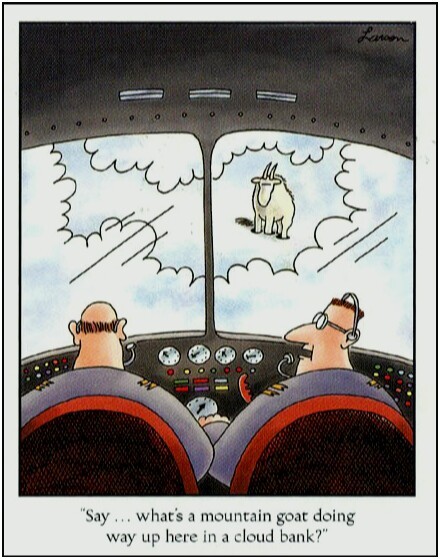
Someone recently reprinted this Far Side cartoon and it brought back memories ... and you have the dubious privilege of having me tell of them.

Sometime back in the early 90s, I had a job supervising aerial oil surveys over the upper headwaters of the Amazon and foothills of the east slope of the Andes in eastern Peru. "Supervising" being a relative term; it was me and the pilot.

We left from a small private airport east of Denver (which no longer exists) and flew by hops down to Pucallpa, Peru (8°23′S 74°31′W; 500ft elevation) where we based operations. Pucallpa is the regional capital and sits on the banks of the Ucayali River, the primary headwater of the Amazon River.

We buzzed around over the jungles at the eastern foothills of the Andes in a plane like this one: a Piper Aztec (after flying it down from Denver). There were the two front seats and 4 passenger seats - in our case, the passenger seats were removed and the cargo space filled with survey and recording equipment. A video recorder was pointed straight down through a hole in the fuselage and the magnetic field sensors were located at the end of a 10-foot stinger off the rear tail.

For some reason, this seemed to attract the attention of the DEA ...

It also attracted the attention of the Sendero Luminoso. The latter shot at us, the former didn't (I think) ... but they were very, very interested.

We were based at the military side of the airport which led to some interesting situations but all was good.

Don't drink the water, use ice cubes, or eat fresh vegetables in a third-world on a first-world stomach.

So to the point of this story:

We were buzzing around on gridded flight patterns that were very similar to plowing a field: 100 km one way, turn around, shift over a few km, repeat in the other direction. Repeat as necessary. 6 days a week for 3 months.

I was the equipment operator; this required me to be prone on top of a platform between the equipment. On one of our flights, I heard the pilot telling me to hang on.

It's wet in the equatorial jungle. Makes Seattle look dry. Clouds form at the uplift of the mountains. GPS didn't really exist yet, the region was not fully surveyed.

The ceiling of this plane is just shy of 19,000 ft. The Andes rise to over 20,000 feet. We came out of the clouds and saw dirt. And trees. One should not see dirt and trees in front of you when staring out the front window of an airplane at 15,000 feet.

All I could do was grip the equipment rails and try to hold still so as to not upset the balance of the plane. I didn't know this plane could perform this maneuver. We pulled up and over ... and headed back to base; that was enough flying for the day.

When we landed, the pilot told me he had undergone a transformation: "I took off as a man; I landed as a chicken".

One does not expect a camera pointed down from an airplane to record images of the undersides of leaves ...

When the surveys were completed, we flew back to Lima, and the pilot took the plane back home to Denver; I took the opportunity to visit Machu Picchu.

Another tale, same trip ...

While in Lima, I arranged to join an English-speaking tour group to Cusco. I was accepted (Yankee dollars) but I was the last-minute addition. Caught the red-eye flight out of Lima (sea level) to Cusco (11,000 ft). Only a bit over 1 hour flight

Cusco is in a valley ... the mountains surrounding Cusco rise to over 20,000 feet.

So anyway, being the last-minute tail-end Charlie of the group, I had to stay at a different hotel than the one the tour group had booked - Cusco is a tourist town after all, it was August, and the hotels were booked. The group I was with were Europeans and Australians just coming in from the Galapagos; I was the only American. They didn't hate us then.

It was an early AM flight; I got dropped off first at a place the tour company arranged for me and the rest of the group went to their hotel.

Coffee. It's time for coffee.

I was the only person in this dining room. Not even staff.

All of a sudden, some little guy came out of the back, presented me with a cup of camomile tea - so I thought, and left before I could speak (No habla Espanol).

"Wait a minute! I want some coffee!"

But the tea was hot and it was cold out. Took a sip.

"Wow! That's better than coffee!"

Turned out that the camomile tea was actually coca tea. Coca is legal and common there (I could buy a box of coca leaves the size of Celestial Seasonings tea boxes for 50¢ American at the airport. I had the thought that may not be a good idea).

Everything we expect coffee to be. Wide awake and full of energy. Must be bad for you ...

Turns out coca tea is a good for reducing the effects of altitude sickness. Having been adapted to Colorado altitudes (Leadville is at the same altitude), I wasn't affected but the rest of the group were sea-level people. Serving coca tea to tourists is a routine.

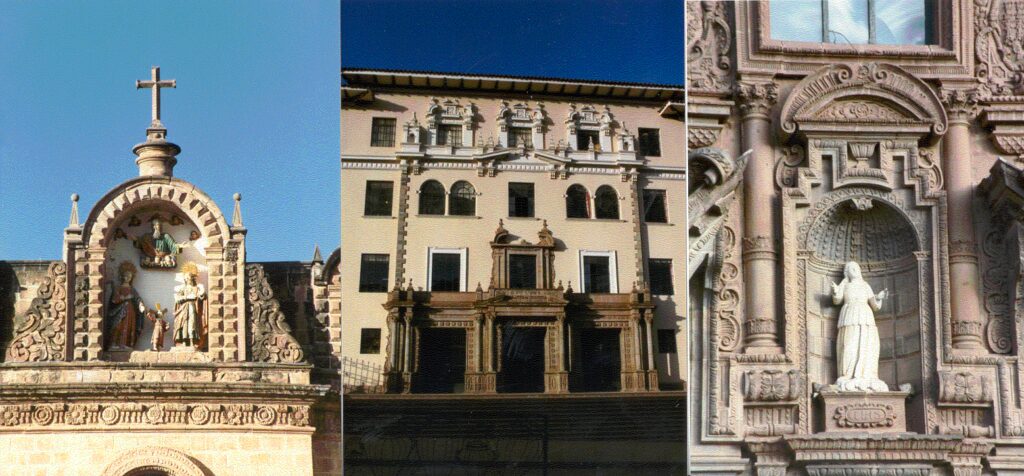
Spent some time wandering around Cusco ...

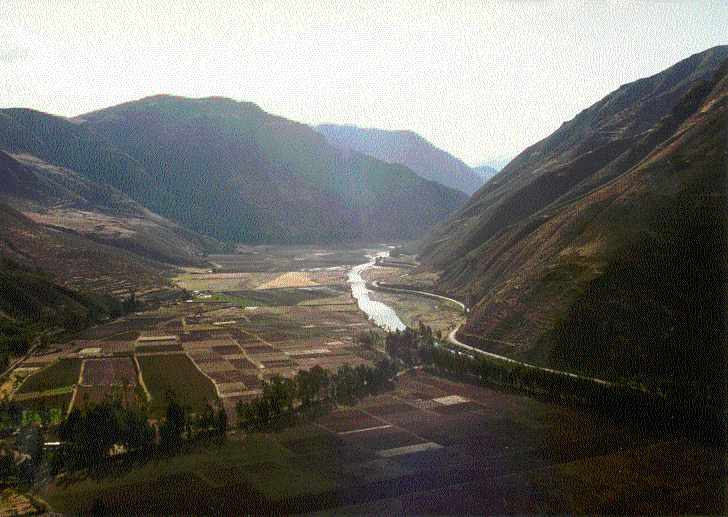
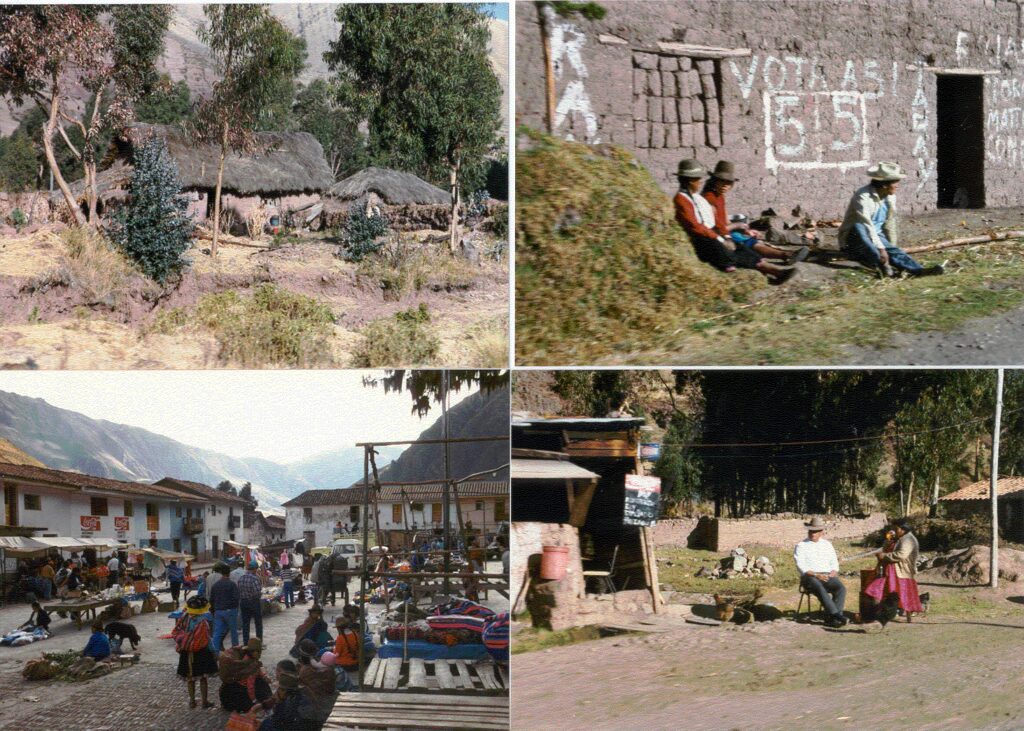
Having joined the group got me accommodations and tickets but I was essentially on my own; the group's tour bus was full. Last minute Charlie effect. I hired an English-speaking guide for an auto tour of the area. Most of the drive was between 11,000 and 13,000 feet ... in the valleys.

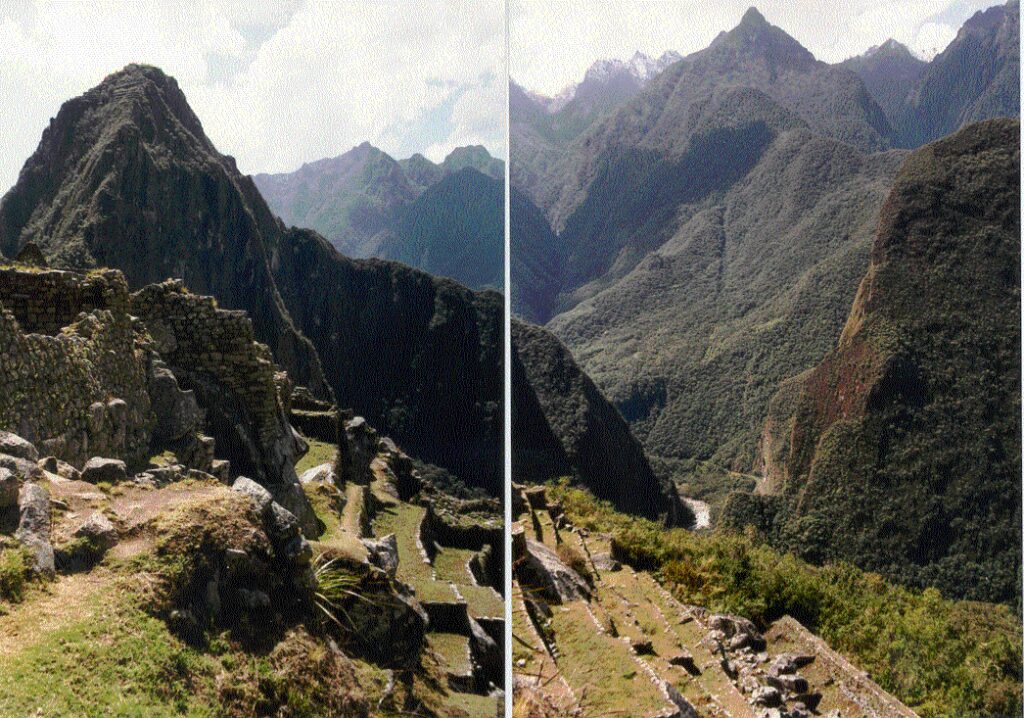
Came back then caught the train to Machu Picchu the next day. Other than the flight over (when most of the group were taking naps on the red-eye), this was the only time I was with the tour group.

the train runs along the river
it's a long hike up; not any shorter going down
I was younger then

Caught the flight from Cusco to Lima the next day; stayed at the Lima airport to catch an American Airlines flight to Miami, then a domestic flight back to Denver.

Worst part of the trip? Coming through the Miami airport on the way home.

Continue reading →
Posted in Uncategorized | 10 Replies

Rules

Gerard Van der Leun
12/26/45 - 1/27/23


Gerard's Last Post
(posthumous): Feb 4, 2023
"So Long. See You All a Little Further Down the Road"

When my body won’t hold me anymore
And it finally lets me free
Where will I go?
Will the trade winds take me south through Georgia grain?
Or tropical rain?
Or snow from the heavens?
Will I join with the ocean blue?
Or run into a savior true?
And shake hands laughing
And walk through the night, straight to the light
Holding the love I’ve known in my life
And no hard feelings

Avett Brothers - No Hard Feelings

The following was posted along with the announcement of Gerard's passing.
Leonard Cohen - Going Home

For a 2005 interview with Gerard


November 2025
S M T W T F S
 1
2345678
9101112131415
16171819202122
23242526272829
30  
« Oct   Dec »

Most Recent Comments

  1. DT on GrandpaDecember 14, 2025

    I'm reminded of a Christmas card cartoon showing some guy in Arizona, leaning on his lawnmower enjoying a cold beer.…

  2. jean on GrandpaDecember 14, 2025

    Your house is beautiful, gs!

  3. ghostsniper on GrandpaDecember 14, 2025

    72, you lucky dawg. Over time that has proven to be my perfect number. More than a usual amount of…

  4. azlibertarian on GrandpaDecember 14, 2025

    I am at my best when in my role as a grandfather. I'd have been happy to have been left…

  5. Joe on Gerard’s PoetryDecember 14, 2025

    I am looking forward to it.


Blogroll
The New Neo
Jean's Blog

Hey, Mr. Tambourine Man,
play a song for me
I'm not sleepy
and there ain't no place I'm goin' to

Hey, Mr. Tambourine Man,
play a song for me
In the jingle jangle morning,
I'll come followin' you

Take me for a trip upon
your magic swirling ship
All my senses have been stripped
And my hands can't feel to grip
And my toes too numb to step
Wait only for my boot heels to be wanderin'

I'm ready to go anywhere,
I'm ready for to fade
Unto my own parade
Cast your dancing spell my way
I promise to go under it


Men who saw night coming down about them could somehow act as if they stood at the edge of dawn.


From Gerard's site. The picture always caught my eye.

Archives

  • December 2025
  • November 2025
  • October 2025
  • September 2025
  • August 2025
  • July 2025
  • June 2025
  • May 2025
  • April 2025
  • March 2025
  • February 2025
  • January 2025
  • December 2024

Contact: dt@newamericandigest.org

About "DT"

The New American Digest © 2024 - Weaver Xtreme Theme
↑