A Question
for you "more-experienced" folk.
Anybody still writing a full date with "19" instead of "20"?
Continue reading →
for you "more-experienced" folk.
Anybody still writing a full date with "19" instead of "20"?
Continue reading →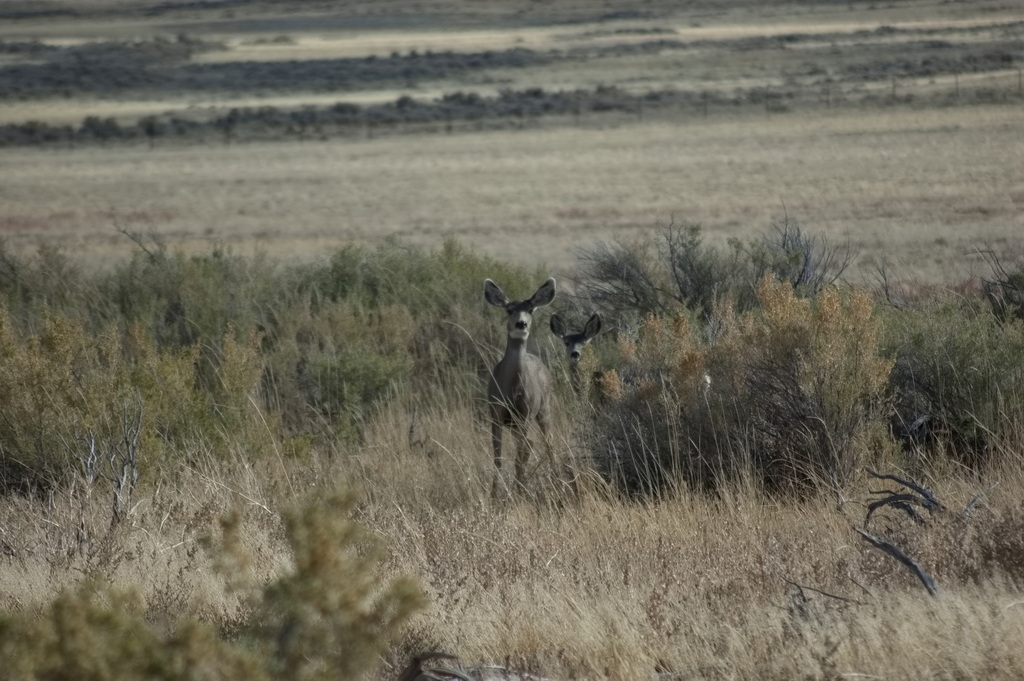
Sudden weather shift came with the eclipse ... which I didn't get to see for the cloud cover that night. We weren't total but 98% on a lunar eclipse gets the point across.
High 90s/low 100s went to high 80s/low 90s overnight and predicted down another 10° by mid week. Clouds build, it's trying real hard to rain. The winds have picked up and don't fade away as quickly as just a week ago. It's a bit chilly (66°) to sit out a windy morning to watch the sun rise with just a T-shirt. (but I'll be out in a T-shirt when it gets up to 40 in a few months)
Summer's putting on it's final act - although not expected, 1st dusting of snow could show up in a few weeks - not a few months anymore. Time to put the winter emergency gear in the truck.
What happened to "I like winter?" Hell, I left the deserts because I missed winter.
I'll be ready for mid-May here pretty soon.
And I am NOT ready for Christmas just yet. Get that stuff out of the stores.
Jeez!
Continue reading →Hey John! How timely of you to mention something about traffic at Arches.
Funny you should bring that topic up ...
This is traffic backed up trying to get into Moab/Arches ... which is still a few miles down the road from this viewpoint. At this time, Arches is restricting access and traffic backs up. Town can be a zoo at times ... although I'm not really sure when it's not a zoo anymore.
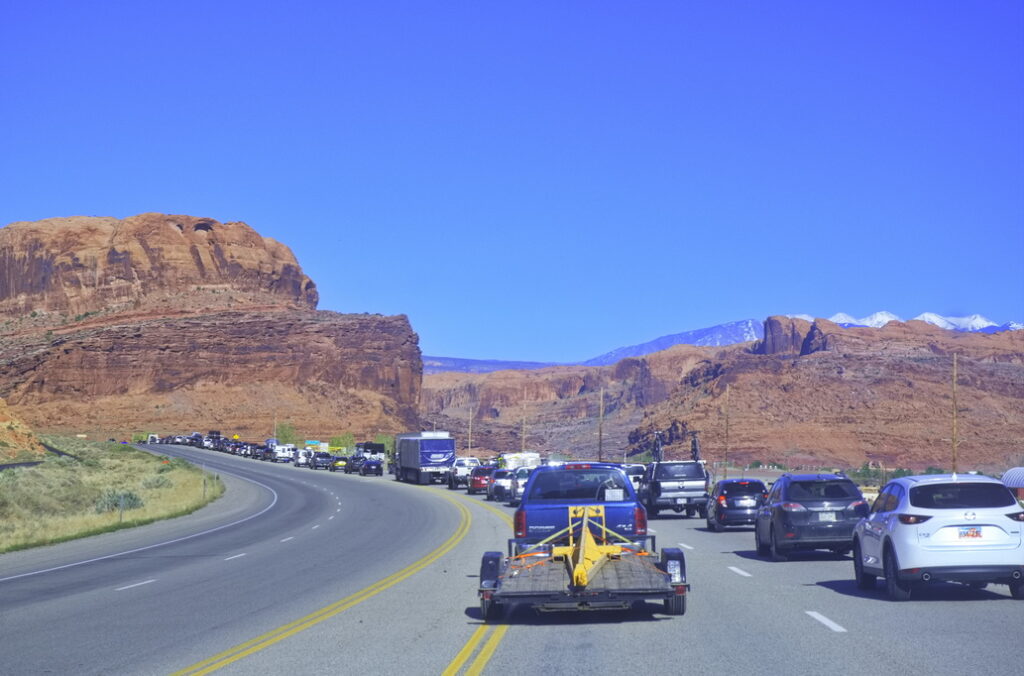
I lived in Moab almost 50 years ago (???). It wasn't quite the tourist place then. This road was two-lane, I-70 was being built; US6 was the main (only) EW highway. I was in town for 3 months or so working with an oil survey team out on the San Rafael Swell. Good job, nice country, paid portal-to-portal as well :) Didn't go with them when they moved on (to Texas). Sometimes I wonder ...
Anyway, I wasn't caught in this traffic for more than a few hundred yards to a cut-off. There's at least one decent road I usually take on the back side to avoid all this if I'm going into the park. It's a bit out of the way, much red clay/sand surface, can be treacherous remote desert driving although usually passable with 2wd.
Don't go out there if it has rained, is raining, or will rain.
submitted by illinoisbeekeeper
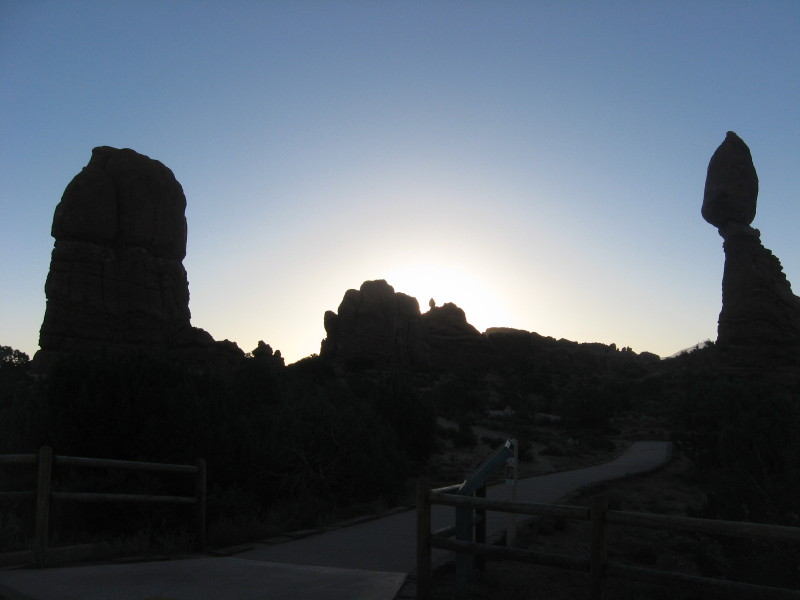
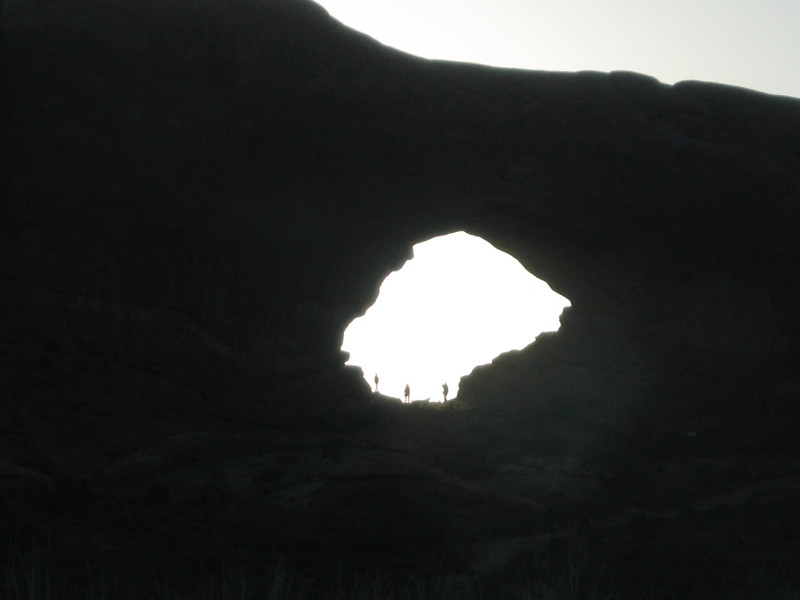
Arches is perhaps my most visited natl park and maybe second to Death Valley as my favorite.
One should read Edward Abbey's "Desert Solitaire" while there.
I've rattled on enough the past few days. Here's something originally published by Jean Nov 9, 2011
His name was Peanut Butter Jones.
His parents were hippies.
His quest was to find the perfect Jelly.
He spread Orange Marmalade, licked
Peach Preserves and dipped a digit in his
cousin Apple Butter.
Plain Grape made him drip. Red Raspberry
stuck in his teeth. Elder Berry was too ripe
and Cherry was taken a long time ago.
Poor Peanut changed his name to Damn Skippy.
Continue reading →If you don't make plans, they won't go bad.
I had plans. I was to go to east Kentucky for a yearly family get-together. Seems family reunions are popular in the hill country as are family cemeteries. I know where every male ancestor is buried going back to the Revolutionary War veteran ... and Dad has already chosen his place. All within a few miles of each other. The reunion is held on a Sunday (right after church - when church was just part of life) near the main family cemetery and visiting cemeteries is also a thing.
Only so many times one can pay respects to a great-great grandfather ...
Only so many times can greet a distant cousin as a close family member.
When our only connection is a 4x g'grandfather and we live in vastly different places in the country with vastly different cultures ... there's not really anything special about our relationship.
But damn, it must be an Appalachian culture thing - keeping track of family connections, even if pretty faint.
I may have been raised in Detroit but Sunday mornings were Renfro Valley time: the "Renfro Valley Sunday Morning Gatherin'" - a little bit of fiddle, a little bit of soul-saving - all before church.
North to my original stomping grounds for my favorite niece's wedding. It's been years; a strange feeling - "my" town doesn't exist anymore but that street looks familiar, so does that store ... but where did that road disappear to and when did this road go in?
And where the hell did all this traffic come from???
Family homes were full; I may be A-level close family but grandfathers and off-spring are 1st tier A+ level and the bedrooms are full. I made plans to utilize a week's time between events. I was going to head north and visit some places around Gaylord and Roscommon and check to see if the wild wintergreen and low-bush blueberries are ripe. I was going to visit Greenfield Village and Detroit Institute of Arts. I was going to enjoy a Zehnder's chicken dinner in Frankenmuth and probably visit Bronner's while I was there. I was going to visit a long-ago friend and apologize to him for something from 60years ago (huh?). I was going to visit either Warren Dunes or Sleeping Bear. Pop over for a quick visit to Port Huron - watch the ships squeeze into the St Mary's River channel, see the fence on the Canadian border.
Notice the use of "was".
I did get up into the thumb a ways - Marlette/Sandusky regions.
If .... IF ... I had to live in Michigan again, the central thumb would be one region I'd consider.
Funny - I worked in the highest of high-tech in my field for most of my career. I go out of my way to avoid what I can of it these days. I have little desire to live in technology centers. Don't call me or text me; I don't often have that damn thing anywhere near me anyway ... and it spends a fair amount of time uncharged when I forget about it. The central thumb is probably a good place to avoid pervasive "high-tech".
I got caught in family fun and wedding preparations.
A high-end wedding. Mid-5 figures!!! Or more. Eek! I didn't "read" that B&W square thingy on the invitation (QR code?); just show up and I'll get pointed in the right direction. More damn unnecessary tech ...
Niece married someone world-famous in his field and pretty well off is probably an understatement. Prominent people on hand; some local, some from distant lands. Eek! EEK!!!
DT showed up with clean work boots (I have boots and slippers. Pick one), brand new jeans, and dress shirt that fit to a semi-formal affair. I haven't had proper dress-up clothes for a long time. Semi-formal to me is shirt sleeves not rolled up, buttons all done up, but no tie.
Well ... as Mrs DT pointed out, I didn't get dressed up for my own wedding either ...
So I'm memorable ...
And I'm the favorite uncle :)
or was:
"Uncle DT wouldn't even get dressed up for my wedding!"

A sample of some obscure - and maybe not obscure - tunes from my strange and off-the-wall collection.
Today's selection: Norman Greenbaum - "Back Home Again" 1970
Yes I am ...
Norman Greenbaum is most known for "Spirit In The Sky". The album this cut was taken from has been described as "Something pleasant and homey about this album, like a needlepoint sampler."
Continue reading →Wind north through the hills to the Ohio River. Cross over into Ohio - up and over to I-75 north at Dayton. With a reminder to myself to not take that route again. Not that it's likely I'll ever need that route again ....
Follows are photos of all the interesting places along I-75 in Ohio:
After the excitement of Toledo, I cross into Michigan headed for Detroit and points north.
Other than passing through on I-75, I didn't get into the city proper. Just as well. Missed a few things on my to-do list though - among them, the Detroit Institute of Arts.
I've seen prosperous areas with less visible economic activity than I saw in the northern suburbs. Detroit proper may be a dump - can't speak to that - but north Detroit metro seems to be a hive of activity: wide-spread construction activities, factories re-opening, rush hour traffic, outrageous property values ...
So anyway, I arrive at brother's home ... and into wedding preparations.
And, unknown upon arrival, a week of the women breaking into spontaneous karaoke, a cappella.
Family - sometimes I miss it all at once.
Continue reading →I wouldn't expect y'all to catch it, but I certainly should have.
That picture in the earlier post?
Same location but sunset, not sunrise ... sunrise was back in SW Wyoming. It was Wyoming driving into the morning sun.
Losing it, DT ... losing it.
(oops ...)
Eastward through the night. One thing about US36 in eastern Missouri - gas stations are few and far between ... or non-existent on the highway itself.
I refuse to spend money in Illinois unless I can absolutely not avoid it.
So I topped off somewhere back in the middle of Missouri and will make it across I-72 to Champaign and I-74, then one more gas stop just inside Indiana, down 74 to I-275 just outside Cincinnati and on into the hills of eastern Kentucky.
Yee-haw!
This here's more or less across the road from the home of my Kentucky holler hillbilly side of the family back to the Revolutionary War - relatives as close as 1st cousins spent their lives here.
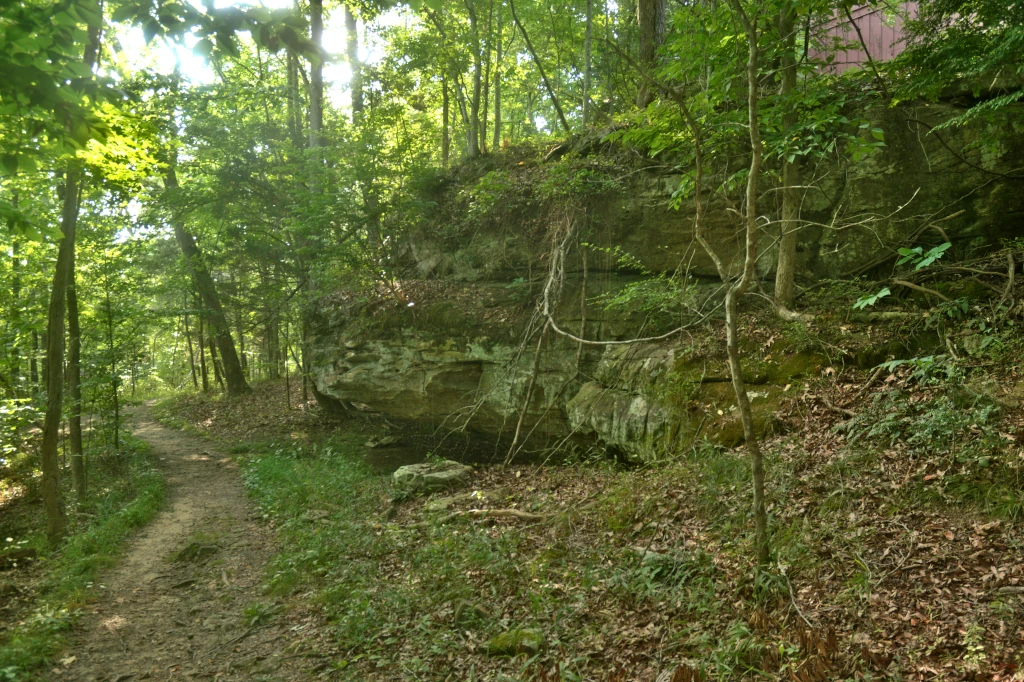
Mostly 'round here, I'd get invited in for dinner ... or shot. My name doesn't cross over the ridge to the next holler south.
One or more of my parallel lives is here.
This is Daniel Boone country; Boonesborough is not far from here. Deep woods and limestone rocks.
Moonshiners, revenooers, family feuds, good ol' boys, caves, damn good country fixins for supper, tall and narrow family trees. Lost family cemeteries on top of overgrown hills.
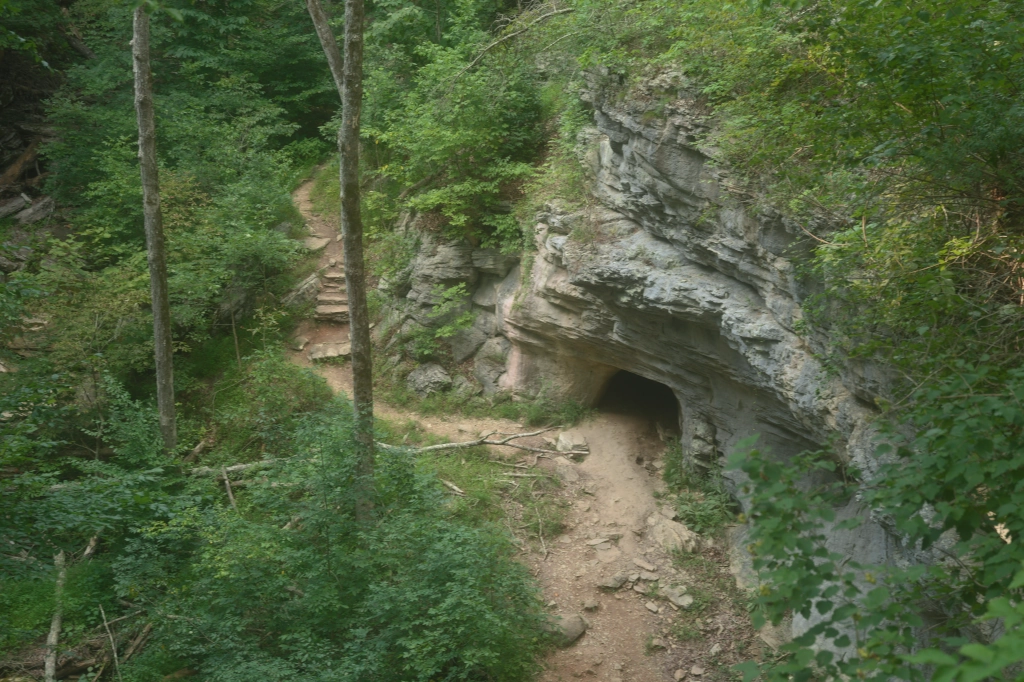
Bugs. Snakes. Humidity.
Continue reading →Back home, more or less recovered, more or less caught up. Back to "life" as constitutes "normal" around these parts.
I've done this trip enough times to have a route and timing down pretty well. I tend to leave just after dinner and drive through the night - it's a different world at 3AM than 3PM. I'll be where I need to be in a day and a half ... biscuits and gravy for breakfast day after tomorrow!
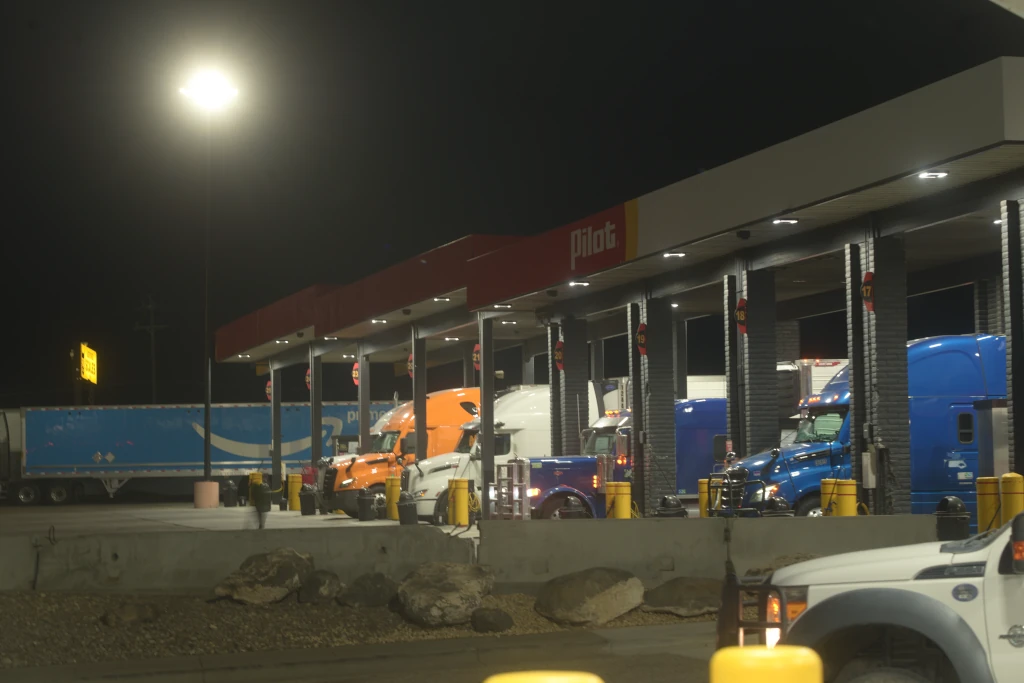
I-84 to Echo, UT. Pick up I-80 to Lincoln. Drop down along surface roads to the Missouri River crossing at Nebraska City. I-29 is just east of the river.
Eventually the dawn comes - I find myself on I-29 somewhere south of Nebraska City, somewhat north of St Joe - which is where I get off the expressway and hit US36 east across Missouri.
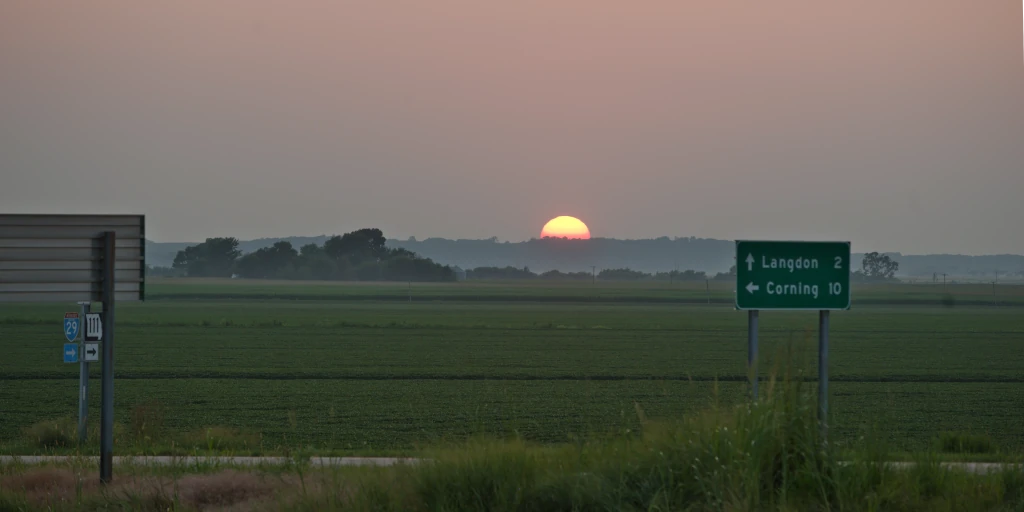
Take I-29 down to St Joe where I pick up US36 as an alternative to the slightly quicker route down to KC and I-70 to I-64.
It's just past dawn; I'm driving into the sun. Pull the brim down on my hat and carry on.