Like All Fairy Tales
Once upon a time ...
Gordon Sinclair was a Canadian from Toronto that recorded "The Americans" in 1973. A transcript was recorded by Byron MacGregor of CKLW in Windsor, climbing to #4 on the Billboard 100
Continue reading →
Once upon a time ...
Gordon Sinclair was a Canadian from Toronto that recorded "The Americans" in 1973. A transcript was recorded by Byron MacGregor of CKLW in Windsor, climbing to #4 on the Billboard 100
Continue reading →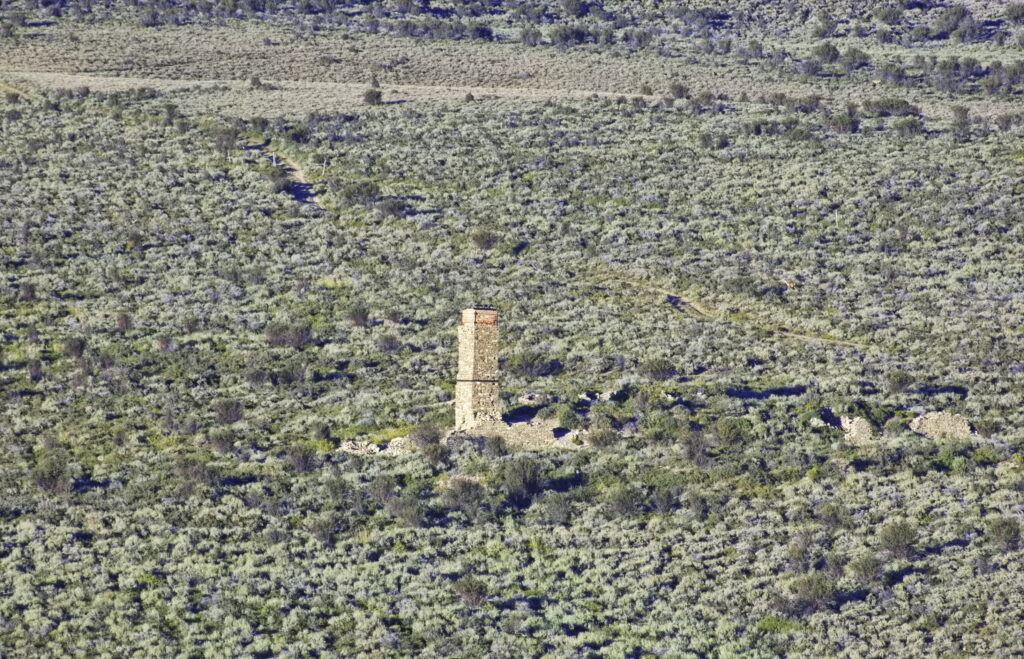
Rich silver ore was discovered in the nearby hills in late 1867; the town of Hamilton, first known as Cave City, was first "settled" in May 1868 when a saloon was built. By August, the town had 600 residents, 4 saloons, and a post office - a "rowdy metropolis of vice and venture full of gamblers, miners, and madams". The town sat at about 8,000 ft with the mines on nearby hillsides being up to over 10,000 feet. Stage lines ran to Elko (on the Central Pacific Railroad) and Austin, another silver camp (now on US50).
The first silver strike was of a vein 70 ft long, 40 feet wide, and 30 feet deep worth over $1M 1869 dollars. It is claimed to have been the purest silver vein found in Nevada.
When White Pine County was formed in 1869, Hamilton was selected as the county seat. At that time, the population had grown to over 10,000 people with 200 mining companies in operation. By late 1869, the region reached its peak of 25,000 people covering 2 square miles complete with suburbs and every type of business of that time. Multiple banks, churches, schools were established with elaborate courthouses for each of the towns (of which Hamilton was by far the largest). Several breweries, over 100 saloons, and upwards of 60 general stores inhabited the region.
Theatres, dance halls, and stamp mills ran 24 hours. Typhoid fever, claim jumpers, and gun-fights kept the population under control. A steam powered water system was built in 1869; flattened tin cans provided building materials - of which many remnants even now litter the ground.
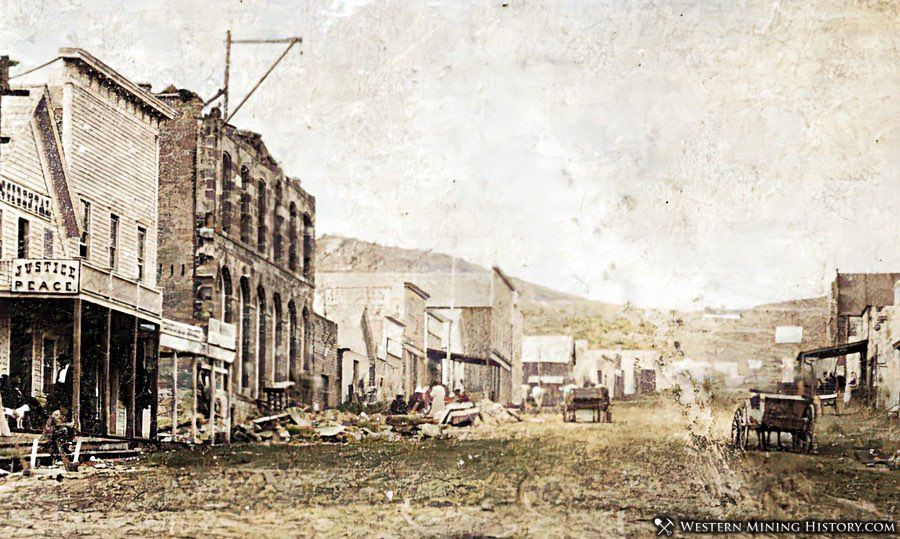
The same story for most of the Nevada mining towns: the ore started to play out, much of the population moved on (but even with a population of just under 4000 by the 1870 census, still the 3rd largest city after Virginia City and Gold Hill; #4 was Carson City, the state capital). In 1873, a fire broke out and damaged most of the business district - many of the businesses never re-opened. Apparently, the fire was started by a business owner wanting to collect insurance on his property, a cigar store; the destruction basically finished the town. The business owner was caught and served 7 years in prison. By 1880, the population dropped to around 500 people.
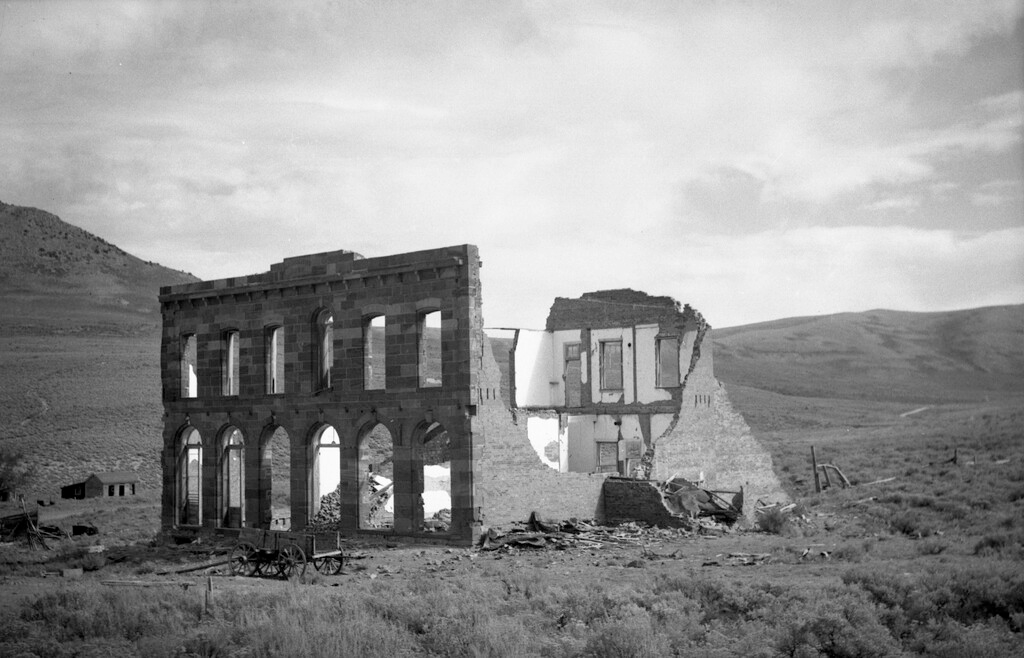
In 1885, another fire destroyed the courthouse and county records. By 1887, the county seat moved to Ely, 50 miles away (and about 10 miles off today's US50). By 1895, most of the population had left for greener pastures. The last stamp mills ceased operation by 1895.
By 1919, mush of the town was full of deserted and dilapidated ruins of former glory. However, Hamilton remained important enough to justify routing the Lincoln Highway through town in 1913 but new routing of the road bypassed the town in 1924. The post office closed in 1931; the population had fallen to 25 by 1940 with ranching the main activity.
Some tentative mining was re-established during the silver price boom of late 1970s/early 80s but nothing came of it. Last I was there, a few worn out truck bodies, a metal quonset hut type structure, and rusted cable were scattered among the older ruins.
Remnants of some structures remained at least through 1996, most notably those of the Wells-Fargo bank but by 2006, someone/something had collapsed the bank walls and this mill chimney was the only standing structure of the glory days ... although ruins abound. The road into the area is seasonal; impassible in winter, not recommended when wet, and high clearance 4x4 recommended when dry - although careful driving may allow a passenger car to reach the site. Well worth a visit for those that explore these old places.
Gas up in Ely to the east or Eureka to the west. Carrying extra jerry cans wouldn't be a bad idea. I like carrying 2 spare tires ...
The 1912 Lincoln Highway ran across the 1st photo, just this side of the chimney. This view is of what was once a bustling main street of the town; when I was last there, the main residents were several herds of wild horses and I slept to the song of coyotes singing in the hills.
Continue reading →