What’s Going On Here?
"Civilian Casualties Reported As US Conducts Record Number Of Somali Drone Strikes"
Are we attacking Minneapolis now?
Continue reading →
"Civilian Casualties Reported As US Conducts Record Number Of Somali Drone Strikes"
Are we attacking Minneapolis now?
Continue reading →No, not this web site ...
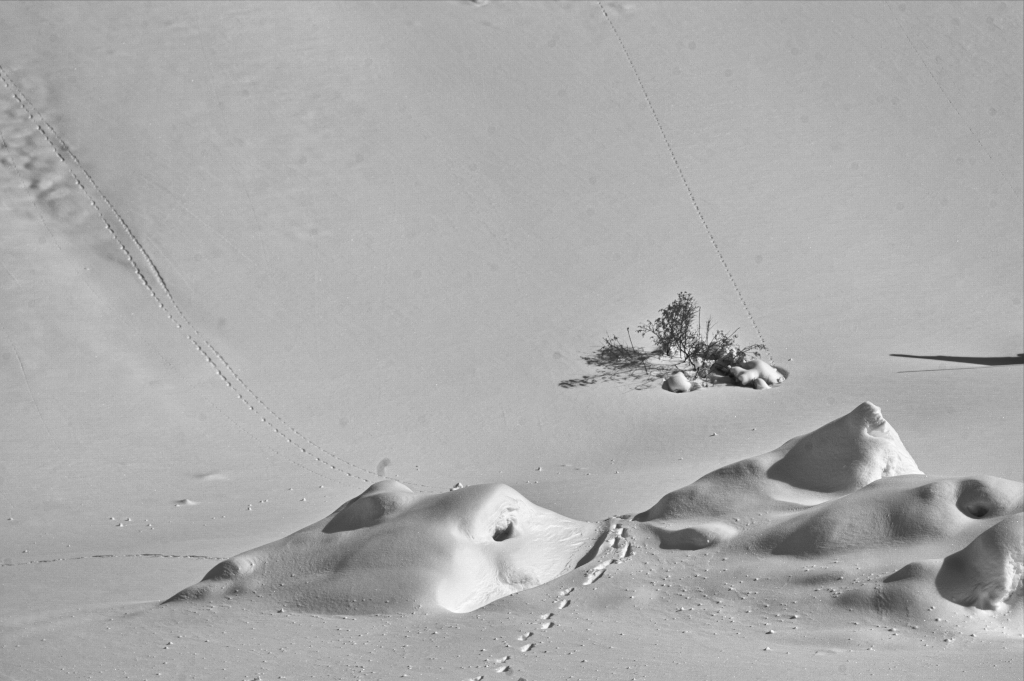
It's been an unusual October here. The weather's been more like September - we haven't had a hard freeze yet.
As I write this in early evening, the sun is shining and the temperature poked its nose up into the 70s.
Never say never but I don't expect to see 70s again for a few months.
But this is it. A storm is predicted to blow in tonight and predictions are for 12" snow above 4500 ft. Rain and sleet down here.
It's been 50s and low 60s for highs the past couple weeks - even those temperatures are warm for this time of year at this latitude (44° or so) and elevation (2500-3000 ft. Not really all that high. Not even in "high-altitude" cooking zone. Foothills, not mountains. Those are 10 miles or so east). I expect the pass to close tomorrow - first heavy snow usually has problems - but it's a main route (for here. It's a gravel road) and it's usually open.
The bugs know what's coming; out doing chores today, the gnats and other unidentified such creatures are swarming to the point of a choice between additional unexpected, undesired protein or a face mask. Had enough of those.
The stink bugs are making their presence known.
The wind's already picking up, the clouds are moving in, and the predicted highs for the next week or so are 40s and 50s. I guess the inevitable first freeze is here.
But I got the lawn mowed for the last time this season, got the new shed enclosed, hose lines from the garden and watering hole (for the critters) have been pulled in. Plenty of firewood stacked up and ready.
The greenhouses have been "de-summerized"; not sure they're winterized but we'll know in a month or so. The harvest has been beyond expectations. I guess the cantaloupes are finished. Probably the tomatoes as well. Too bad for the late starters, but they had an extended season. Beans, beans, beans. I like beans but who's going to eat all this butternut squash? Not I.
It's a little early to turn on the water line anti-freeze heaters. At least my water lines don't extend a foot inside the house like they did when I lived in Montana - nonetheless ...
Am I properly winterized yet? Close ... but what's winter prep without the weather pointing out what one forgot to prep?
Have I mentioned I'm ready for Memorial Day?
Continue reading →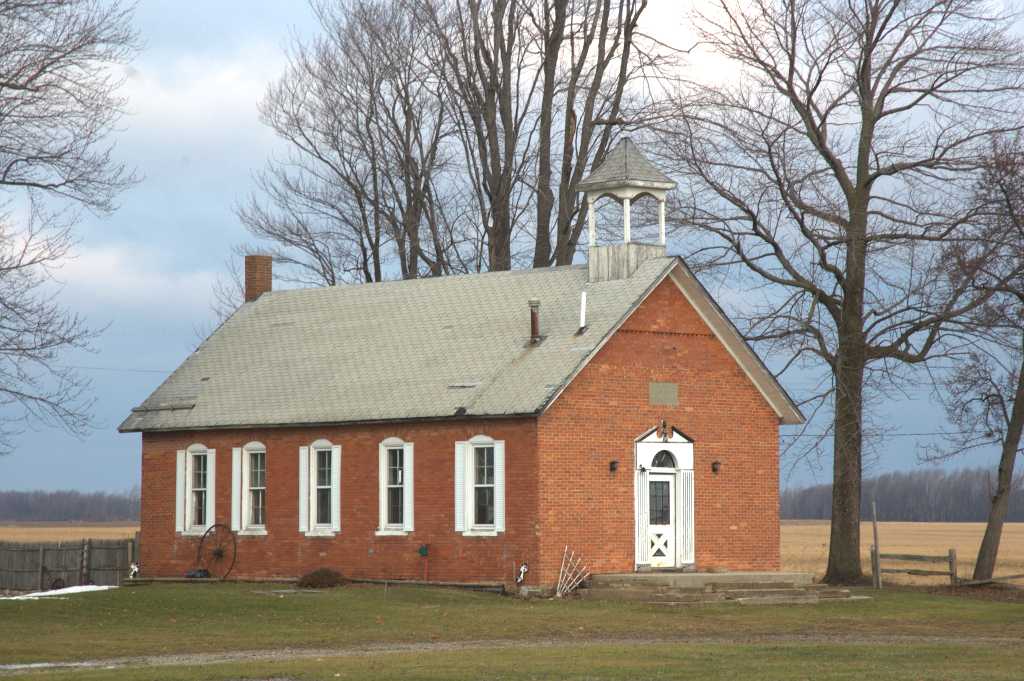
Up at the base of the thumb of Michigan sits this old schoolhouse: District 2, 1896 per the date plate above the door.
Farming country then; farming country now.
Certainly a different world than metro Detroit.
That's all I know of this structure.
I wonder what happened to the bell. I wonder what it's used for now - it's in pretty good shape.
I passed by and took the photo.
Then I drove on.
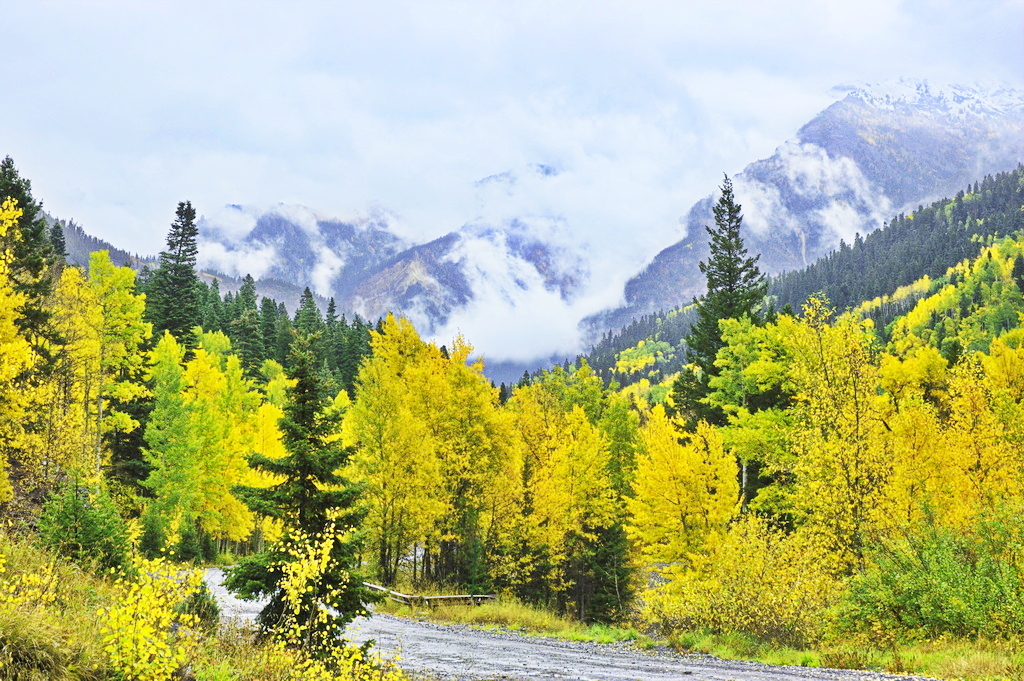
I was up with a buddy at the old Ruby Trust Mine a few miles outside and uphill from Ouray, Colorado when a minor storm passed over. Coming downhill, the clouds were breaking up showing one of the season's first snows high up. The aspens were still in transition here at roughly 10,500 ft but it won't be long before they begin to look more like bare white sticks when the brilliant foliage turns from green to yellow to brown to gone. The tallest peaks in the background top 13,000 ft. The location is near the ghost town of Sneffles and the Revenue Mine. (The location of the Ruby Trust as marked on Giggle Maps does not appear to be correct)
Continue reading →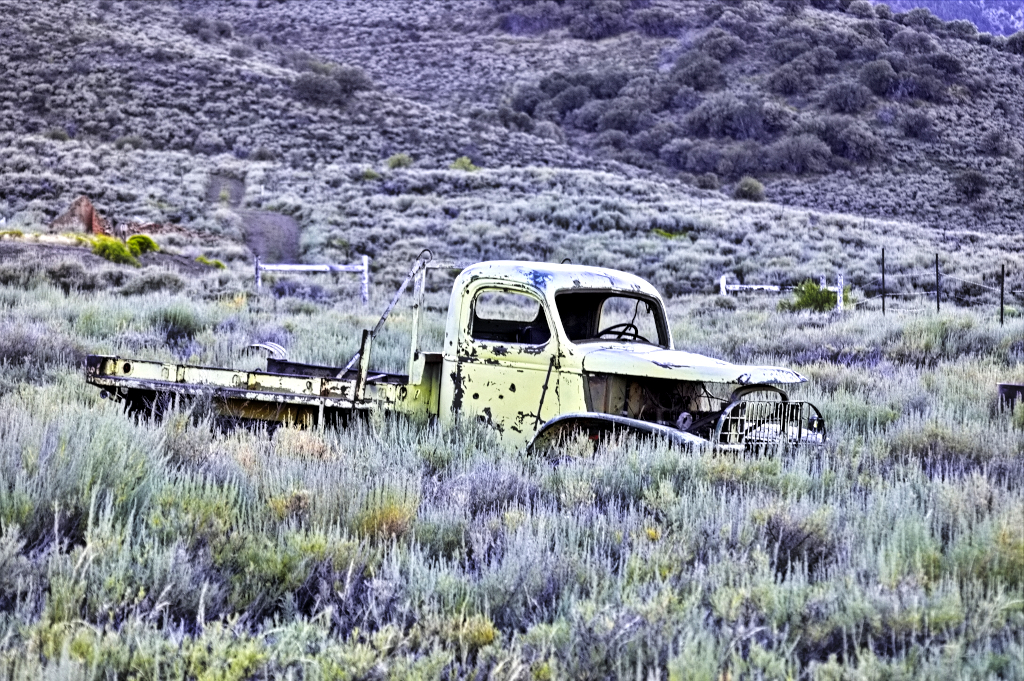
I notice the engine is missing
A not-quite-so-old mine site. 1940s-1960s; maybe into the 1970s. A fair number of abandoned vehicles laying around. Off to the right is a shaft that's been fenced off.
Continue reading →A sample of some obscure – and some maybe not obscure – tunes from my strange and off-the-wall collection.
Today’s selection: T Bone Burnett "Shut It Tight" 1983
T Bone (Joseph Henry) Burnett was a guitar player for Dylan in the '70s, worked on several movie soundtracks, and produced the Alison Krauss/Robert Plant collaboration on "Raising Sand".
Along with all the other work he has done: more producer than performer.
Shut It Tight is off the album "Proof Through The Night"
I don't like to win but then again I hate to lose
And in between is something I can't stand
I don't care what you think and I hope that you approve
I am just an ordinary man
Sometimes I want to stop and crawl back into the womb
And sometimes I cannot tell wrong from right
But I ain't gonna quit until I'm laid in my tomb
And even then they better shut it tight
Headline: "'No Kings' Color-Revolution Turns Into White Liberal Boomer Parade"
Now I'm a member of that most dreaded group, white boomer conservatives - yet the news is making it seem that all us boomer types are ex-hippies. (Actually, "ex"-hippies are OK but too many of them never left that playground)
I don't know that I've encountered such a group of people - liberal ex-hippies and wanna-bes - so willing to be so ignorant, so unwilling to look at details, so unwilling to think maybe they should change at least some of their beliefs - yet know so much better than anyone else about just about any topic that comes to their minds.
Way back when in the 80s, I lived in Santa Cruz where I first seriously ran into what I call "hippies with money".
They struck me as mean-tempered, holier-than-thou hypocrites even then.
All those glorious ideas when they were poor about the "proper" society went out the window when they got money and it became "their" money, not "the man's" money - or even "our" money.
Now they've organized.
I liked living in Santa Cruz - I like the regions within the Santa Cruz mountains - but SC was more quirky than insane then, before the earthquake. No way would I live there now.
Continue reading →A little bit of some foot-stompin' music.
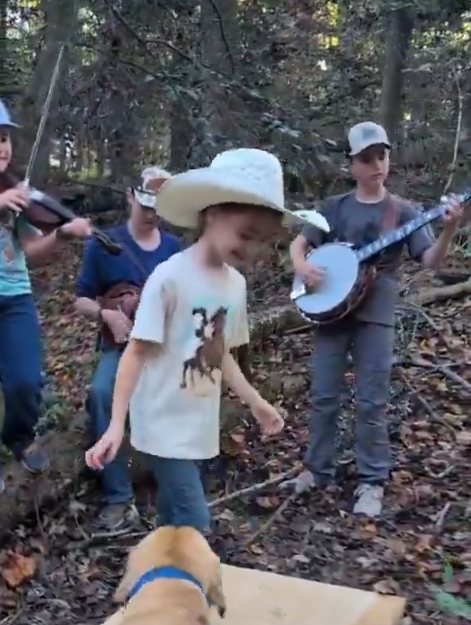
https://twitter.com/i/status/1980076437697646868
I dislike live links on the main page but the video could not be embedded.
This stuff's as good as bagpipes :)
Continue reading →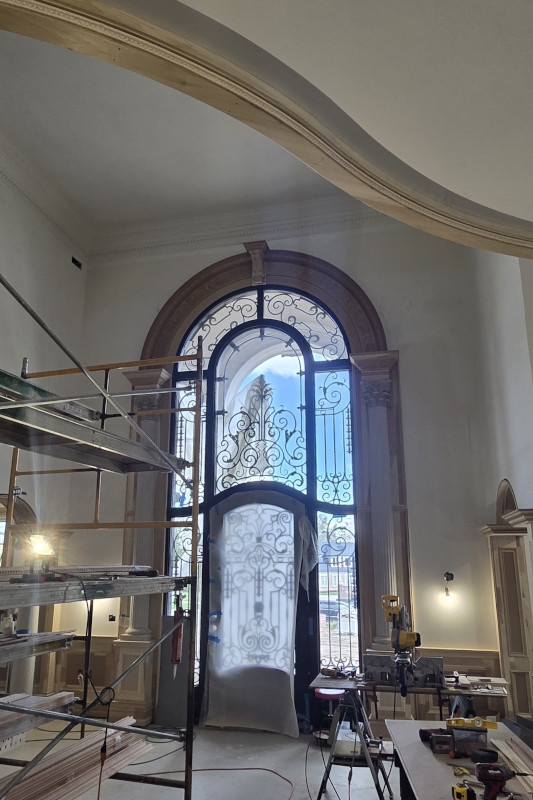
I had something else lined up for today but it'll keep.
I just received this photo of some finish work my brother did recently. I don't know the proper name for his specialty but "finish carpenter" is what I use.
His work in this photo is the entry way and ceiling trim. Probably other detail trim work as well.
Other than his mother's house, I don't think he's worked on any home under $10M for a long time; some in the $100+M range.
I can't afford him.
so I have to use family "secrets" to blackmail him :)
Continue reading →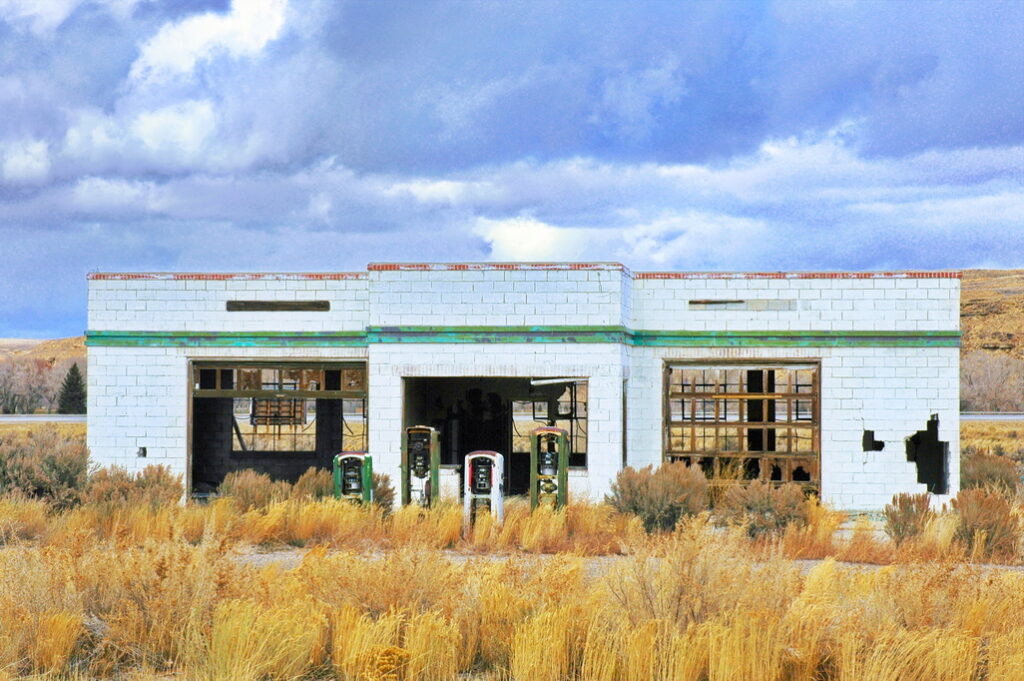
Along what was once US30 just west of Green River, Wyoming sits ... sat ... this forlorn remnant of Highway America of the 40s and 50s ... perhaps into the 70s? See the USA in your Chevrolet ...
The construction of I-80 - that stretch of road behind the structure - doomed this business ... and likely many others along this stretch of road.
My first thought was "Texaco" but I now lean towards "Sinclair". There was nothing on site to aid identification.
I don't know what drew me to stop by the place more than once but stop often I did. One time, there was a professional photography crew there. I didn't interfere with them; they returned the compliment.
A weird arrangement of gas pumps ...
The ghosts out here aren't necessarily of the 1860s; the ghosts of the 1960s are fading away even faster.
As are those of us who remember the 1960s.
And even now, I realize I didn't gather all of whatever it was - it was not physical things - that drew me there..
The structure is gone now ...
Continue reading →