
Destination 2
Wind north through the hills to the Ohio River. Cross over into Ohio – up and over to I-75 north at Dayton. With a reminder to myself to not take that route again. Not that it’s likely I’ll ever need that route again ….
Follows are photos of all the interesting places along I-75 in Ohio:
After the excitement of Toledo, I cross into Michigan headed for Detroit and points north.
Other than passing through on I-75, I didn’t get into the city proper. Just as well. Missed a few things on my to-do list though – among them, the Detroit Institute of Arts.
I’ve seen prosperous areas with less visible economic activity than I saw in the northern suburbs. Detroit proper may be a dump – can’t speak to that – but north Detroit metro seems to be a hive of activity: wide-spread construction activities, factories re-opening, rush hour traffic, outrageous property values …
So anyway, I arrive at brother’s home … and into wedding preparations.
And, unknown upon arrival, a week of the women breaking into spontaneous karaoke, a cappella.
Family – sometimes I miss it all at once.
1st Destination
I wouldn’t expect y’all to catch it, but I certainly should have.
That picture in the earlier post?
Same location but sunset, not sunrise … sunrise was back in SW Wyoming. It was Wyoming driving into the morning sun.
Losing it, DT … losing it.
(oops …)
Eastward through the night. One thing about US36 in eastern Missouri – gas stations are few and far between … or non-existent on the highway itself.
I refuse to spend money in Illinois unless I can absolutely not avoid it.
So I topped off somewhere back in the middle of Missouri and will make it across I-72 to Champaign and I-74, then one more gas stop just inside Indiana, down 74 to I-275 just outside Cincinnati and on into the hills of eastern Kentucky.
Yee-haw!
This here’s more or less across the road from the home of my Kentucky holler hillbilly side of the family back to the Revolutionary War – relatives as close as 1st cousins spent their lives here.
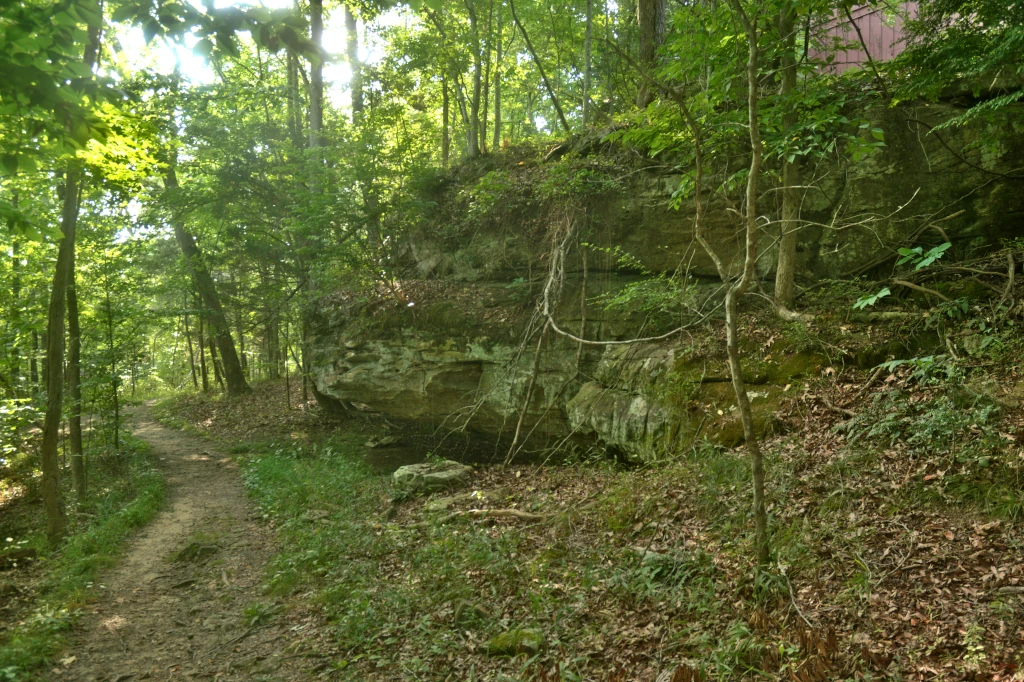
Mostly ’round here, I’d get invited in for dinner … or shot. My name doesn’t cross over the ridge to the next holler south.
One or more of my parallel lives is here.
This is Daniel Boone country; Boonesborough is not far from here. Deep woods and limestone rocks.
Moonshiners, revenooers, family feuds, good ol’ boys, caves, damn good country fixins for supper, tall and narrow family trees. Lost family cemeteries on top of overgrown hills.
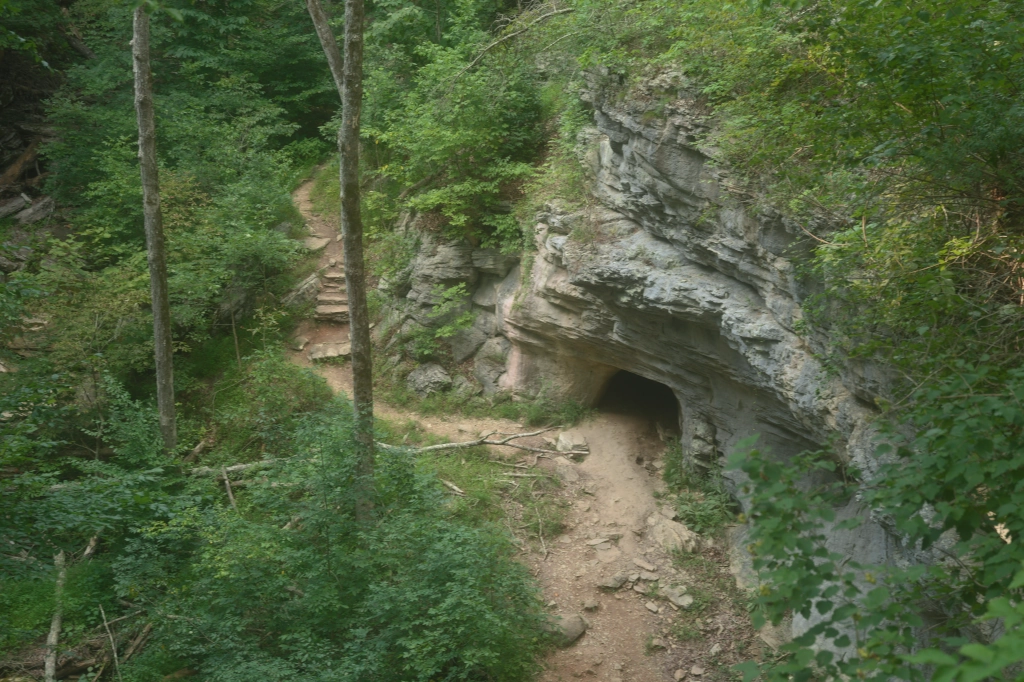
Bugs. Snakes. Humidity.
Travel Time
Back home, more or less recovered, more or less caught up. Back to “life” as constitutes “normal” around these parts.
I’ve done this trip enough times to have a route and timing down pretty well. I tend to leave just after dinner and drive through the night – it’s a different world at 3AM than 3PM. I’ll be where I need to be in a day and a half … biscuits and gravy for breakfast day after tomorrow!

I-84 to Echo, UT. Pick up I-80 to Lincoln. Drop down along surface roads to the Missouri River crossing at Nebraska City. I-29 is just east of the river.
Eventually the dawn comes – I find myself on I-29 somewhere south of Nebraska City, somewhat north of St Joe – which is where I get off the expressway and hit US36 east across Missouri.
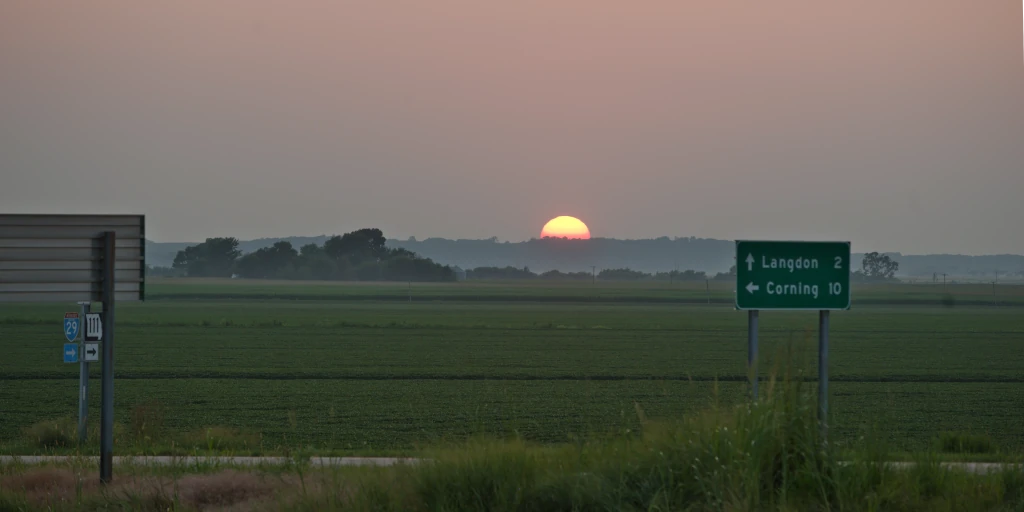
Take I-29 down to St Joe where I pick up US36 as an alternative to the slightly quicker route down to KC and I-70 to I-64.
It’s just past dawn; I’m driving into the sun. Pull the brim down on my hat and carry on.
Ruby Ridge
Just to remind you that your government will entice you to break a law then shoot your family, friends, and pets for doing so.
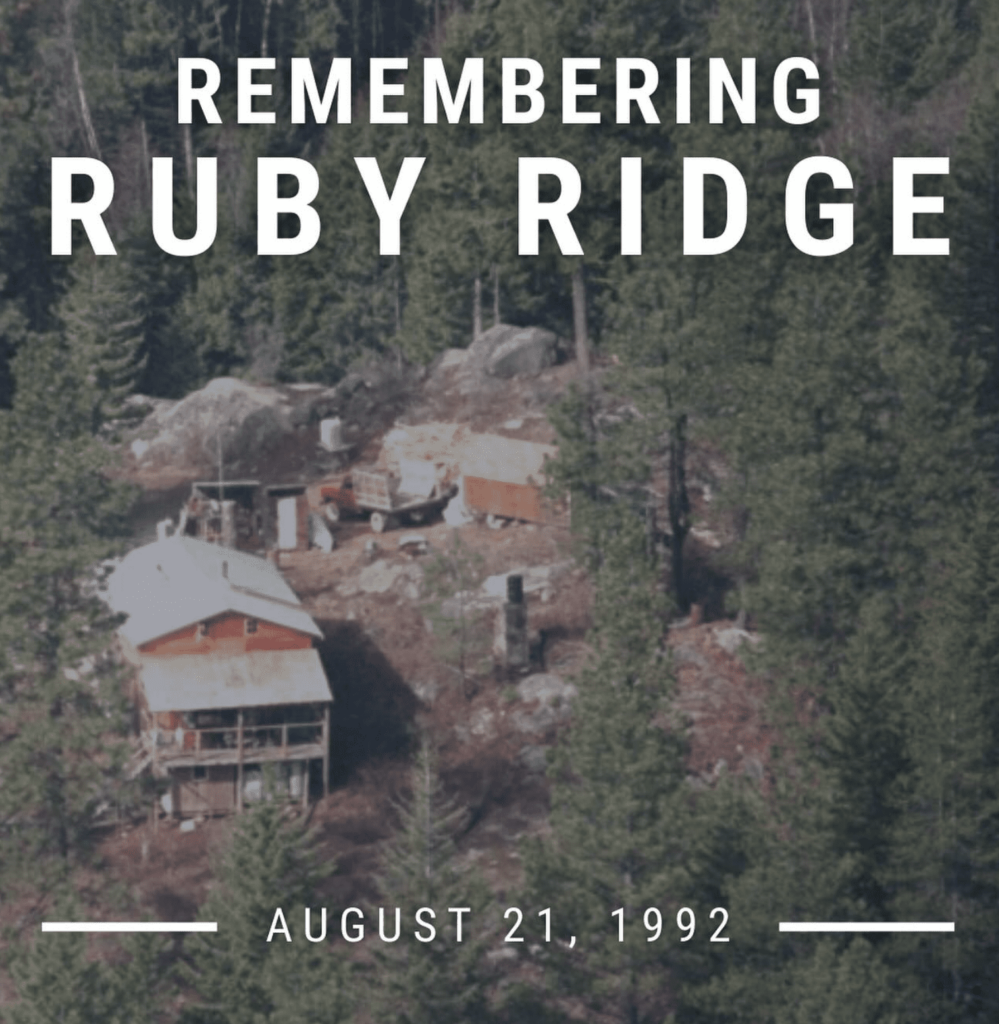
… and blame it all on white supremacists.
Sweet victory…
First published by Jean Oct 12, 2008
Beyond true young,
yet refusing old,
I claim my life
as won.
Back
Safe and sound – but not recovered yet.
Later. Few more days. Let the tire hum fade away.
Anyone ever notice the line stripes are Morse for the letter “K”? At least in whatever state I was in …
Weekend. Still working on canned NAD.
Thanks for the submissions. Several came in while I was on the road; I will get to them.
Not tonight. 🙂
Butterfly On Weed

Tunesday: Dwight Yoakam – Thousand Miles From Nowhere
A sample of some obscure – and maybe not obscure – tunes from my strange and off-the-wall collection.
Today’s selection: Dwight Yoakam – “Thousand Miles From Nowhere” 1993
Song peaked at #2 on Billboard charts.
Dwight Yoakam born 1956 in Pikeville, KY – deep down in the coal country. I believe he’s famous.
War of the Worlds
Years ago, one of the formerly big three channels aired some kinda drama about a meteor shower or maybe enormous forest fires, I don’t remember for sure, burning up a wide swath of the western United States. Specifically, California, if I recall correctly.
I know, I know, but we can dream, can’t we?
Anyway, the format of the program was as if news agencies were reporting the events. My parents had finally gotten cable TV, and it was my father’s habit to turn on CNN and let it drone away for hours, until Mother would get sick of it and disarm him of the television remote. We shall see the correlation of this annoying habit to the program in question shortly.
Now this was not the sort of program to interest me, but I was vaguely aware of its existence. At that time, I was living out of state and by chance the program aired during the customary time for my weekly call home to check in with the folks. Mother and I were chatting, and she said, isn’t it awful about all those people getting burned up?
What people, Mother?
All those people getting burned up in California. It’s all they’re showing on the news, haven’t you heard? It’s horrible.
I was not sure how to process this, because Mother always took being wrong quite personally. But finally, I couldn’t stand it any longer, and as innocently as possible asked her if she’d ever heard of Orson Wells, knowing full well that as a young ‘un, she’d heard his famous Martian invasion broadcast on the radio.
Yeah, she said, War of the Worlds, what of it? Then maybe a five-count pause, during which I knew better than to say a word.
No, she said. Then maybe another five-count pause.
Dammit, she said. Then yet another long pause.
Click, the phone said.
I thought it best to not bring up the subject the next time I called home. So, I didn’t.
jd Suggests …
… this article at A Midwestern Doctor regarding the benefits of DMSO therapy
BurningPlatform Headline:
“From Sharper Night Vision to Curing Lifelong Blindness — How DMSO Heals Each Level of Vision Loss“
DMSO (Dimethyl Sulfoxide ~$8/oz OTC)
Interesting that “Low Oder” is specified.
jd highly praises “A Midwestern Doctor” as a regular read.
I recall hearing about DMSO in the late 70s – I believe legality-to-purchase was the issue. As I understand it (and worth every penny you paid for my opinion), DMSO is actually a carrier – absorbed through the skin, it carries the desired medication directly to the location needed. That was long ago but luckily my memory is still as sharp as a baseball
As jd suggests:
“That’s why I’m sending to you. Look into it, for your own sake. You must have something physically wrong somewhere. Then do with it what you like.“
Worth looking into …