
1873 Mason Bogie Locomotive
Mason Bogie locomotives were first developed in the early 1870s. An articulated tank locomotive (no tender and the drive wheels swivel), it was intended to be used on poor track with sharp curves. 146 of these engines were built between 1872 and 1890.
The most famous of these engines ran on the Denver, South Park and Pacific Railroad which operated 23 of them.
The only surviving engine of this type is the “Torch Lake” which is operational and lives at Greenfield Village outside Detroit.
Built in late 1873 by the Mason Machine Works of Massachusetts for use in the copper country on the Keweenaw Peninsula off Michigan’s Upper Peninsula, the Calumet & Hecla Mining Co operated the engine as its #3 locomotive. It was obtained by Greenfield Village in 1968 and was once the oldest operating steam engine in the country. (In 1981, the 1831 John Bull operated under its own power but it is now on static display at the Smithsonian).
Several engines of the same era are operating or undergoing restoration at the Nevada State Museum in Carson City, the most famous of which is the 4-4-0 Reno built in 1872. Once common in westerns, the Reno was damaged in a fire at Old Tucson and has since been moved “home” to Carson City where it was once the primary passenger engine of the Virginia & Truckee of the Comstock Lode days. The 4-4-0 narrow gauge Eureka, also from Nevada, was built in 1875, is operable, and is often seen on the Durango & Silverton Railroad.
Last time I visited Greenfield Village, the Torch Lake was undergoing maintenance and parked in a roundhouse replica. I played around with the processing a bit – here are the reasonable results.
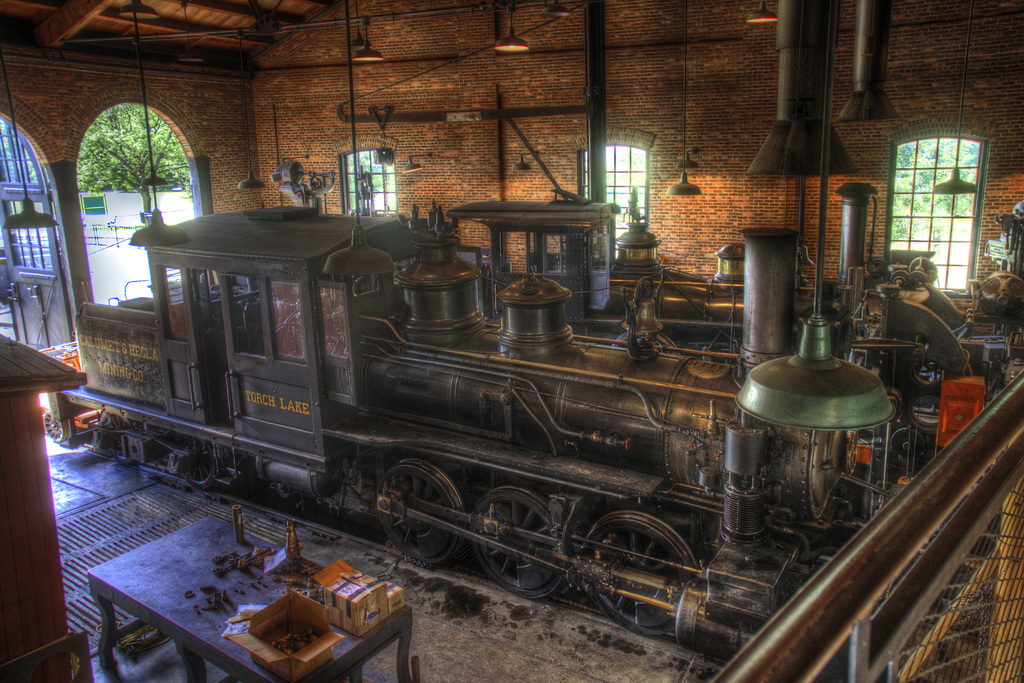
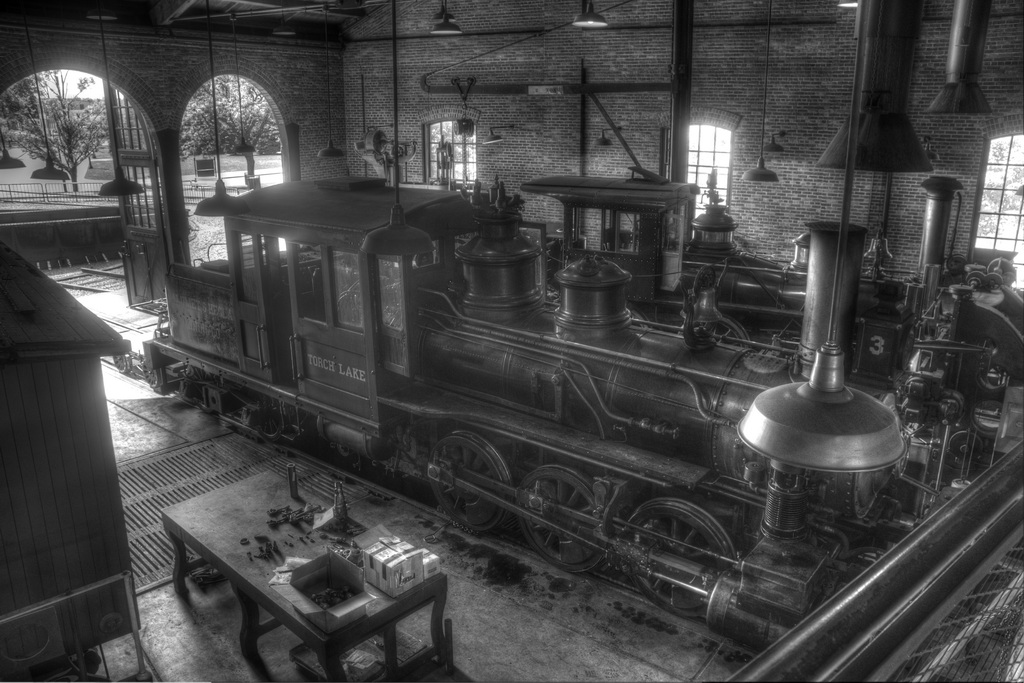
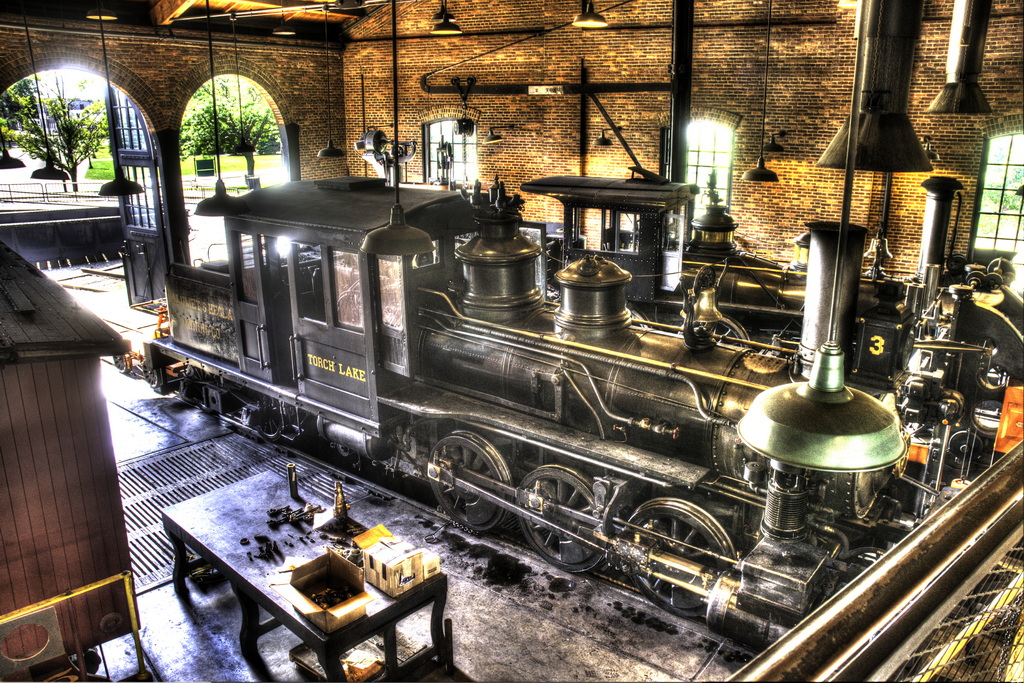
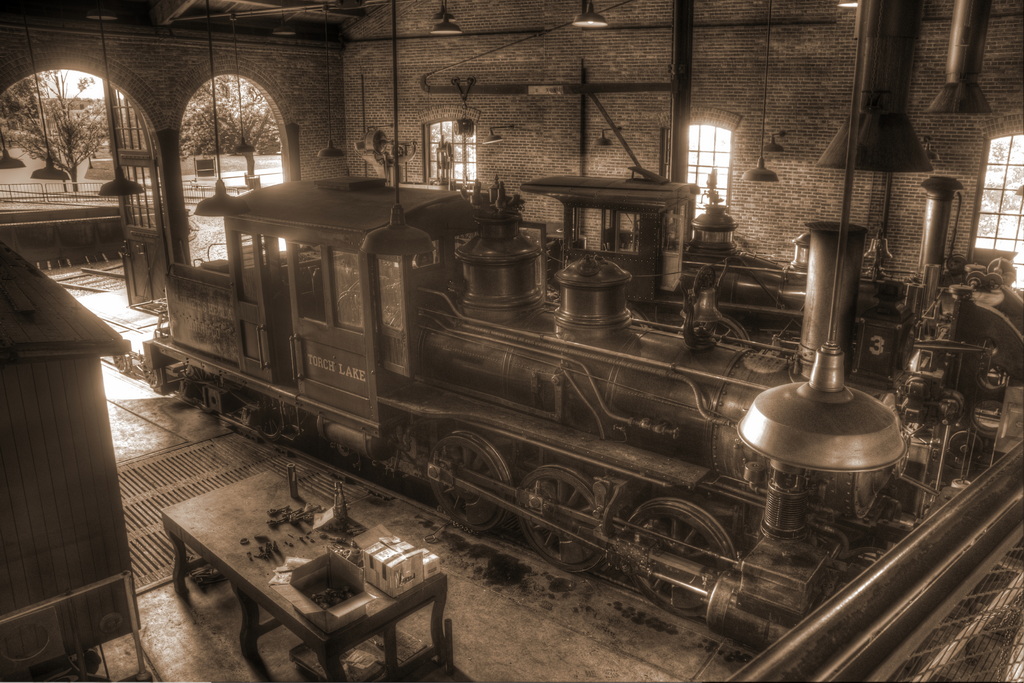
In the background sits an 1870 0-4-0 unnamed switch engine once used at one of Thomas Edison’s companies. Henry Ford purchased the engine in 1932 for his museum after rebuilding it into a 4-4-0 configuration and named it “Edison”. Both engines operate at the museum on a regular basis.
I like the bottom left photo.